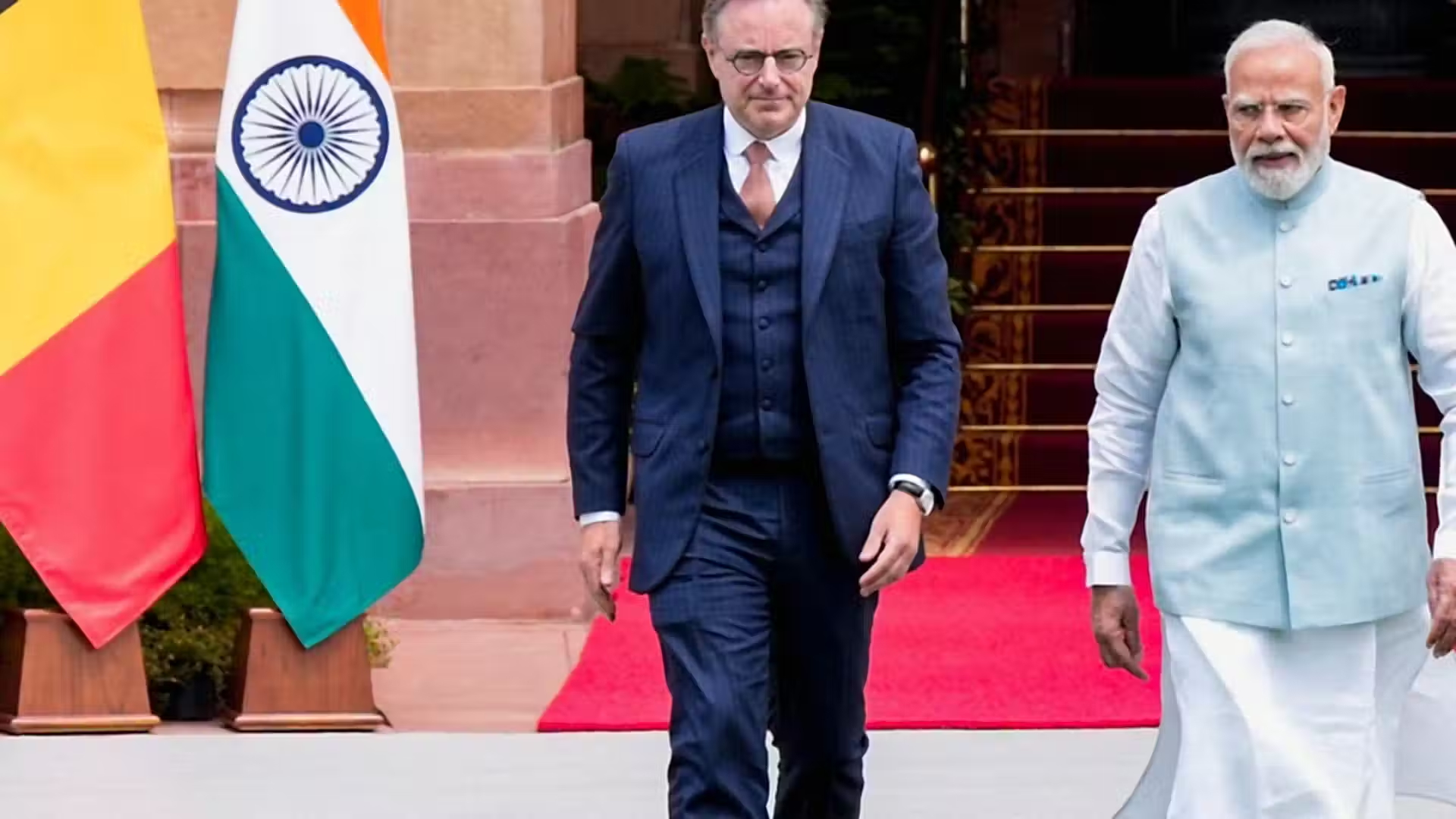
India and Belgium signed multiple agreements to strengthen bilateral cooperation across renewable energy, defence, and advanced technology during a three-day visit by Belgian Prime Minister Bart De Wever to New Delhi, which began Wednesday.
The renewable energy accord, finalized during De Wever's visit, targets key sectors including green hydrogen, offshore wind, and critical mineral recycling. Both nations pledged to accelerate decarbonization efforts and strengthen industrial supply chains. The framework expands upon a decade of bilateral climate dialogue and includes joint initiatives in advanced energy storage, bioenergy, and pumped hydro systems.
Prime Minister Narendra Modi emphasized at a joint press briefing that reliable supply chains and a clean energy transition remain shared strategic priorities. He pointed to growing joint ventures in green ammonia and defence manufacturing as evidence of deepening ties.
On the defence front, Belgian Defence Minister Theo Francken, who also holds the foreign trade portfolio, met with Indian Defence Minister Rajnath Singh on Thursday. The two sides signed pacts covering maritime security, military hardware, drones, and rockets. At least 15 Belgian defence companies participated in the delegation, and defence firms from both countries concluded co-production agreements for a range of military equipment.
Francken stressed the geostrategic importance of the strategic pact, noting that India is a rapidly growing economy and a major military power in the Indo-Pacific, strategically located along some of the world's most important trade routes. He stated that for an open trading nation like Belgium, the security of these routes is essential.
Modi and De Wever, the first Belgian prime minister to visit India in two decades, set a target to double bilateral trade within five years. Their discussions covered collaboration in semiconductors, chemicals, pharmaceuticals, fintech, advanced manufacturing, ports and logistics, and clean energy.
The two leaders also reviewed the creation of resilient supply chains to reduce dependency on China and discussed more predictable trade arrangements. They referenced the proposed India-European Union free trade agreement against the backdrop of geo-economic challenges stemming from U.S. trade policies and tariffs.