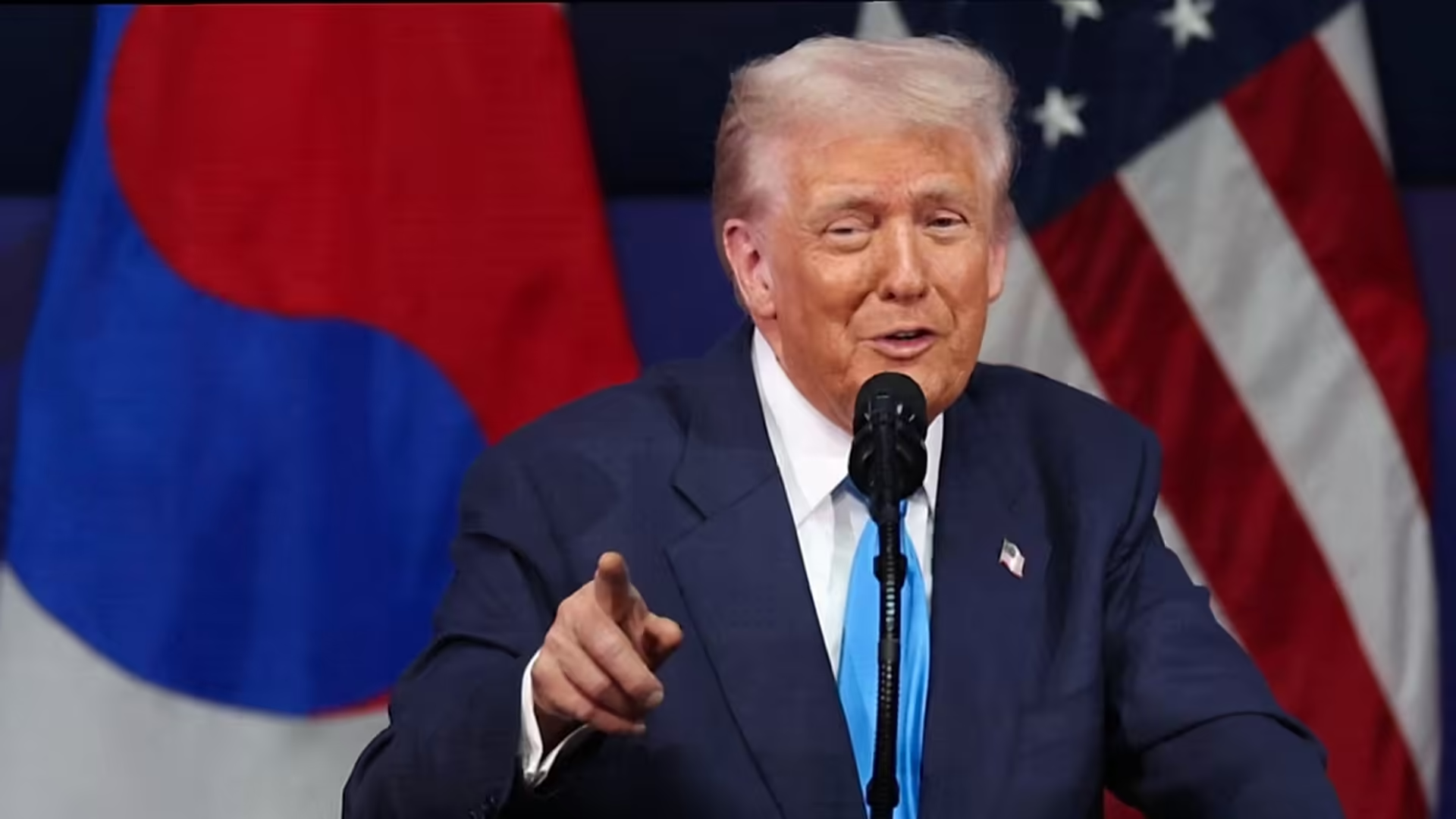
Trump raises tariffs on South Korea to 25%, citing delayed trade deal approval
President Trump increased levies on South Korean automobiles, pharmaceuticals, and lumber, citing Seoul's legislature failure to ratify a bilateral trade agreement reached last year.
January 27, 2026
President Donald Trump announced Monday that he is raising tariffs on South Korean imports to 25% from 15%, accusing Seoul's legislature of failing to approve a trade deal struck between the two countries last year.
In a post on Truth Social, Trump said the increased levies would apply to automobiles, lumber, pharmaceuticals, and other goods covered under his reciprocal tariff framework. He cited the delay in legislative approval as the reason for the move.
"South Korea's Legislature is not living up to its Deal with the United States," Trump wrote. "President Lee and I reached a Great Deal for both Countries on July 30, 2025, and we reaffirmed these terms while I was in Korea on October 29, 2025. Why hasn't the Korean Legislature approved it?"
Trump added that the U.S. had acted swiftly to reduce its tariffs in line with the agreement, and expected trading partners to do the same. "Our Trade Deals are very important to America. In each of these Deals, we have acted swiftly to reduce our TARIFFS in line with the Transaction agreed to. We, of course, expect our Trading Partners to do the same," he said.
The trade agreement between Washington and Seoul, initially reached in July 2025, had reduced U.S. tariffs on South Korean vehicles, car parts, pharmaceuticals, and other products from 25% to 15%. The deal was reaffirmed during Trump's visit to Seoul on October 29, 2025, and was reported to include $350 billion in investment commitments from South Korea.
As of Monday evening, the White House had not yet issued an executive order to formally implement the tariff increase.
South Korea's presidential office said it had not received official notification or advance warning of the tariff hike from the U.S. government. In response, the office convened an interagency meeting and announced that Trade Minister Kim Jung-kwan, who was in Canada at the time, would travel to Washington as soon as possible to meet with U.S. Commerce Secretary Howard Lutnick to discuss the issue.
The announcement sent shares in South Korean automakers tumbling. Hyundai Motor shares fell more than 4% following the news, while its subsidiary Kia dropped nearly 3.5% and affiliated company Hyundai Mobis declined 5%. However, shares pared some losses in subsequent trading, with Hyundai last trading 1.12% higher and Kia down 1.1% by Tuesday morning. South Korea's broader Kospi index reversed early losses to gain 1.4%, supported by gains in chip stocks, while the small-cap Kosdaq climbed 0.4%.