A research team has confirmed that the San Andreas Fault in California has accumulated tectonic tension at its highest level in the past 1,000 years, according to findings released Thursday. The discovery has renewed international scientific concern about the potential for a major earthquake, known colloquially as the "Big One," that could directly threaten the state and approximately 13 million residents in exposed areas.
The San Andreas Fault's southern section near Los Angeles is now at its highest stress level in a millennium, researchers said. This accumulation of tension occurs as the fault approaches the limits of its capacity to resist movement.
Scientists at San Jose State University, including professor Kim Blisniuk, have also documented that the fault moves at a consistent rate along a 10,000-year window of observation. Blisniuk noted that the movement rate in the southern section is similar to rates measured farther north along the San Andreas Fault. Faults that move faster generally can unleash earthquakes more frequently, according to seismic research.
The San Andreas Fault has a documented history of major seismic events. The devastating 1906 San Francisco earthquake and the 1989 Loma Prieta earthquake both occurred along the San Andreas Fault zone.
Scientists have identified a geological process called dynamic triggering, or "activación dinámica," that can interconnect earthquakes separated by thousands of kilometers. When a large-magnitude earthquake occurs, it releases seismic waves that travel through the planet. As these waves pass through geologically active regions, they can temporarily modify the existing tensions on distant faults. If a zone is already under high tectonic stress, this small change can potentially trigger additional movement.
The San Andreas Fault currently sits at elevated tension levels, making it susceptible to such triggering effects from distant seismic events. Researchers emphasized that the fault's current stress state represents a significant concern for earthquake preparedness in California.
The global monitoring network records more than 500,000 earthquakes annually across the planet, but international scientific attention has recently focused on the San Andreas Fault due to the new findings about its stress accumulation.
Related Articles
Magnitude 6.9 earthquake strikes northern Chile near Calama
A strong earthquake centered near Calama in Antofagasta region left over 27,000 without power and caused infrastructure damage across four northern regions.
Multiple earthquakes strike Granada in three hours, three injured
Three earthquakes of magnitude 4.0 to 4.8 hit Granada province Tuesday morning, with three people injured and one hospitalized.

Colombia earthquake death toll rises as rescuers search rubble
A magnitude 7.4 earthquake struck western Colombia on Monday, killing at least 254 people with hundreds more injured and missing.

Magnitude 5 earthquake strikes southern Spain, causes material damage
A strong earthquake centered near Granada in Andalucía caused property damage to homes and vehicles Saturday, with no reported injuries.

Colombia earthquake death toll rises to 265, nearly 3,500 injured
A 7.4-magnitude earthquake that struck Colombia on Monday has killed 265 people and injured 3,494, with 496 still missing and over 53,000 affected.
Magnitude 6.2 earthquake strikes southern Italy
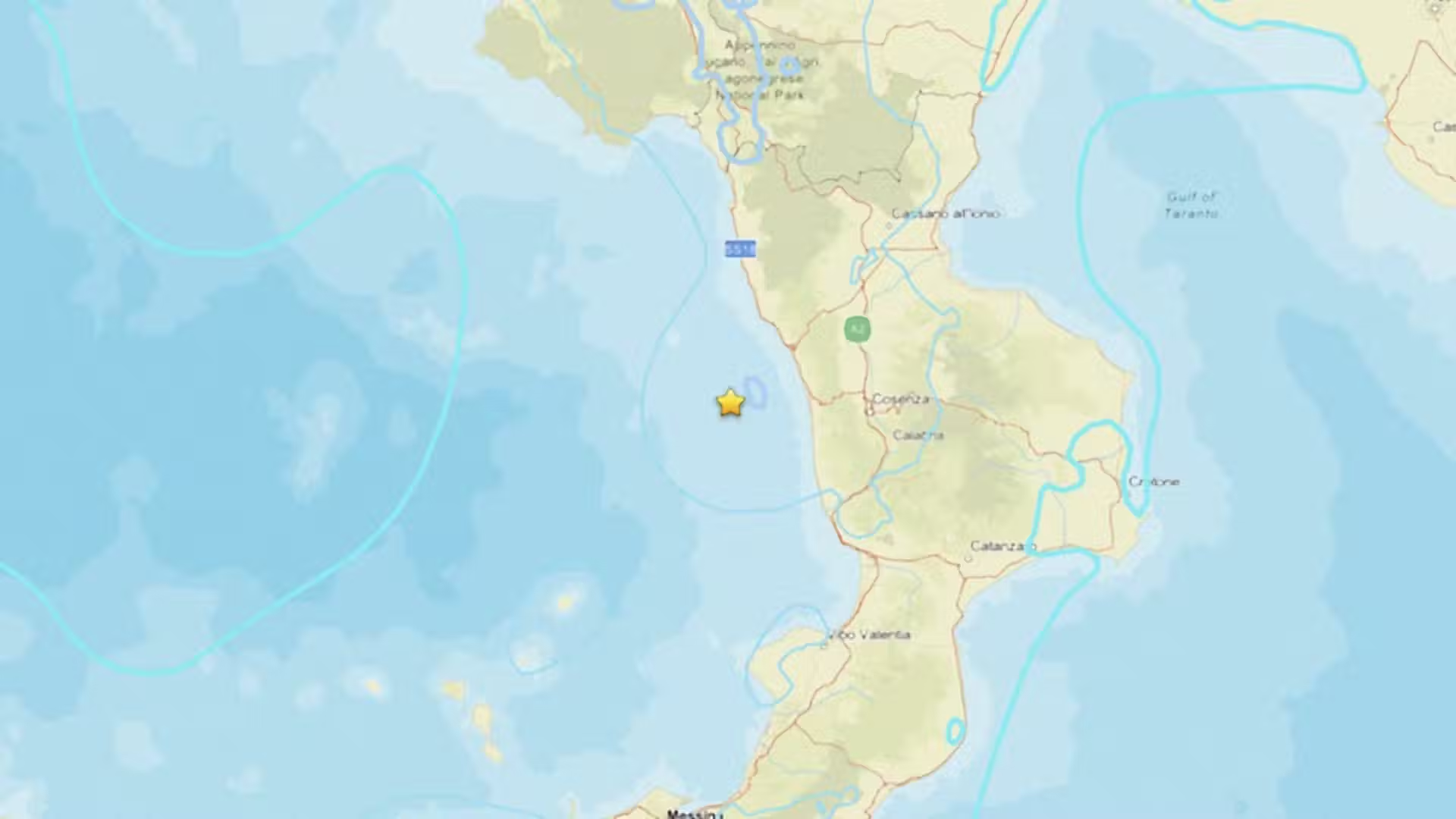
A strong earthquake hit southern Italy early Tuesday, centered offshore in the Tyrrhenian Sea near Calabria at a depth of about 250 kilometers.