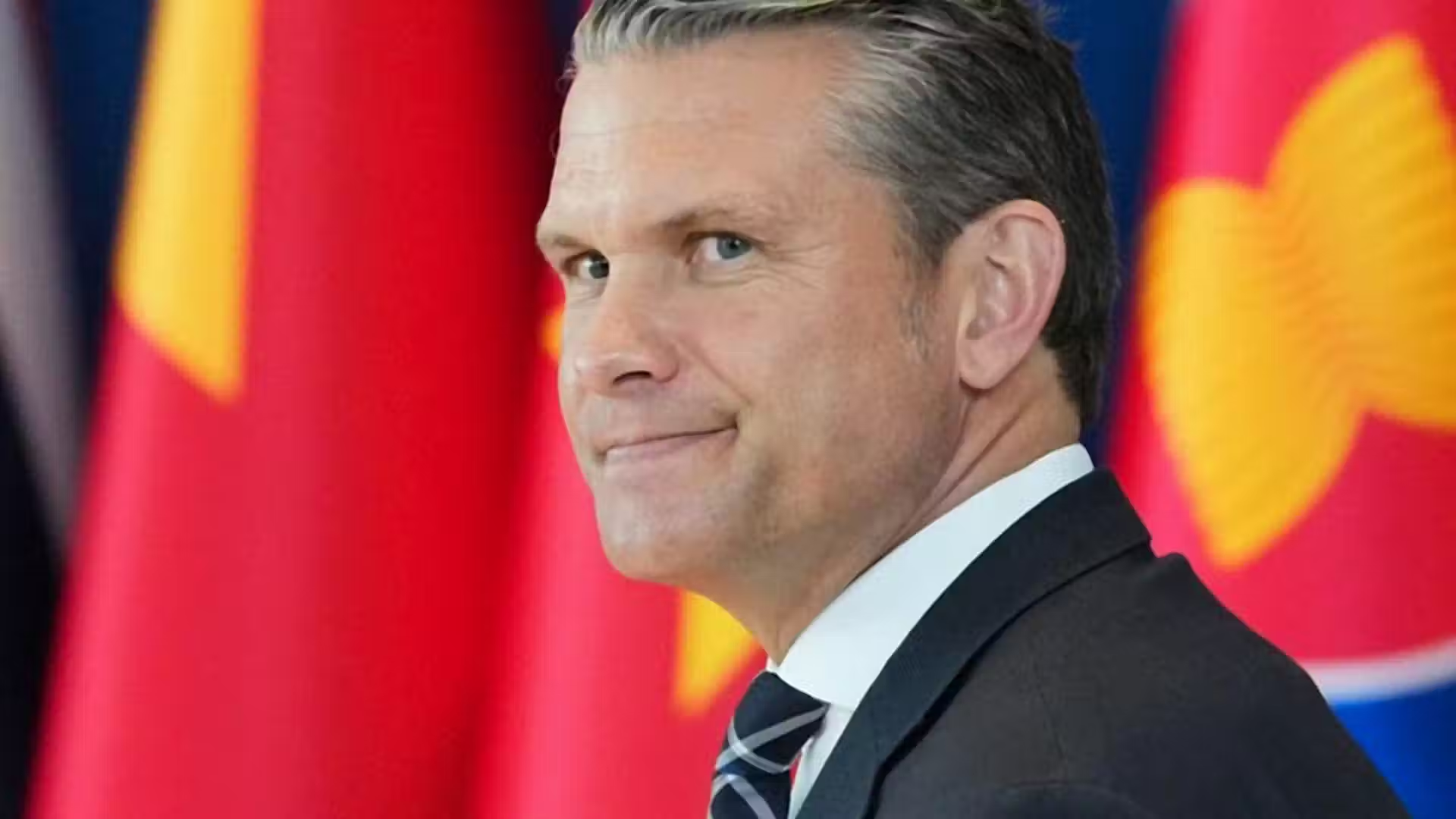
U.S. Defence Secretary Pete Hegseth reportedly issued a classified memo last week imposing "new restrictions" on military cooperation with Canada, but Canadian military and government officials said Friday they are unaware of any such restrictions and have received no formal or informal communication about them from Washington.
The Washington Post reported the memo's existence on Friday, citing unnamed officials, but did not see the document or provide details about what restrictions it contains. Senior leaders of the Canadian Armed Forces learned of the reported memo only from the Post story, three military sources with direct knowledge told The Globe and Mail.
The Pentagon's chief spokesperson Sean Parnell said major elements of the Canada-U.S. defence relationship will not change. "This guidance does not impact defence intelligence co-operation, our binational NORAD command, or our co-operation through NATO," Parnell said Friday evening. He added that Washington is "taking steps to ensure its engagements with Canada advance tangible U.S. defence objectives" and is "prioritizing opportunities for bilateral co-operation that strengthens the defence of our Homelands and shared hemisphere, while supporting Canada's ability to meet NATO obligations."
Canadian military sources said it was unclear what would actually be affected by the memo given Parnell's statement ruling out restrictions on broad areas of bilateral military coordination. They pointed to military-to-military exchange programs as one possibility.
The reported memo comes amid tensions between the Trump administration and Canada over defence spending and procurement. In May, the Trump administration suspended participation in the Permanent Joint Board on Defense, a joint defence advisory body, after Prime Minister Mark Carney's January speech at the World Economic Forum in which he called for middle powers to resist mistreatment by global "hegemons." Elbridge Colby, the U.S. undersecretary of defence for policy, announced the suspension and criticized Canada for failing to make "credible progress" on defence commitments.
The Trump administration has also expressed annoyance at Canada's decision to hold off on buying U.S.-made F-35 fighter jets. Canada announced a review of its previous commitment to buy 88 F-35s after Trump began threatening to annex Canada and imposed tariffs. A U.S. official also criticized Ottawa's decision not to lay out a concrete plan for spending 5 per cent of GDP on defence by 2035.
Canadian government officials contended the U.S. criticisms were unfair. Since taking office last year, Carney has stepped up Canadian military spending to reach NATO's 2 per cent of GDP benchmark and committed to Trump's demanded 5-per-cent-by-2035 level. Canada has also pushed back against Trump's global trade war more significantly than most other countries, imposing retaliatory tariffs and walking away from a tentative agreement in August. The two sides are currently negotiating again.
Trump said Friday his administration is "working on making a deal" and Carney was "very nice" when the pair met in China this week. But Trump also repeated complaints that Canada is "ripping us off" and a "difficult" country to deal with.
The Prime Minister's Office did not comment on the Washington Post report. A Department of National Defence spokesperson said Canada continues to engage "constructively and professionally" with U.S. counterparts and "would not speculate on the media reports of this nature." Two senior military sources said all military-to-military relationships are currently operating normally and Canada plans to stay the course.