Colombia's leftist Pacto Histórico leads Senate while Centro Democrático tops House in congressional elections
Colombians voted Sunday to elect Congress and choose presidential candidates, with leftist and rightist blocs splitting control of the bicameral legislature.
March 8, 2026
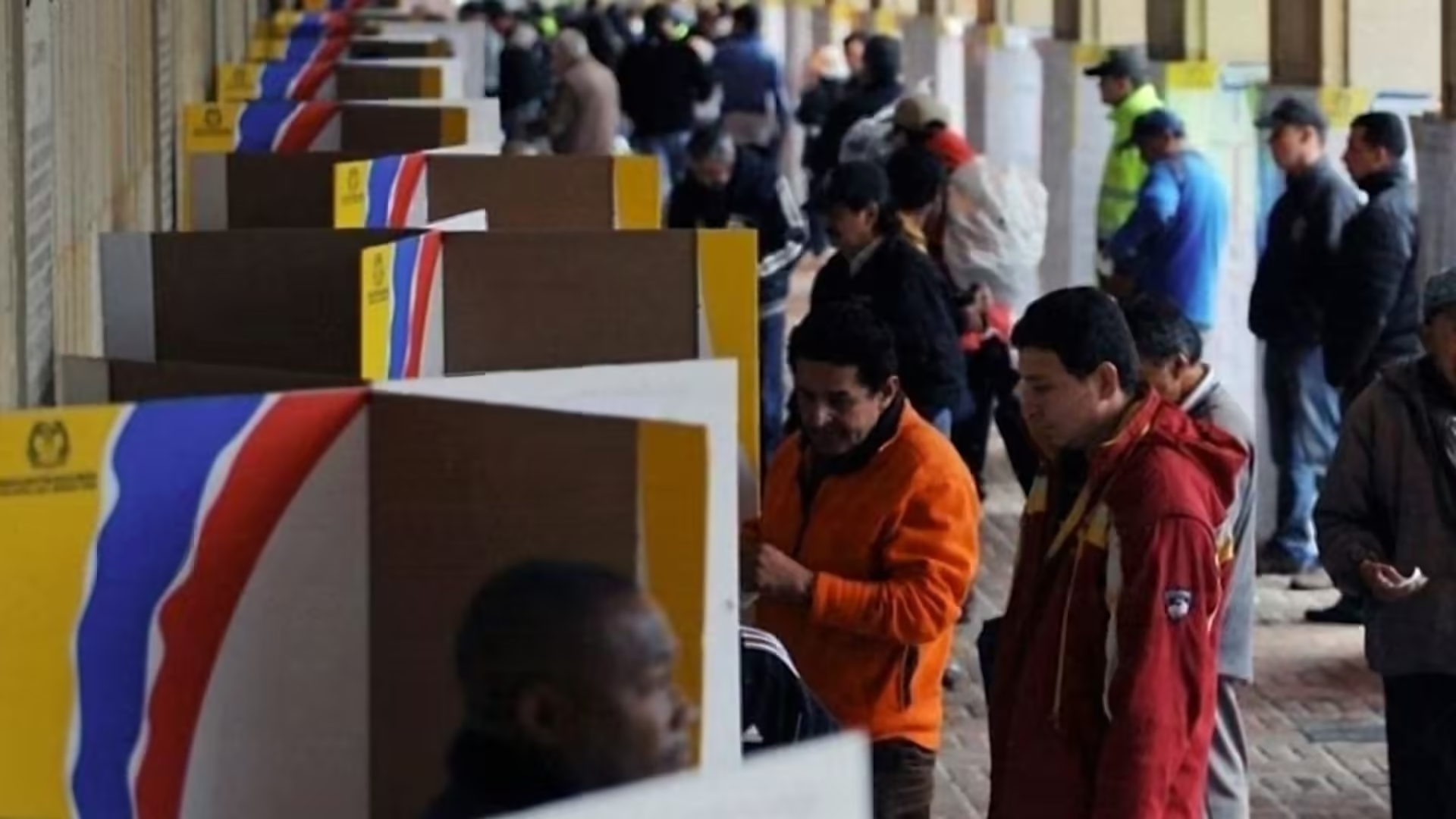
Colombians voted Sunday to elect a new Congress and select presidential candidates from three political coalitions ahead of May presidential elections, with results showing a divided legislature split between leftist and rightist blocs.
Pacto Histórico, the party of President Gustavo Petro, secured the largest share of Senate votes with 22.86 percent, according to tallies with 91.61 percent of polling stations reporting. The party is projected to increase its Senate representation from 20 to 25 seats. Centro Democrático, the party of former President Álvaro Uribe, finished second in the Senate race with 15.69 percent of votes.
In the lower chamber, Centro Democrático led with 13.18 percent of votes, followed by the Colombian Liberal Party, a center-left formation aligned with social democracy and progressivism, which obtained 11.27 percent.
Approximately 41.2 million eligible voters participated in the election to choose from more than 3,000 candidates competing for 102 Senate seats and 182 House seats. Voters will elect 286 lawmakers total for four-year terms in Colombia's bicameral Congress, which comprises 103 senators and 183 representatives.
The election also served as a primary-style contest in which voters selected presidential candidates from the country's three key political blocs: the left, centre-left, and the right. The winners of Sunday's primary voting will advance to the presidential election scheduled for May.
The voting took place amid heightened security concerns. More than 126,000 law enforcement officers were deployed across the country throughout election day. Authorities maintained high alert for potential political violence, particularly in rural regions dominated by armed groups.
The election occurred as Colombia faces ongoing pressure from the administration of United States President Donald Trump and contends with rising crime, economic challenges, and deep political polarization.