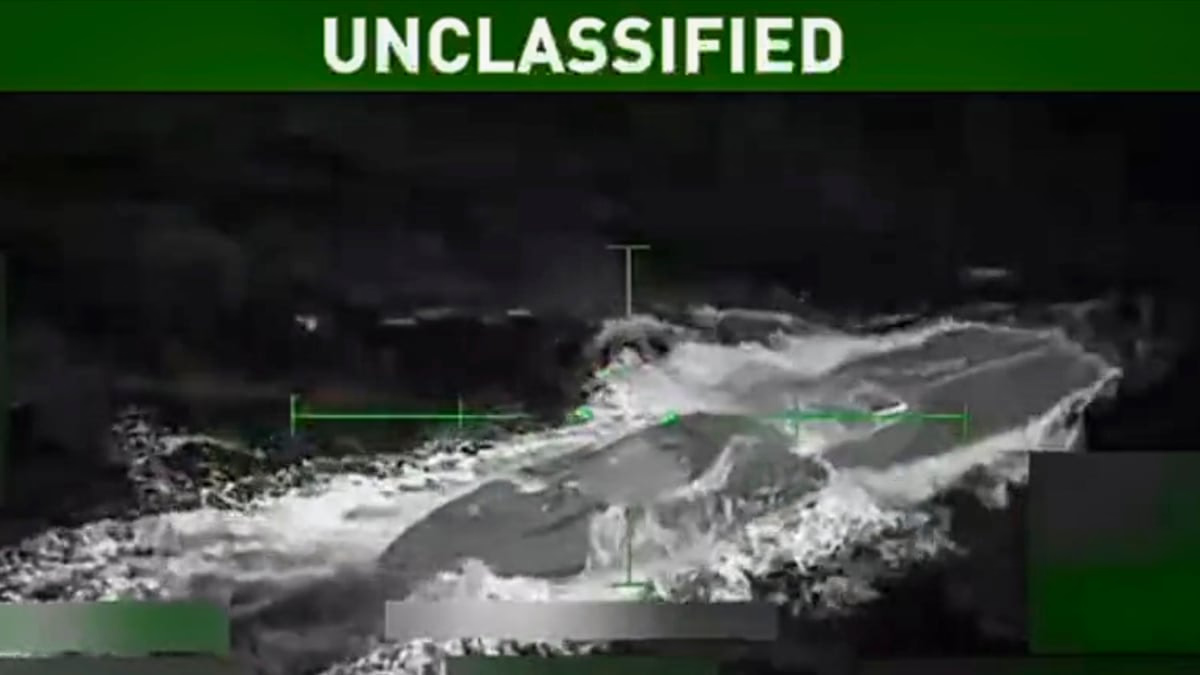
Ecuadorian authorities have released a man who survived a United States military strike on a suspected drug-trafficking semi-submersible vessel in the Caribbean Sea, the attorney general’s office confirmed Monday. Officials said there was no evidence that the man, identified as Andrés Fernando Tufiño, had committed a crime within Ecuador and no pending cases against him, meaning he could not be detained.
The U.S. strike, which occurred last week, targeted a vessel described by U.S. officials as a “very large drug-carrying submarine.” The operation resulted in the deaths of two crew members, while two men—Tufiño and a Colombian national—survived.
Repatriation and Legal Status
Following the attack, a U.S. Navy helicopter transported the survivors from the semi-submersible to a Navy ship. U.S. authorities subsequently repatriated the men to their home countries.
Tufiño, who reportedly hails from the Esmeraldas province bordering Colombia, was released after medical evaluations confirmed he was in good health. A document obtained by news agencies indicated that there were insufficient elements to lead fiscal or judicial authorities to certainty regarding any crime committed by Tufiño in Ecuadorian territory.
Despite the lack of charges, his travel history was noted as peculiar; records show he registered more arrivals than departures and had traveled to Mexico at least four times since 2018. He was also deported from the United States last year.
Status of the Colombian Survivor
The second survivor, Colombian citizen Jeison Obando Pérez, was also repatriated. However, authorities in Bogotá indicated he would face prosecution. Pérez remains hospitalized in Colombia.
Colombia’s Interior Minister reported that Pérez “arrived with brain trauma, sedated, drugged, breathing with a ventilator.” He assured that Pérez “will be processed according to the justice system, because he is allegedly a delinquent who was trafficking drugs.”
Semi-submersibles, often called “narco subs,” cannot go fully underwater but are increasingly used by international drug traffickers because they can sometimes evade detection by law enforcement.
Escalating U.S. Operations and Regional Tensions
The strike on the vessel was the latest in a series of U.S. operations targeting drug transit routes in the Caribbean, particularly off the coast of Venezuela. Since August, these raids have reportedly resulted in the deaths of at least 32 people.
U.S. President Donald Trump, who ordered the operation, announced the strike on social media, claiming the vessel was loaded with fentanyl and other narcotics, and labeled the men on board “terrorists.” However, reporting noted there is little evidence to suggest fentanyl is produced in the Andes region, with most of it flowing into the U.S. through Mexico.
The increasing use of force by the U.S. military has drawn sharp reactions from South American leaders.
Ecuador’s President Daniel Noboa, in a post on X directed toward Mr. Trump, reaffirmed his nation’s commitment to combating drug trafficking. “Ecuador stands firm in the global fight against drug trafficking and illegal mining, challenges that demand unity among nations committed to peace and prosperity,” Noboa wrote.
In contrast, Colombian President Gustavo Petro has harshly criticized the U.S. campaign, describing the operations as part of a “failed strategy” to “control Latin America.” He also accused the U.S. of previously hitting a fishing vessel in one of its strikes. This tension follows Washington’s decertification of Colombia as an ally in the fight against drugs last month, prompting Colombia to halt arms purchases from the United States.