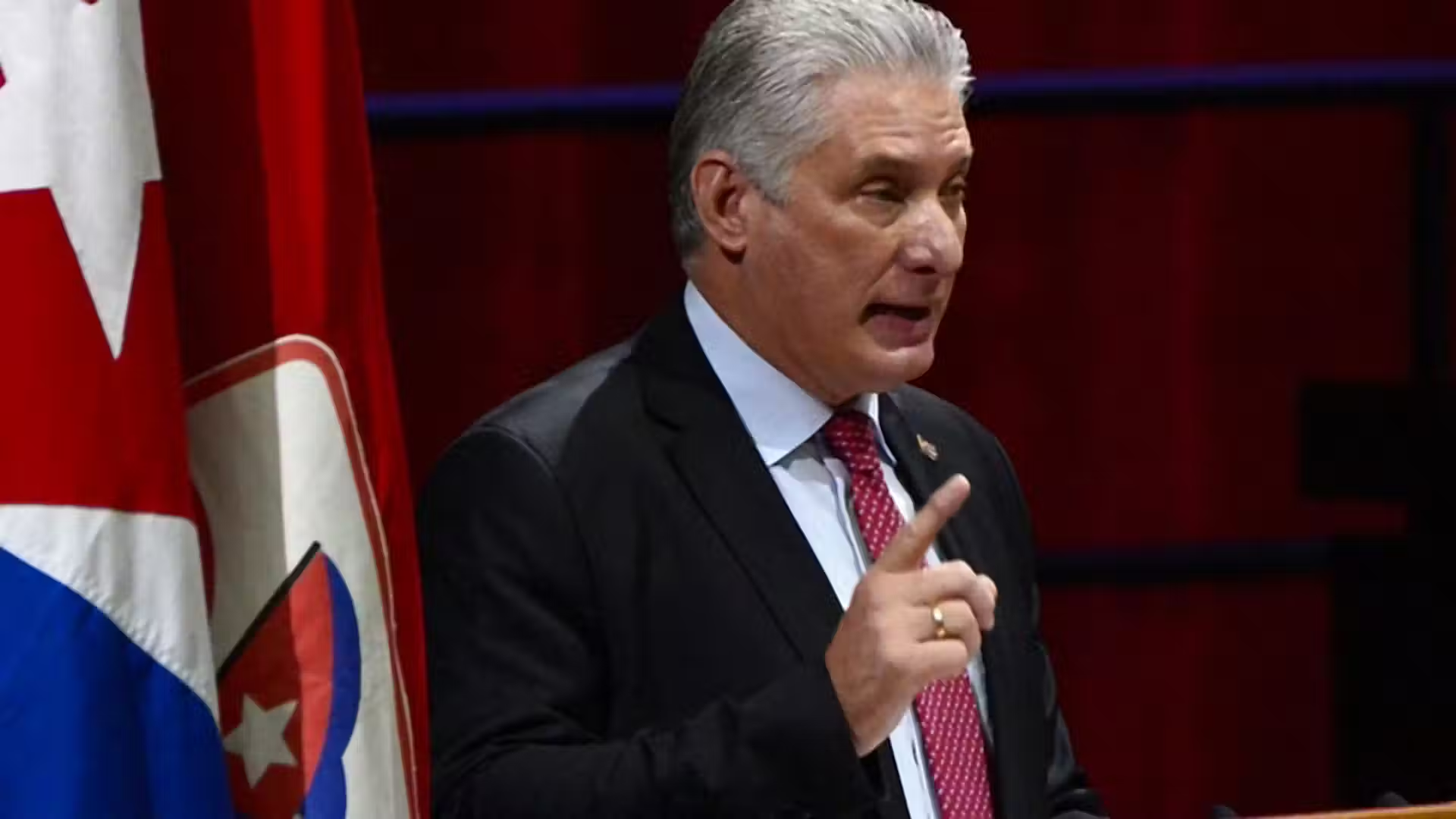
Cuba's parliament approved a package of 174 economic reforms on Thursday, marking the most significant shift in government policy in at least 15 years, according to officials.
The reforms were driven by President Miguel Díaz-Canel in response to the country's deepening economic crisis and mounting pressure from the United States. The plan opens the door to private capital and reshapes the rules governing the island's economy.
The Central Committee of Cuba's Communist Party, the only legal party, gave approval to the reforms, which represent the most drastic economic measures to be applied to the island since the Revolution began nearly 70 years ago. "We are not doing it because of pressure from the Yankees, but because we have reached a moment of maturity, of reflection," Díaz-Canel said.
Former president Raúl Castro, 95, gave his approval to the package of reforms in a letter presented during the meeting, which he attended by videoconference. Castro, who holds no official positions but remains a key figure in the power structure, stated that transforming the economy "is what is most convenient today for the Revolution."
The reforms were advanced by Díaz-Canel on Friday of the previous week and approved by parliament within one week.
Economists and analysts, however, expressed skepticism about the measures. Cuban economist Alfie Ulloa, a professor at the University of Chile's Law School, told UPI the reforms represent a significant change in official rhetoric but questioned whether they will translate into meaningful change. Ulloa said the reforms are "a profound adjustment in discourse" and that if implemented, they "would represent an important adjustment to the model," but cautioned that for now they remain largely rhetorical.
Experts warned that the real impact of the measures will depend on their implementation and on broader institutional changes that remain absent from the government's plans.