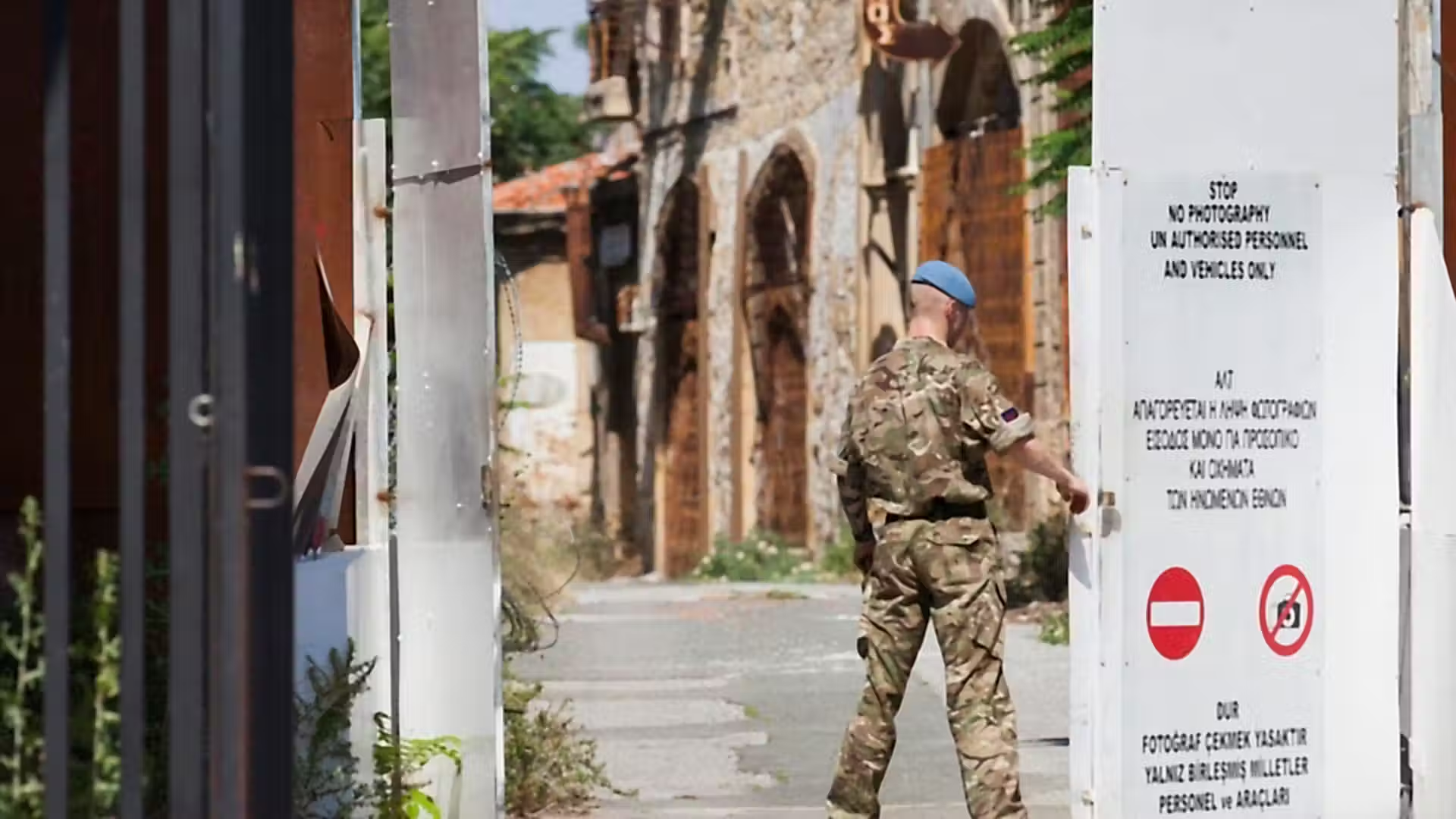
Greek Cypriot and Turkish Cypriot leaders agreed Monday to open two new border crossings and coordinate emergency responses as part of a United Nations-backed effort to resume peace talks on the divided island.
Cypriot President Nikos Christodoulides and Turkish Cypriot leader Tufan Erhurman met jointly with UN Special Envoy Maria Angela Holguin on November 9, 2026, in the UN-controlled buffer zone that splits the island. The agreement marks the first concrete sign of detente between the rivals after nearly a decade of deadlock.
Under the accord, the two communities will establish two additional border crossings to facilitate movement across the island's dividing line. The leaders also agreed to coordinate emergency response procedures and share archival materials, steps intended to build confidence and create conditions for resuming substantive peace negotiations.
The meeting took place at a UN compound in Nicosia, the divided capital, with Holguin facilitating discussions between the two sides. The agreement represents a significant development in Cyprus's long-standing division, which has persisted since 1974 when Turkish military intervention followed a coup attempt.
Cyprus has been split between the internationally recognized Republic of Cyprus, controlled by Greek Cypriots, and the Turkish Republic of Northern Cyprus, recognized only by Turkey. The UN buffer zone, established in 1974, has separated the two communities for over five decades.
Currently, only a limited number of crossing points exist between the two sides, restricting movement and economic interaction. The addition of two new crossings is expected to improve connectivity and facilitate trade, tourism, and personal movement between communities.
The agreement on emergency response coordination suggests both sides recognize the practical benefits of cooperation on matters affecting the entire island, such as natural disasters, public health crises, and search-and-rescue operations.
The sharing of archival materials addresses historical grievances and may contribute to reconciliation efforts by providing access to documents relevant to the island's divided past. Such transparency initiatives have been identified by international mediators as important steps toward building mutual understanding.
The UN has maintained a peacekeeping presence on Cyprus for decades, with the buffer zone serving as a demilitarized area. Holguin's role as special envoy reflects the international community's continued investment in resolving the Cyprus dispute, which remains one of Europe's longest-standing unresolved conflicts.
The agreement was welcomed by international observers as a positive step, though analysts cautioned that incremental confidence-building measures, while important, represent only preliminary progress toward resolving the fundamental political divisions that have characterized Cyprus for nearly 50 years.