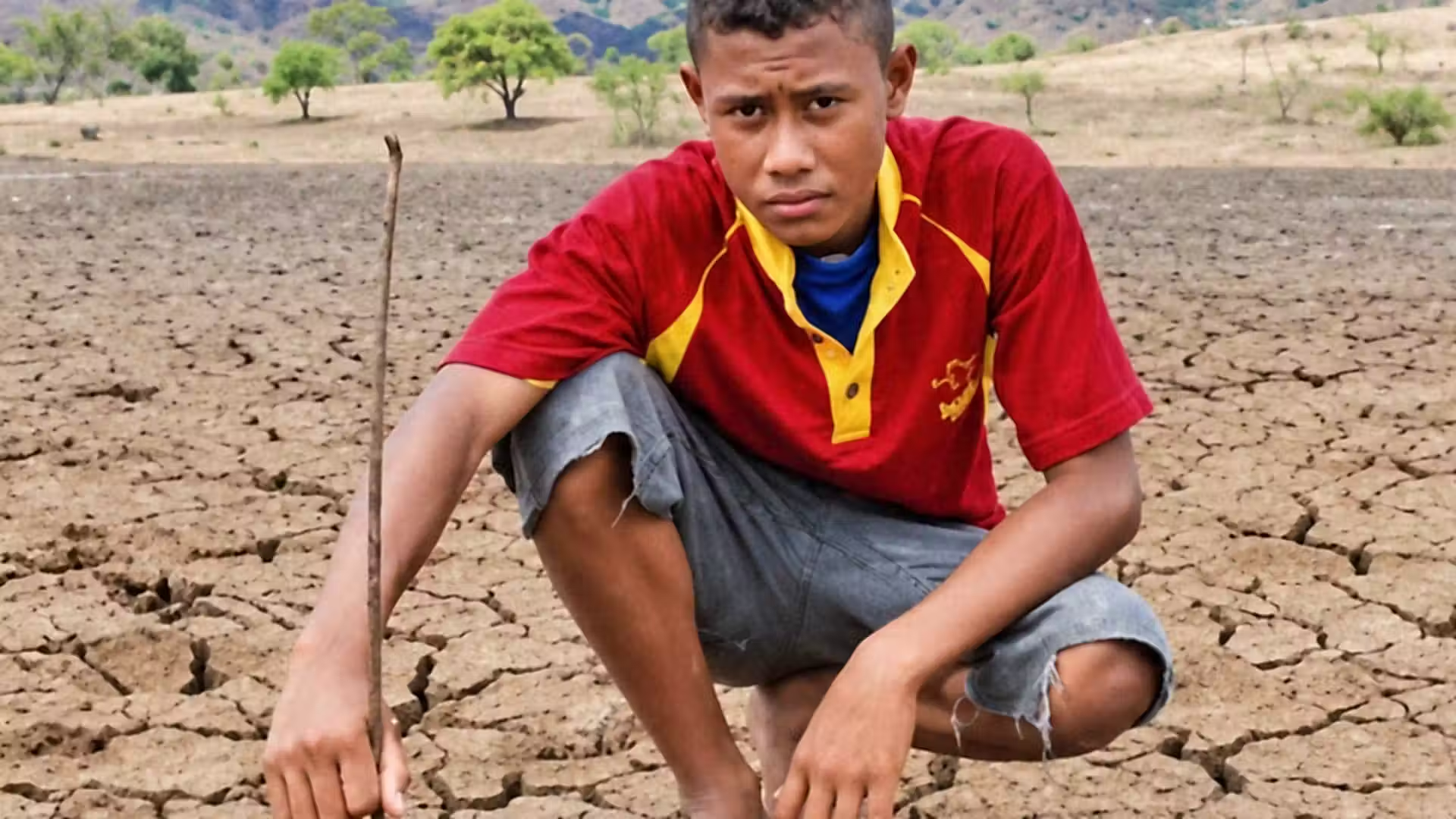
Fiji declared a state of national disaster on Tuesday in response to an ongoing El Niño drought that has caused severe water shortages across the island nation.
Prime Minister Sitiveni Rabuka announced the declaration, made by the Cabinet on advice from the National Disaster Risk Management Council, in a recorded video message. The declaration empowers the government to issue mandatory evacuations, curfews and travel restrictions nationwide, and will formalize water rationing and land use rules already in place.
"This declaration strengthens the arrangements through which government mobilises resources, coordinates assistance, and supports communities that are facing increasing hardship," Rabuka said. "It builds on the response already underway, and provides for its escalation as needs increase."
The government has allocated FJ$20 million for the emergency response. Rabuka said the funding will support emergency water supplies, assistance to affected communities, support for farmers and livestock owners, and other urgent interventions from the prolonged dry conditions.
Over the past month, the government has delivered more than two million litres of emergency water to affected maritime communities. The Water Authority of Fiji has also been supplying emergency water to mainland communities. As of Saturday, the authority placed strict night-time water restrictions on households in the greater Suva area between 9 p.m. and 4 a.m., saying the Tamavua Water Treatment Plant has lost more than 15 percent of its raw water inflow.
Wildfires have become a daily occurrence throughout Fiji, hitting farms and forest plantations the hardest. Rabuka announced a six-point initiative to help farmers, including emergency water and irrigation, livestock feed, climate-resilient planting materials and seed, sugar sector drought protection, household and community food security, and sustainable agricultural practices.
The declaration came two weeks after Rabuka faced public backlash when he dismissed the severity of El Niño's impact, responding to a journalist's question about the drought by asking "are people dying?" Fiji's meteorological service expects below-average rainfall through the end of the year and into early 2027, with El Niño potentially reaching very strong intensity and persisting until early 2027.