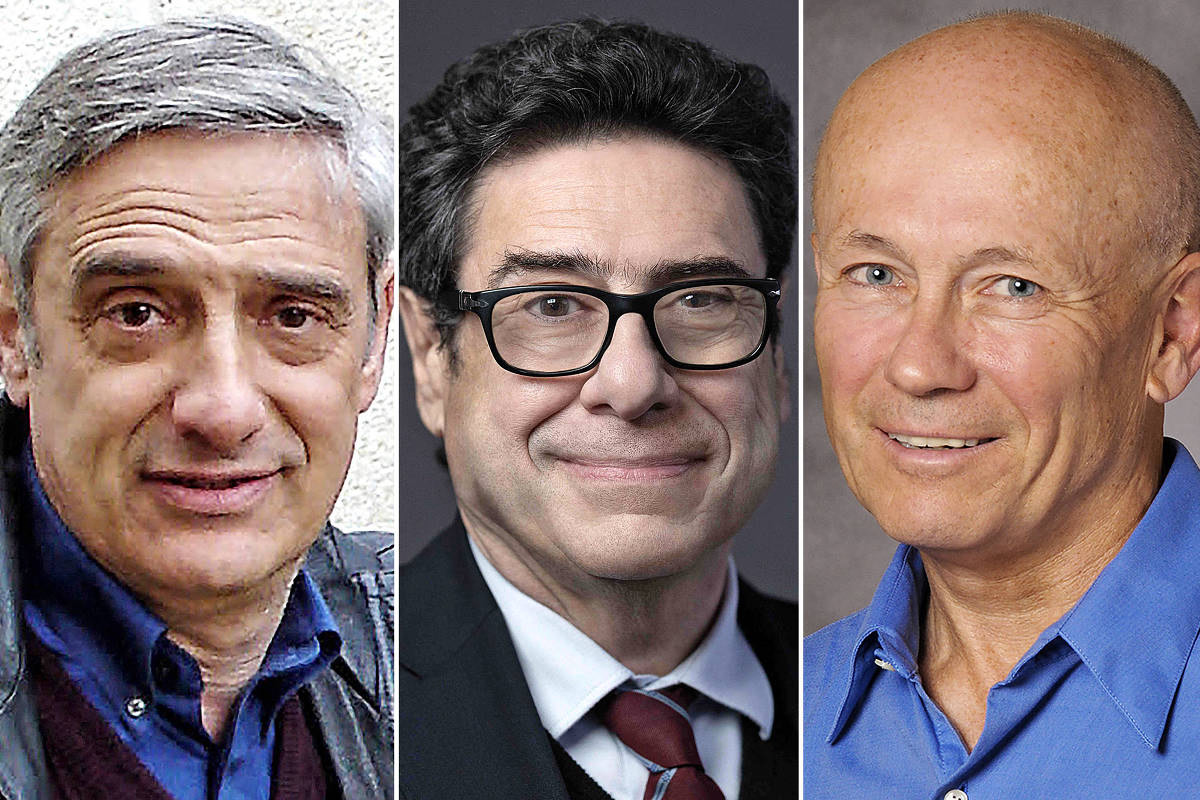
STOCKHOLM, Sweden – The Royal Swedish Academy of Sciences announced Monday that the Nobel Prize in Economic Sciences will be awarded to Joel Mokyr, Philippe Aghion, and Peter Howitt for their significant contributions to understanding how innovation and technological progress fuel economic growth.
The prize, which recognizes work that has improved living standards, health, and quality of life globally, will be split between the three economists. One half will go to Joel Mokyr, a Dutch-born professor at Northwestern University in Illinois. The other half will be shared by Philippe Aghion, a French-born economist with affiliations in France and the UK, and Peter Howitt, a Canadian-born economist from Brown University.
Mokyr is being honored for his use of historical evidence to demonstrate that for innovation to lead to sustained economic growth, there must be scientific explanations for why these innovations are effective. The Academy noted that prior to the Industrial Revolution, this often scientific understanding was lacking, hindering the development of new discoveries. Mokyr also emphasized the importance of societies being open to new ideas and embracing change.
Aghion and Howitt are recognized for their development of a model explaining sustained economic growth through a process known as "creative destruction." This occurs when new, advanced products enter the market, displacing older versions and potentially leading to stagnation if established interests block innovation. Their work highlights the need to manage the conflicts arising from this process constructively to ensure continued progress.
"The laureates' work shows that economic growth cannot be taken for granted," said John Hassler, chairman of the Committee for the Prize in Economic Sciences in Memory of Alfred Nobel. "We must uphold the mechanisms that underly creative destruction, so that we do not fall back into stagnation."
Their research comes at a time when artificial intelligence is emerging as a powerful force in the global economy, with the potential to drive another technology-led boom. However, the laureates also cautioned against policies that could impede growth, such as protectionism, tariffs, and restrictions on immigration and trade.
Mokyr, who was vacationing in Western Michigan, learned of his award after missing congratulatory calls and emails while preoccupied with news of released hostages. He expressed optimism about future economic growth, citing humanity's capacity to harness natural forces and discover new phenomena, including AI and genetic engineering.
Aghion described the award as a "huge surprise" and noted that while AI has immense growth potential, competition policies are needed to prevent AI innovators from stifling rivals. He also urged European countries to foster their own high-tech innovations.
Howitt, when informed of the award, expressed similar sentiments, emphasizing that while his work on creative destruction built on earlier theories, the inherent conflict in economic growth, including job losses due to innovation, still needs resolution.
The laureates stressed that sustained economic growth is not guaranteed and requires proactive measures to foster science-based innovation, embrace creative destruction, and maintain an open society.