Russia offers energy support to China as Iran war disrupts global supplies
Russia's Foreign Minister said Moscow can help fill energy gaps for China amid Middle East conflict and rising oil prices.
9:45 PM
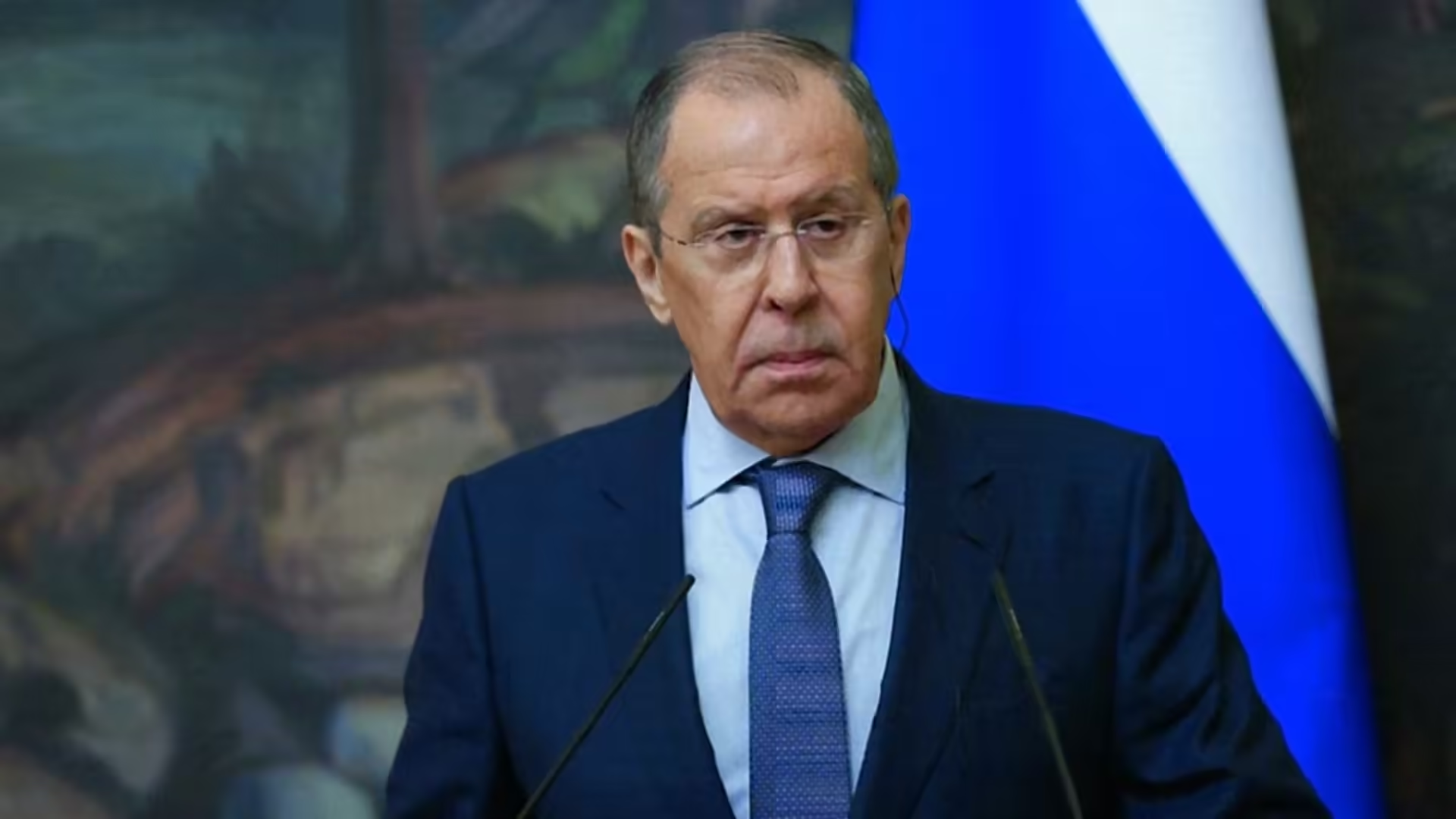
Russia has offered to assist China in addressing potential energy shortages stemming from the ongoing war in the Middle East, according to statements made Wednesday by Russian Foreign Minister Sergei Lavrov.
"Russia can certainly fill the resource gap that has arisen in China and other countries interested in working with us on an equal and mutually beneficial basis," Lavrov said, according to comments reported by Russian news agency Interfax.
The Middle East conflict has intensified geopolitical divisions and threatened global commodity supplies. U.S. military operations against Iran have sent global oil and gas prices soaring. Lavrov also commented on Russia and China's capacity to withstand the economic impact of what he characterized as "aggressive" U.S. military operations, stating that both nations possess the necessary capabilities to manage the fallout.
China, despite being one of the world's largest oil importers, has demonstrated resilience to the energy shock caused by the effective closure of the Strait of Hormuz. The waterway, through which 9 percent of global oil supply typically passes, has been largely shut down by the conflict.
China's ability to weather the disruption stems from multi-year efforts to diversify its energy mix and build strategic reserves. The country maintains a stockpile of over 1.2 billion barrels of oil and has developed a varied portfolio of energy resources including coal, renewables, and liquefied natural gas. This diversification has made China less vulnerable to upheaval in the Persian Gulf compared to other major importers.
The outbreak of the Iran war in late February sparked a sharp sell-off across most regions and asset classes in March as investors assessed the conflict's potential impact on inflation and economic output. China proved to be an exception to this broader market decline, with its capital markets showing low correlation with global sell-offs in recent weeks.
Beyond traditional energy sources, China is positioned to benefit from the global shift toward clean technologies accelerated by the energy crisis. China leads the world in battery, solar panel, and electric vehicle exports. As Asian nations scramble to conserve energy and bolster dwindling reserves, demand for renewable energy products is forecast to rise. Gasoline prices in the U.S. and Europe have spiked amid the temporary ceasefire that continues to teeter.
China's clean energy infrastructure includes massive solar installations on the Tibetan Plateau, where panels cover an area seven times the size of Manhattan. Wind turbines and hydropower dams in the region generate electricity that is transmitted more than 1,500 kilometers to power businesses, homes, and data centers used in China's artificial intelligence development.