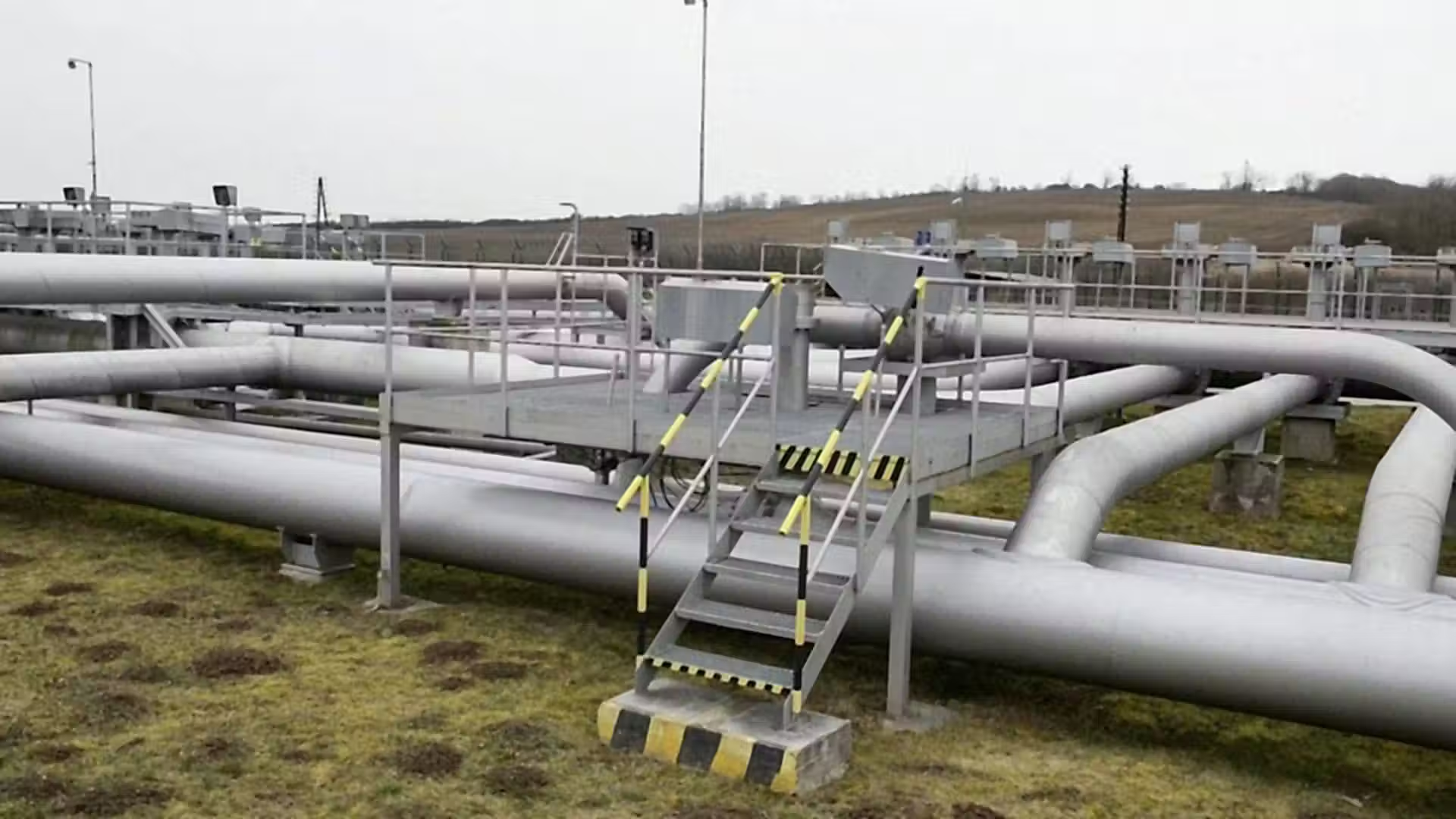
The United States has extended exemptions from its sanctions that allow Hungary and Slovakia to keep buying Russian oil, and Hungary to keep paying for Russian gas, the two governments said on Tuesday.
The U.S. Treasury's Office of Foreign Assets Control (OFAC) informed Hungary that it had extended until March 19, 2027, an authorization for oil company MOL, the Hungarian Foreign Ministry said in a statement reported by TASS. The previous arrangement was valid until Nov. 21, business daily Vedomosti reported.
The authorization covers transactions with Lukoil and Litasco needed to buy oil delivered through the Druzhba pipeline, or to fulfill existing contracts, according to the ministry.
Vedomosti reported that the transactions must not involve U.S. individuals or companies, must not use the U.S. financial system and must not benefit other blocked persons. Vedomosti attributed the decision to the U.S. Justice Department, while TASS and RIA Novosti said it came from OFAC.
OFAC also extended its guidance for Hungarian energy group MVM on financial transactions linked to Russian natural gas delivered through the TurkStream pipeline, the ministry said. "The guidance may be extended further following the expiration of the period established in March," it said, according to TASS.
Slovakia separately secured a 120-day extension of its own exemption, which lets it continue buying and paying for Russian oil without the risk of U.S. sanctions, the Slovak Economy Ministry said, according to Interfax.
The exemption was first granted in October 2025 for one year and was due to expire on Nov. 21.
Deputy Prime Minister and Economy Minister Denisa Saková said the aim was to prevent U.S. sanctions from threatening oil supplies to Slovakia and to keep its refinery operating without interruption.
"We managed to obtain an additional 120 days," Saková said, adding that the extension gave more certainty over supplies and time to continue diversifying sources.
The ministry said the extension did not change its long-term goal of reducing dependence on a single oil supplier and that it would continue talks with international partners on alternative sources.
Oil shipped through Druzhba to Hungary and Slovakia made up 26% of the European Union's 1.5 billion euros of Russian fuel purchases in July, Vedomosti reported, citing the Centre for Research on Energy and Clean Air.
The extensions came a day after the EU expanded its sanctions lists to include Russian refineries and more than 40 banks, Argumenty i Fakty reported.