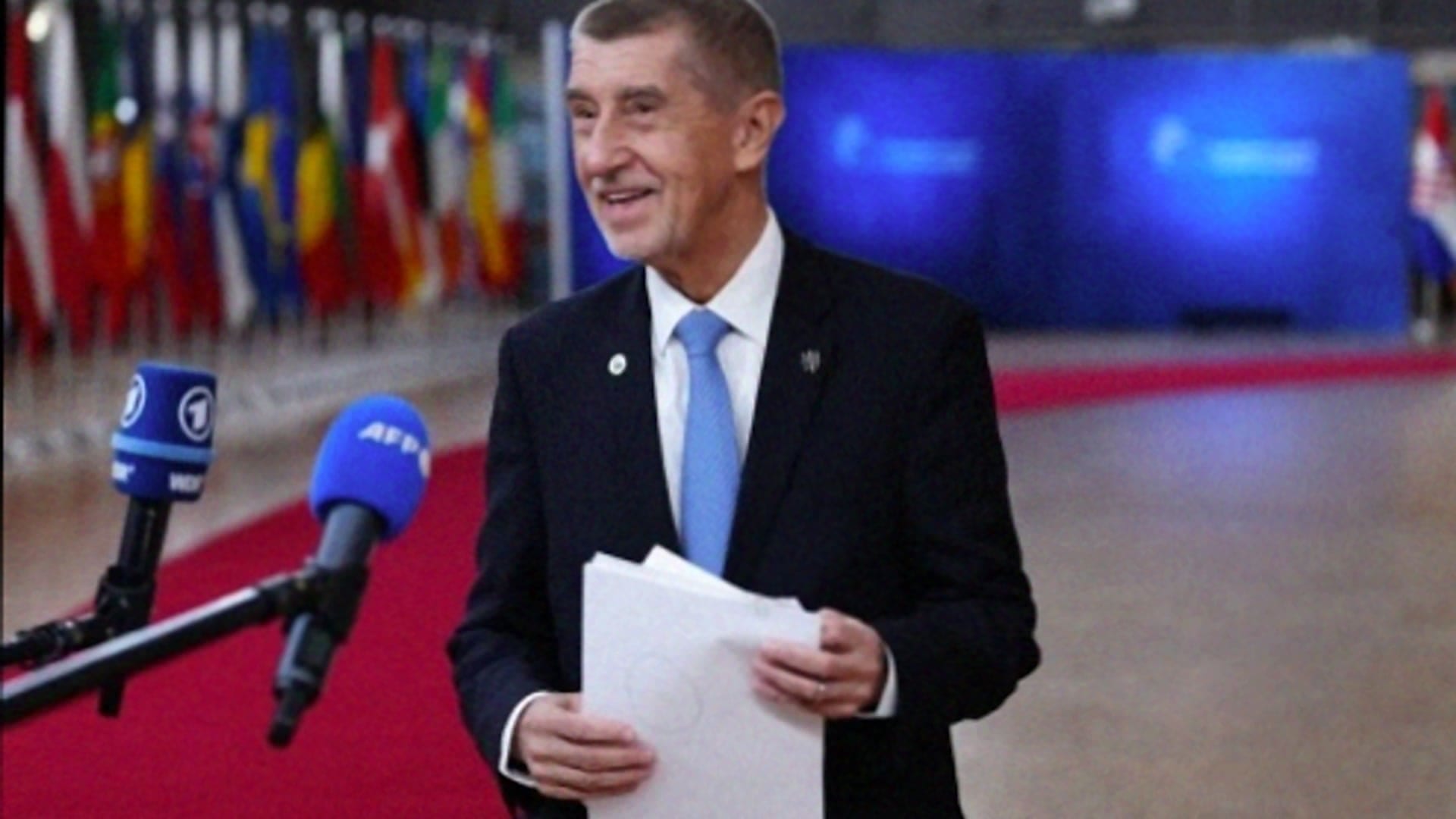
Czech Prime Minister Andrej Babiš rejected the European Union's proposed multiannual budget Thursday, saying it would leave the Czech Republic 3.2 billion euros worse off than current funding levels.
Babiš spoke after an extraordinary EU summit in Brussels where member states failed to reach agreement on the bloc's next long-term budget. European Council President António Costa announced that 24 countries supported a 45 billion euro loan for Ukraine, but did not specify which states opposed it. Czech Republic, Slovakia and Hungary have long opposed the loan.
"Nothing was achieved," Babiš said when asked whether the summit made progress on a budget deal.
The Czech leader criticized the proposed distribution of funds between member states and central EU programs. Under the current budget period, member states receive 62 percent of funds while central programs account for 38 percent. The new proposal would reverse this ratio, with member states receiving only 46 percent.
Babiš said the Czech Republic receives only 1.28 percent of funding from central programs, making an increase in their share disadvantageous. "Mainly the large old member states are successful. That means they, even though they are net contributors to the EU budget, get additional money through these central programs," he said. These programs support research, education, digitalization and environmental initiatives.
Babiš also criticized planned increases in EU administrative spending. A group of 17 cohesion-focused countries, including the Czech Republic, is seeking a 7 billion euro increase in cohesion policy funding to offset planned cuts. Babiš argued the money could come from administrative costs instead.
German Chancellor Friedrich Merz had linked the budget negotiations to Ukraine financing before the summit, conditioning Germany's support for the next seven-year budget on all 27 member states committing to financial aid for Ukraine in 2027 and beyond. Babiš rejected this linkage, saying Ukraine support should not be part of EU budget discussions.
"We are negotiating here about money for member states, for EU citizens, and I am mainly negotiating money for the Czech Republic and our citizens," Babiš said.
Babiš acknowledged Ukraine's situation is serious, citing remarks by President Volodymyr Zelensky to the BBC about Ukraine's defense challenges. "Europe should be more actively involved in solving this conflict, but so far it does not look like that at all," he said.
Budget negotiations will continue at an EU summit December 17-18 in Brussels. European Council President Costa aims to reach agreement by year-end, though differences between member states suggest talks could extend several days. Babiš expressed skepticism about prospects, saying cohesion countries' demands were not high and compromise could have been reached at this summit.