The European Court of Justice ruled Tuesday that Hungary's anti-LGBTQ legislation violates European Union law and the founding values of the bloc, marking an unprecedented legal finding against a member state.
The law, introduced by Viktor Orbán's government in July 2021, banned the public representation of homosexuality and gender identity to minors in education, media and advertising. Officials presented the measure as child protection legislation.
The court found the law breaches Article 2 of the EU Treaty, which establishes the bloc's foundational values including respect for human rights and dignity. The ruling also identified violations of EU rules on non-discrimination based on sex and sexual orientation, respect for private and family life, freedom of expression and information, and free provision of services.
Judges in Luxembourg determined the law does not serve to protect children but instead stigmatizes and marginalizes LGBTQ people. Hungary's legal defense based on national identity and Christian values was rejected by the court.
The case was brought by the European Commission and represents the first direct action against a member state on these grounds. Sixteen EU member states—including France, Germany, Spain and the Netherlands, but not Italy—intervened in support of the Commission against Hungary. The European Parliament also backed the action.
The law's ambiguous language led to widespread censorship of books and films depicting LGBTQ themes. Materials were wrapped in cellophane and packaged as prohibited goods solely because they addressed homosexuality or non-binary gender identity.
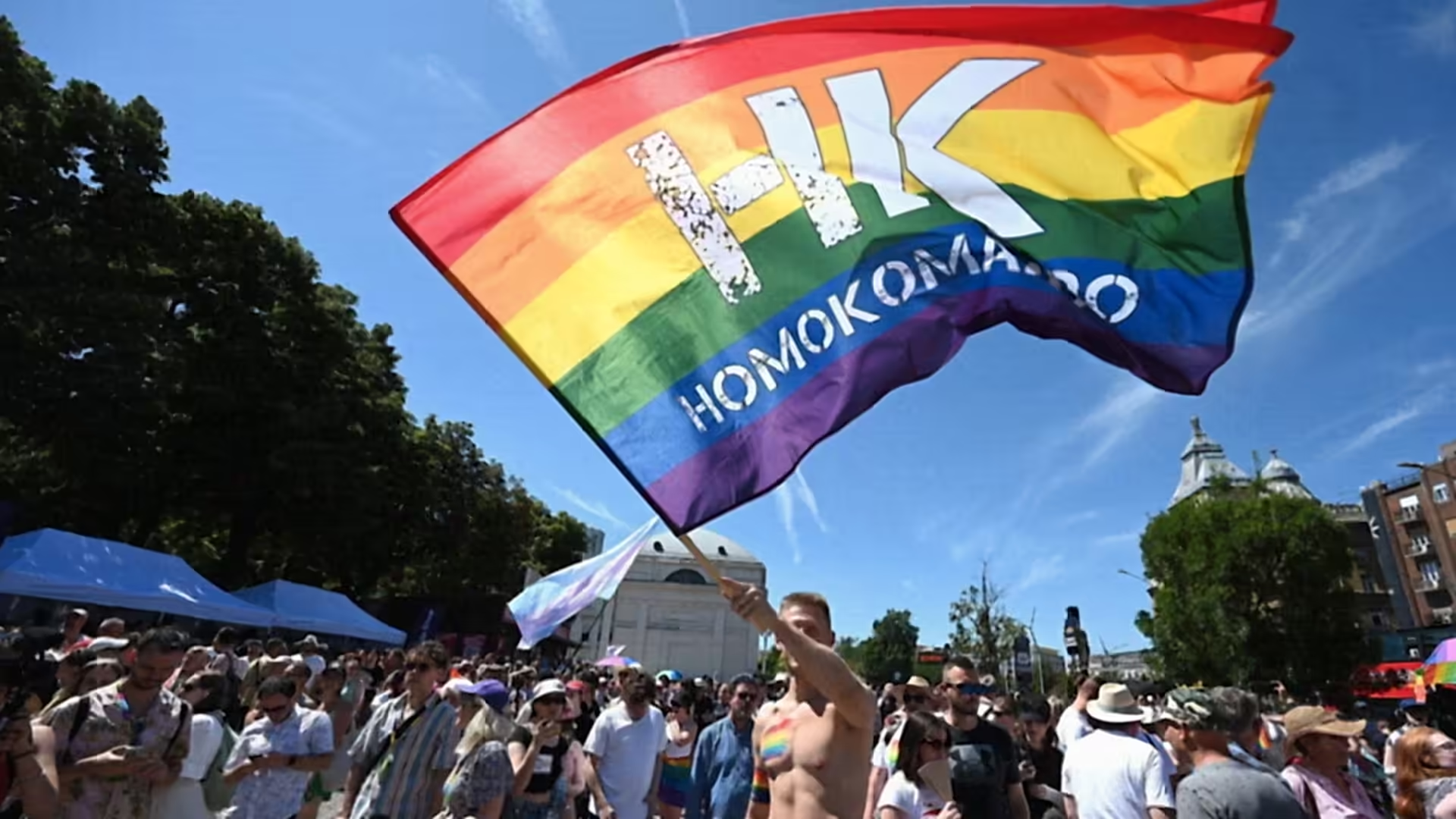
During Orbán's 16-year tenure, policies toward the LGBTQ community progressively hardened. In recent years, the government banned Pride marches, though Budapest's 2025 Pride march proceeded regardless. Authorities also authorized facial recognition technology for police to identify participants at such events.
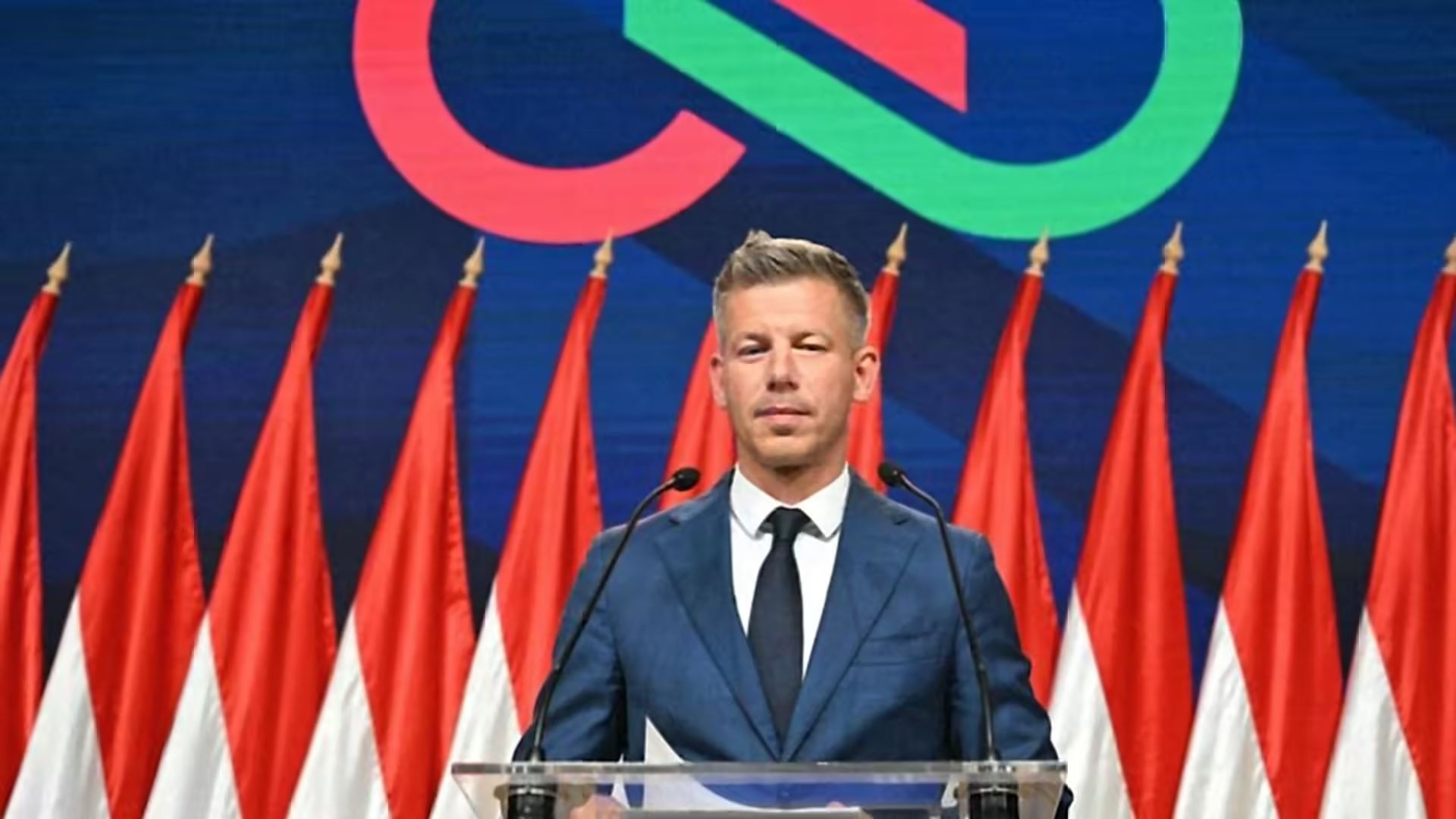
The ruling comes nine days after Hungarian voters ended Orbán's continuous rule through elections. Orbán remains in office pending formation of a new government.