Ford takes $19.5 billion hit as it scales back electric vehicle production
Ford will stop making large electric vehicles and pivot to hybrids and gas-powered models, taking a $19.5 billion writedown amid weakening EV demand and Trump administration policy shifts.
December 15, 2025 - 08:37 PM ET • 2 min read
Ford Motor announced Monday it will scale back electric vehicle production and take a $19.5 billion hit to cover the costs of a major strategic shift toward hybrid and gas-powered vehicles.
The Dearborn, Michigan-based automaker cited lower-than-expected demand for battery-powered vehicles, high production costs, and recent regulatory changes under the Trump administration as reasons for the change. The company said the business case for large-sized EV models has "eroded" and it is "redeploying capital into higher-return growth opportunities."
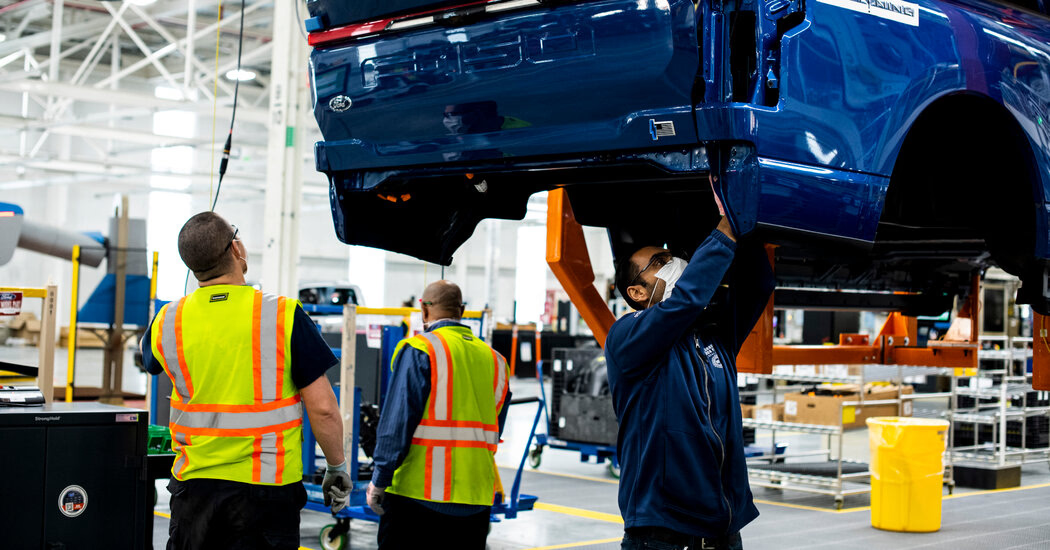
Ford will discontinue the F-150 Lightning electric truck and instead produce an extended-range electric model, known as an Erev, which uses a gas-powered generator to recharge the battery. The company is also scrapping a next-generation electric truck codenamed the T3 and planned electric commercial vans.
Chief Executive Jim Farley said in a statement that the shift reflects changing operating conditions. "This is a customer-driven shift to create a stronger, more resilient and more profitable Ford," he said.
The announcement represents the most dramatic example yet of the auto industry's retreat from battery-powered vehicles. General Motors and Stellantis have also recently changed their plans to place greater emphasis on combustion engine vehicles and hybrids.
Ford's pivot comes as the Trump administration has slashed government incentives for electric vehicles while promoting fossil fuels. This month, the administration eased fuel economy rules, removing a key regulatory driver for EV adoption.
The company expects its global mix of hybrids, extended-range EVs, and pure electric vehicles to reach 50 percent by 2030, compared with 17 percent today. Ford said it will eventually hire thousands of workers as part of the shift, though some layoffs are expected at a jointly owned Tennessee battery plant in the near term.