German Chancellor Merz says rift has opened between U.S. and Europe
Friedrich Merz acknowledged divergences with Washington at Munich Security Conference, calling for renewed transatlantic trust and European sovereignty.
16 hrs ago
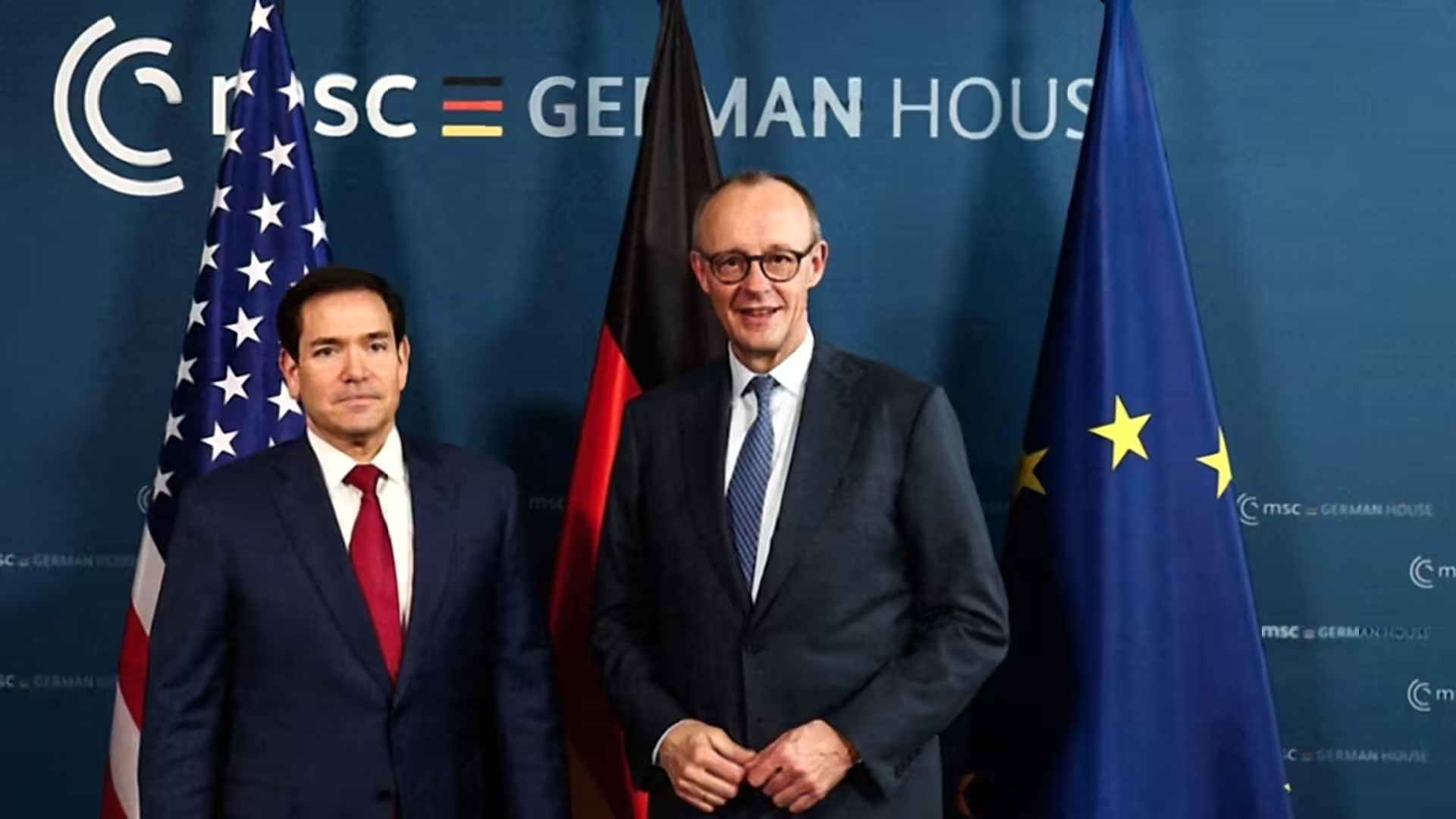
German Chancellor Friedrich Merz opened the 62nd Munich Security Conference on Saturday by acknowledging a "fracture" between the United States and Europe, one year after Vice President JD Vance delivered a sharp rebuke to European allies from the same stage.
Merz said Vance was correct in highlighting divergences across the Atlantic, but rejected the cultural framework underlying the American criticism. "The cultural battles of the MAGA movement are not ours," Merz said, referring to the political movement associated with the Trump administration.
The German leader framed the rift not as a terminal break but as a call for European action. "The transatlantic alliance is no longer to be taken for granted," Merz stated, adding that Europe must become "more sovereign: militarily, economically and technologically."
Merz emphasized that neither side could operate effectively alone. "In an era of great power rivalry, even the United States alone would not be sufficiently strong," he said. "Therefore we must recover and revive together the transatlantic trust."
The chancellor called for a "new transatlantic pact" to repair confidence between the two regions. He noted that "Europe is doing its part" in this effort.
French President Emmanuel Macron, who was scheduled to speak later Saturday, has signaled alignment with the European position. According to reports, Macron stated that "everyone should be inspired by us and should stop criticizing us."
U.S. Secretary of State Marco Rubio, arriving in Bavaria for the conference, framed the moment differently. "We live in a new phase of geopolitics; everyone must review their role," Rubio said, indicating the Trump administration's view that existing arrangements require reassessment.
The conference agenda includes discussions on strengthening European defenses within NATO, the war in Ukraine, and Middle Eastern crises including the Iranian question. The gathering of world leaders addresses foreign policy and security issues across Europe and globally.
Merz's remarks come amid ongoing tensions between Washington and Brussels, including unresolved questions over U.S. interest in Greenland and broader disagreements over trade, defense spending, and strategic priorities.