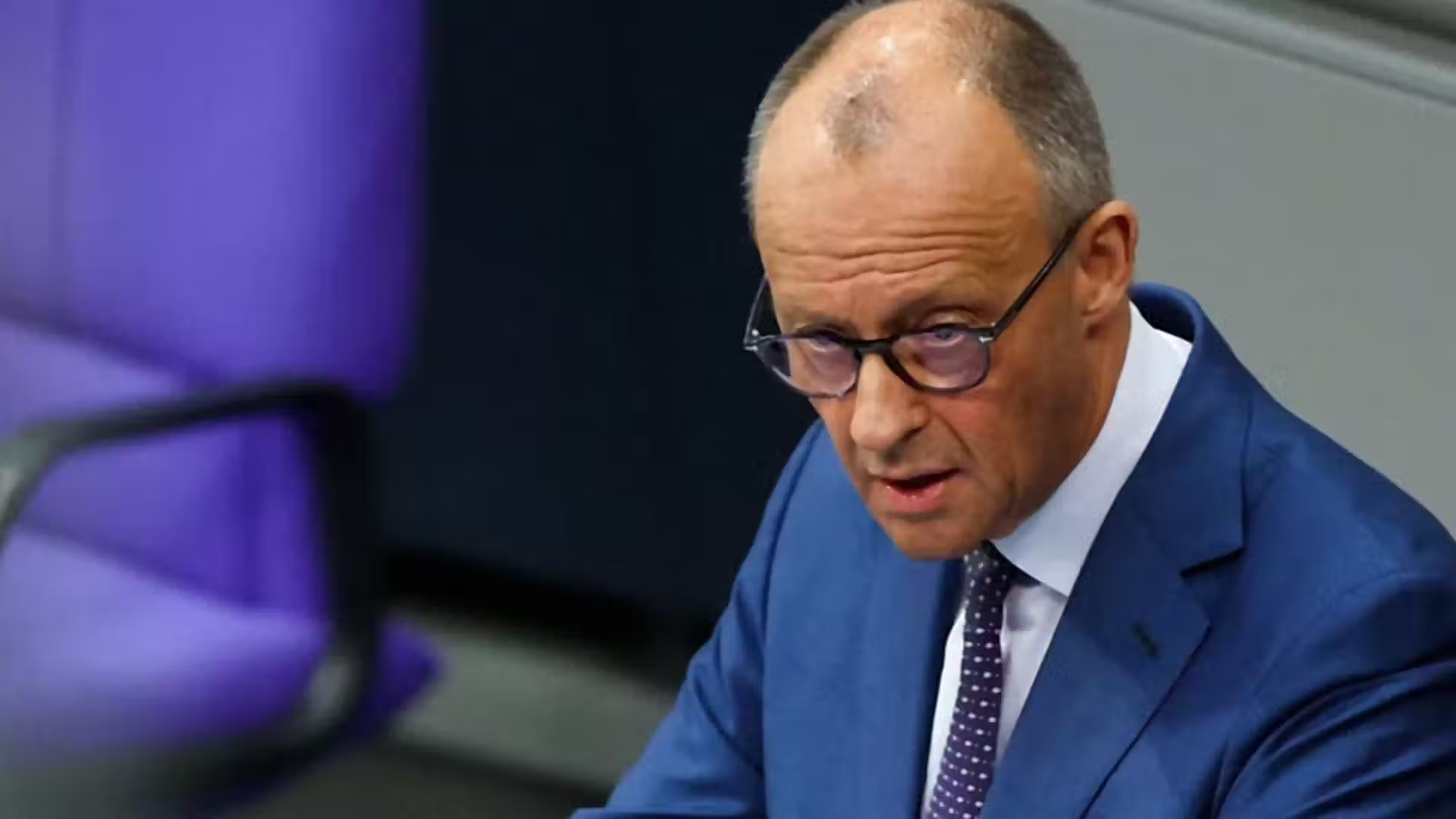
Germany's governing coalition agreed on Wednesday to cut the electricity tax to the European Union's minimum from Jan. 1 and to introduce a temporary cap on fuel prices, after overnight talks between Chancellor Friedrich Merz's CDU/CSU and the Social Democrats.
The tax will fall from 2.05 cents per kilowatt-hour to 0.1 cent, initially for one year. "A permanent reduction is planned," the parties said in a joint statement, according to Czech news agency CTK. Reuters reported that a permanent cut would depend on a matching compensation mechanism in the 2028 budget.
For a three-person household using 4,000 kilowatt-hours a year, the cut means savings of about 7.75 euros a month, according to comparison website Verivox. A single-person household using 1,500 kilowatt-hours a year would save about 3 euros a month. Savings for businesses will be significantly higher.
Germany already cut the electricity tax earlier this year for energy-intensive industrial companies and for agricultural and forestry businesses. Merz had pushed to extend the reduction to all remaining companies and households.
Finance Minister Lars Klingbeil, co-leader of the SPD, had argued that the budget did not have enough money for the measure, which was calculated to cost the state 5.4 billion euros a year. The coalition talks began on Tuesday afternoon and ran through the night.
Reuters reported that the cut will be financed from surplus funds set aside for renewable energy subsidies. Demand for those subsidies is expected to fall next year because the war with Iran has driven up electricity prices.
The Bundestag budget committee approved the draft 2027 federal budget last Friday, with spending of 560.9 billion euros. Committee approval usually ends the government's budget talks, but the electricity tax dispute had been left unresolved.
The coalition also agreed to set a maximum permitted price for fuel for three months from the start of the new year. How the cap will work is not yet clear, CTK reported.
The SPD rejected a proposal from Economy Minister Katherina Reiche of the CDU under which the cap would apply only if diesel and petrol prices rose more than five percentage points above the average increase in the rest of the EU for three weeks in a row. Such a situation has never occurred before, the DPA news agency reported.
A three-month cut in energy tax on diesel and petrol that took effect in early October expires at the end of the year. It was designed to lower pump prices by almost 17 cents per liter.
Fuel prices rose after the United States and Israel attacked Iran at the end of February. The war has disrupted shipping through the Strait of Hormuz, a key route for oil exports from the Persian Gulf.