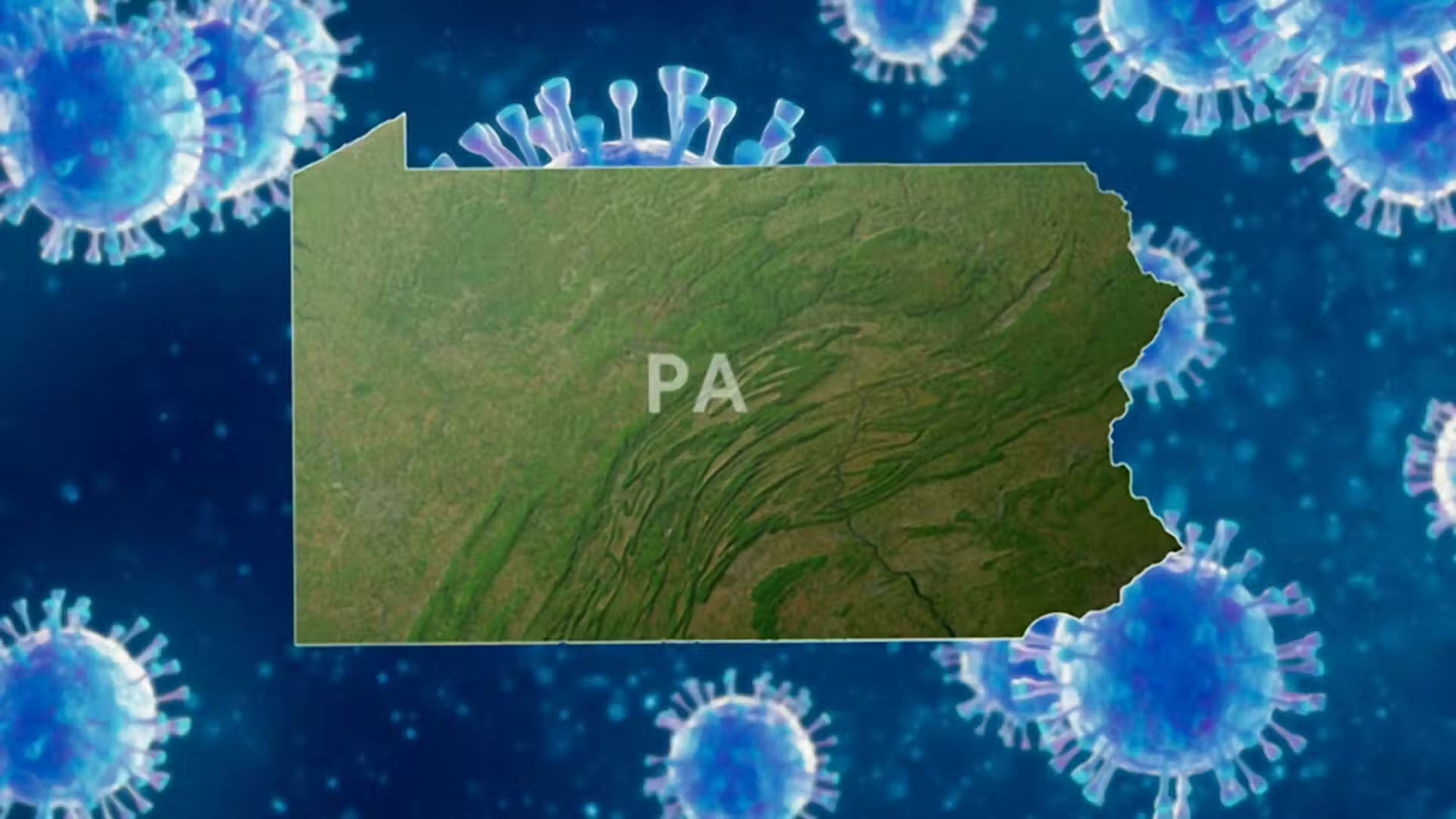
Pennsylvania reported its eighth measles death this year after an unvaccinated Clinton County resident tested positive for the virus, the state Department of Health announced Wednesday.
The death brings the state's confirmed measles-associated deaths to eight. Previous deaths were reported in Lancaster County (3), Jefferson County (2), Mifflin County (1) and Montour County (1). Officials are investigating a reported death of a Franklin County resident in October but have not yet confirmed it meets criteria for a measles-associated death.
The state reported 28 new measles cases since Monday, with nearly half in Lancaster County. The total number of confirmed cases in Pennsylvania this year reached 1,589 across 46 counties, with 315 hospitalizations. Measles cases among vaccinated individuals account for less than 1% of cases, with five confirmed.
Lancaster County remains the hardest hit with 545 cases. Other affected counties in the region include Chester County with 97 cases, Lebanon County with 23, Schuylkill County with 7, Montgomery County with 3, and Lehigh County with 2.
Measles is highly contagious and spreads through breathing, coughing or sneezing. The virus remains infectious in the air and on surfaces for up to two hours. Symptoms begin with fever, cough, runny nose and red, watery eyes, followed by a rash that starts on the head and spreads downward. Symptoms can appear 7 to 21 days after exposure. About 1 to 3 per 1,000 measles cases result in death, and nearly 20% of infected people are hospitalized.
The state Department of Health has administered more than 11,500 measles, mumps and rubella vaccine doses this year, including more than 7,200 at 269 pop-up vaccination clinics in affected communities since the outbreak began in late April. Healthcare providers administered more than 56,000 doses in September and more than 62,000 in October, compared with the typical monthly average of about 25,000. Nearly 27,000 doses have been given in November.
The department recommends an additional early dose for infants ages 6 to 11 months who live in or travel to counties with sustained community transmission. Children 12 months and older who have not received any dose should get one now and a second dose at least 28 days later. Adults with only one dose or no vaccination records should consult a healthcare provider or pharmacist about vaccination.