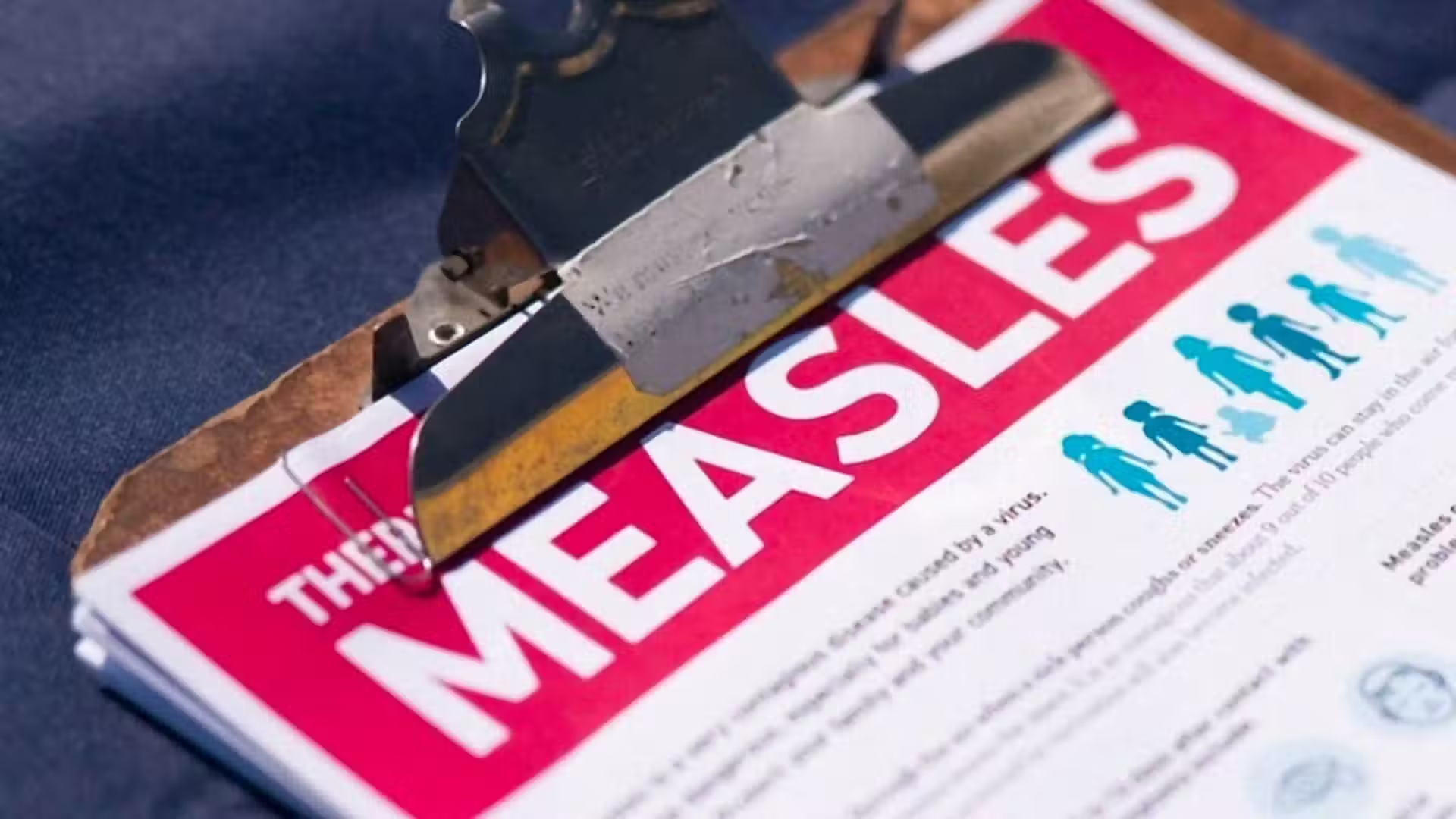
The United States has lost its status as a country where measles is eliminated, after the virus reestablished regular transmission and outbreaks stopped ending within a year, researchers with direct knowledge of the deliberations told KFF Health News.
The Pan American Health Organization reached the conclusion this week and planned a public announcement Tuesday. Its assessment drew on two analyses, one by the Centers for Disease Control and Prevention and one by an independent group of measles experts. Researchers had expected the decision after an outbreak in Utah passed the one-year mark in June.
The United States reported its highest measles case total in more than 30 years. More than 830 people have been hospitalized with measles in the past two years, according to CDC data, and outbreaks have sickened more than 8,000 people at a cost of roughly $125 million in medical care, response and lost productivity, Johns Hopkins University researchers estimated.
States have reported 13 measles-associated deaths, including a 7-month-old in New York and infants in Pennsylvania and Wisconsin in recent months. Babies are typically not vaccinated before their first birthday. The CDC's measles dashboard counts four fewer deaths than states have reported.
The CDC and PAHO declared measles transmission eliminated in the United States in 2000. Elimination allows occasional outbreaks, because the disease still circulates worldwide, but requires that they end within a year. Two doses of the measles, mumps and rubella vaccine prevent about 97% of infections, and childhood vaccination rates have declined steadily since the COVID-19 pandemic began.
"It's a very sad moment," said Anne Schuchat, an epidemiologist and former CDC deputy director who was not involved in PAHO's decision. "Having top leadership disseminating rumors, disinformation and flat-out falsehoods has been unforgivable."
HHS spokesperson Emily Hilliard said the resurgence reflects vaccination gaps "that opened years before this administration," called claims that the department is suppressing measles information false, and said Health Secretary Robert F. Kennedy Jr. and the CDC have provided about $100 million in additional outbreak funding. White House spokesperson Allison Schuster said the president and the secretary have "repeatedly encouraged measles vaccination."
Scientists have faulted the administration's response. A West Texas outbreak that began shortly after President Donald Trump took office in 2025 became the largest in the country since 1992, spread to Mexico and at least three other states, sickened more than 4,500 people and killed at least 16. The administration has cut millions of dollars from state childhood immunization programs and ended funding for research on vaccine hesitancy.
Several CDC measles reports have been delayed or not published in the agency's Morbidity and Mortality Weekly Report, according to multiple CDC officials. "We have two CDCs now," one unnamed official said, describing career staff on one side and political appointees on the other.
To regain elimination status, current outbreaks must end and future ones must be contained within a year. "Bigger fires create more embers, and any one of those embers can seed another fire," said Paul Rota, a microbiologist and former CDC official, who said that point is not yet in sight with outbreaks growing in several states.