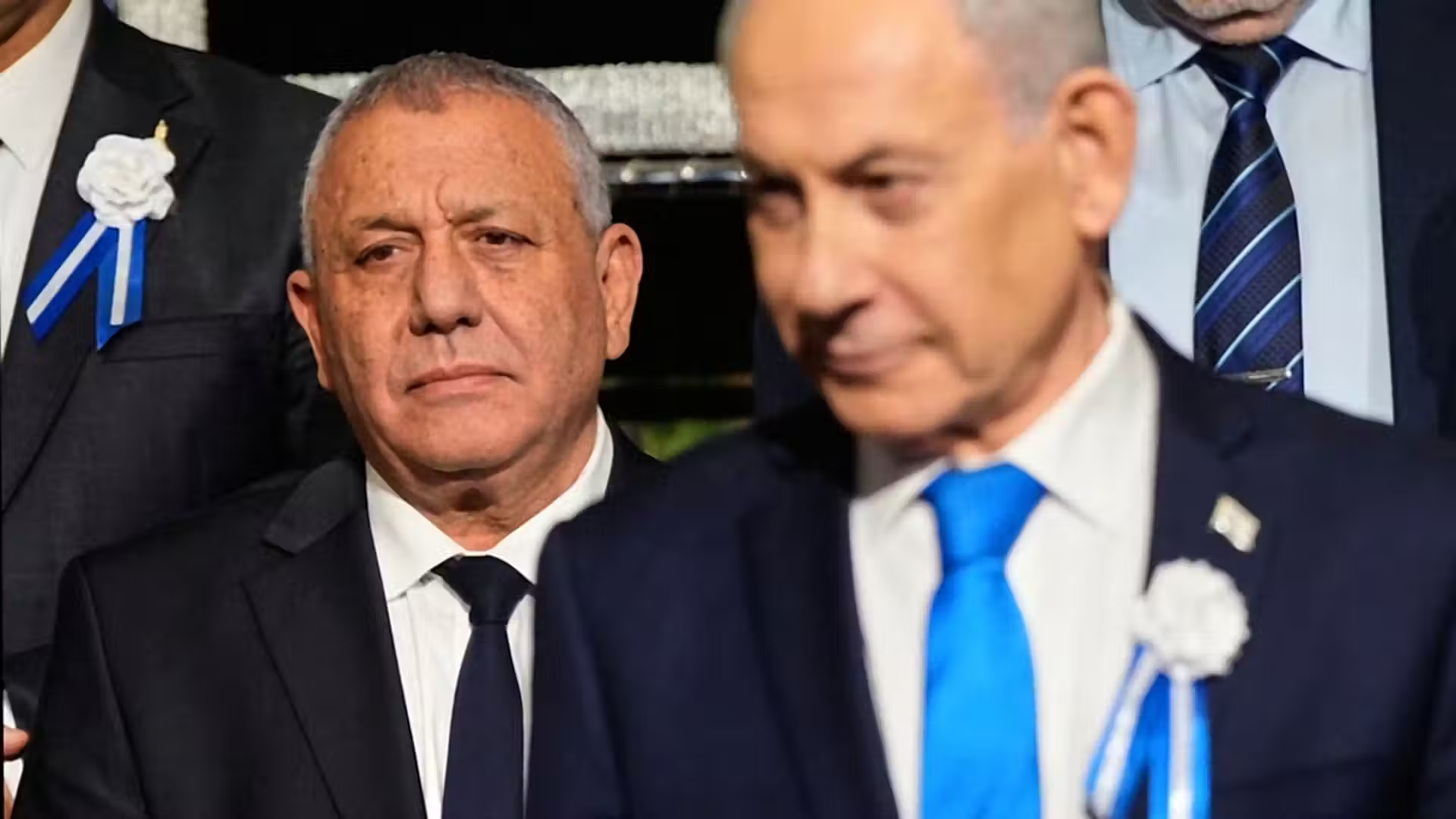
Prime Minister Benjamin Netanyahu's party has repeatedly claimed Israel's Oct. 27 election was "stolen" by Arab-led parties, possibly with foreign assistance, but those claims are crumbling as the longest-serving Israeli leader tries to cling to power.
Israeli authorities say they have found no evidence to support the Likud party's claims. Israel's attorney general is investigating revelations that unsubstantiated claims of voter bribery originated with Netanyahu's own staff. There are no signs Netanyahu was personally involved in wrongdoing.
Early on election day, Israeli police announced arrests of three suspects in a Bedouin Arab town and said they had confiscated envelopes filled with cash. Police said the men were suspected of paying people to vote for the Arab-led Ra'am party. Netanyahu immediately called it a "serious incident" and demanded a police investigation. Four additional suspects were arrested days later, and the incident became a cornerstone of the Likud campaign to discredit the vote, in which Arab-led parties jumped from 15 seats to 19 seats in the 120-seat Knesset.
But the accusations quickly fell apart. A judge ordered all of the men released within days due to a lack of evidence, and none were charged. On Tuesday, after meeting with Israel's internal security service, the Shin Bet, the country's Election Committee said "there is no evidence that bribes were paid to voters on a scale that could have affected the election results." The committee said its investigation is ongoing but shifting to examine allegations of foreign influence, another Likud claim.
Unsubstantiated allegations against Arab voters can be traced directly to Netanyahu's office and allies, according to recent revelations. The information appears to have originated with Danny Greenberg, a former adviser to the prime minister on Arab affairs. Greenberg told Israel's Yediot Ahronoth newspaper that he received a tip from a member of the Arab-led Joint List party whom he declined to identify. He said he then passed information to Netanyahu's chief of staff, Ido Norden.
Netanyahu's office said Norden was "doing his duty as a law-abiding Israeli citizen" by reporting a possible crime to police and that his office had no further involvement. Israel's police commissioner said Monday he would investigate the police handling of the affair. But late Monday, Israel's attorney general ordered police to freeze the probe. Instead, she said she will hold discussions about a broader investigation, including a look at the communications between Netanyahu's office and police close to election day.
Netanyahu's bloc of religious and nationalist parties lost its parliamentary majority in the election, but Netanyahu remains in office as caretaker prime minister. His chief rival, Gadi Eisenkot, is moving ahead with efforts to form a new government and oust Netanyahu. Eisenkot's allies installed their own parliament speaker on Tuesday, clearing the way for Eisenkot to reverse some of Netanyahu's more controversial policies while he continues to try to cobble together a majority coalition in the Knesset.
Eisenkot faces his own struggles because he may be forced to rely on Arab-led parties, a potentially risky move. Netanyahu has sought to head off any alliance between Eisenkot and the Arab-led parties, pejoratively referring to them as "terror supporters." Instead, he has called on Eisenkot to join him in a government under Netanyahu's leadership.
Eisenkot said this week that the actions of Netanyahu and his inner circle pose a "tangible, direct and immediate threat to Israeli democracy." Yoav Dotan, a law professor at Hebrew University, said the Likud party's attempts to discredit the vote were part of a larger pattern. Netanyahu has frequently made incendiary statements against Arab voters during elections. "It's not surprising, because it's not a bug, it's a feature in his strategy during this election," Dotan said. "The only point that might surprise someone is that it was pretty clumsy."