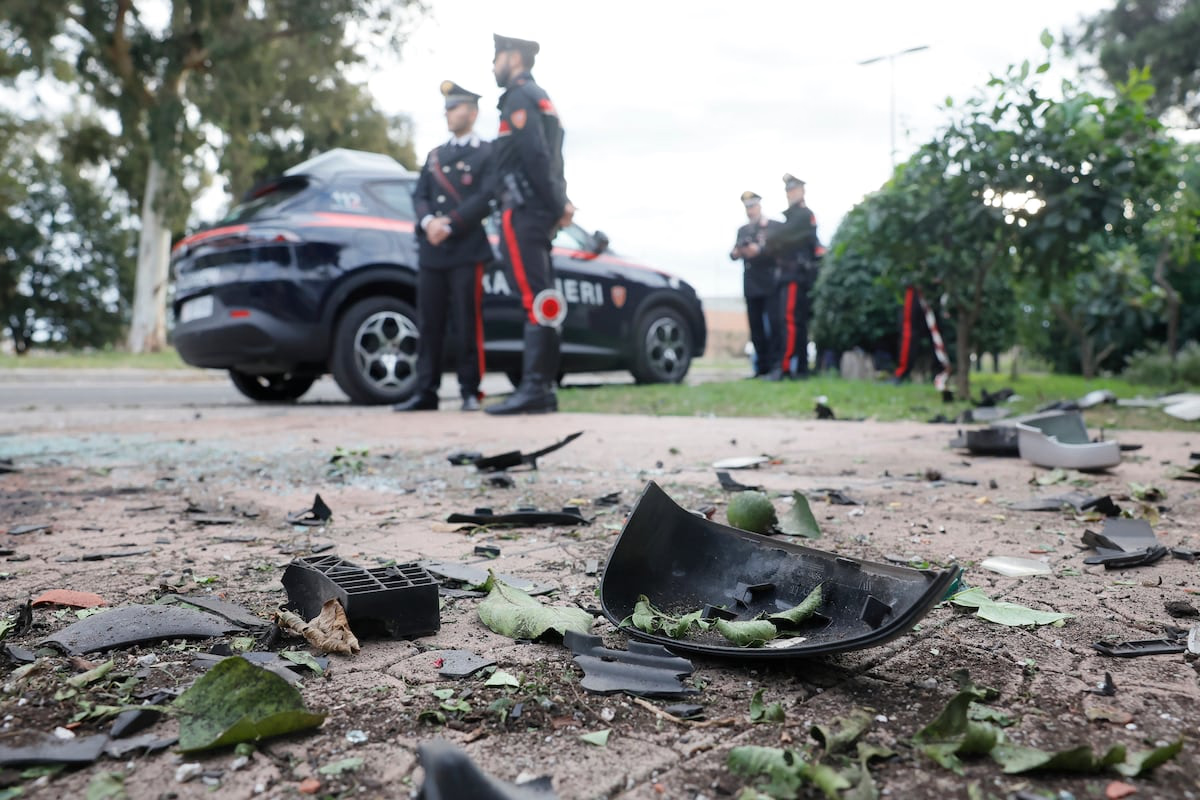
An explosion late Thursday severely damaged two vehicles parked outside the home of prominent Italian investigative journalist Sigfrido Ranucci, in an incident that authorities are treating as a serious act of intimidation.
The blast occurred around 10:00 p.m. local time near Ranucci’s residence in Campo Ascolano, close to Pomezia, south of Rome. The explosive device, which police sources suggest contained about one kilogram of material, destroyed the reporter’s car and damaged a second vehicle belonging to his daughter.
Ranucci, the host of the historical investigative program “Report” on public broadcaster RAI 3, said he heard a “tremendous roar.” Although no one was injured, the journalist noted the potential for lethality. "My daughter passed in front of my car a few minutes before the explosion; they could have killed her," he stated, while the program’s official social media accounts warned that the explosion’s power could have killed anyone passing by.
Investigation and Official Response
The Rome Public Prosecutor’s Office immediately opened an investigation, with officials operating under the hypothesis of the attack employing a “mafia method.” Police analysis suggested the rudimentary device may have been placed near the car, possibly detonated by lighting a fuse rather than remote control.
Interior Minister Matteo Piantedosi condemned the incident as an attack on press freedom and ordered that police protection measures for Ranucci be strengthened to the maximum level.
Prime Minister Giorgia Meloni was among the first political leaders to condemn the bombing, expressing “full solidarity and the most energetic condemnation of the grave act of intimidation.” Meloni stated that the “freedom and independence of the media are essential values of our democracy.”
History of Threats and Controversy
Ranucci has faced constant threats due to his reporting, which often focuses on organized crime, corruption, and government mismanagement. He has been under police protection since 2009, and those measures were intensified in 2021 after authorities discovered an assassination plot against him linked to the 'Ndrangheta, the Calabrian mafia.
The journalist acknowledged that the bombing represented a “qualitative leap” in the threats he receives. He also revealed that he had found two P38 caliber bullets outside his home the previous summer, in addition to experiencing attempts to discredit him professionally in recent months.
The attack occurred just days after Ranucci announced the topics for the new season of “Report,” set to begin October 26, which include investigations into banks, wind energy, health care, and the connection between the ‘Ndrangheta and the far right.
Climate of Intolerance
The bombing has intensified a latent national controversy over the pressure and hostility directed toward investigative journalism in Italy. The country has fallen to its worst-ever ranking on Reporters Without Borders' press freedom list, partly attributed to threats from mafia organizations and extremist groups.
The USIGRAI, the journalists’ union for the public broadcaster, stated that the incident highlighted a “climate of hatred and intolerance” directed at the investigative team. The union recalled instances where political figures have publicly denounced “Report” colleagues as “serial slanderers.”
Writer and journalist Roberto Saviano voiced concern that Ranucci’s attack was reflective of a wider climate, warning that when a journalist is defined as a public target, it suggests that “certain subjects should not be touched.” Ranucci and his program have recently faced attempts at censorship, the cancellation of episodes, and a defamation lawsuit filed by Prime Minister Meloni’s Fratelli d’Italia party over a segment linking party members to organized crime.