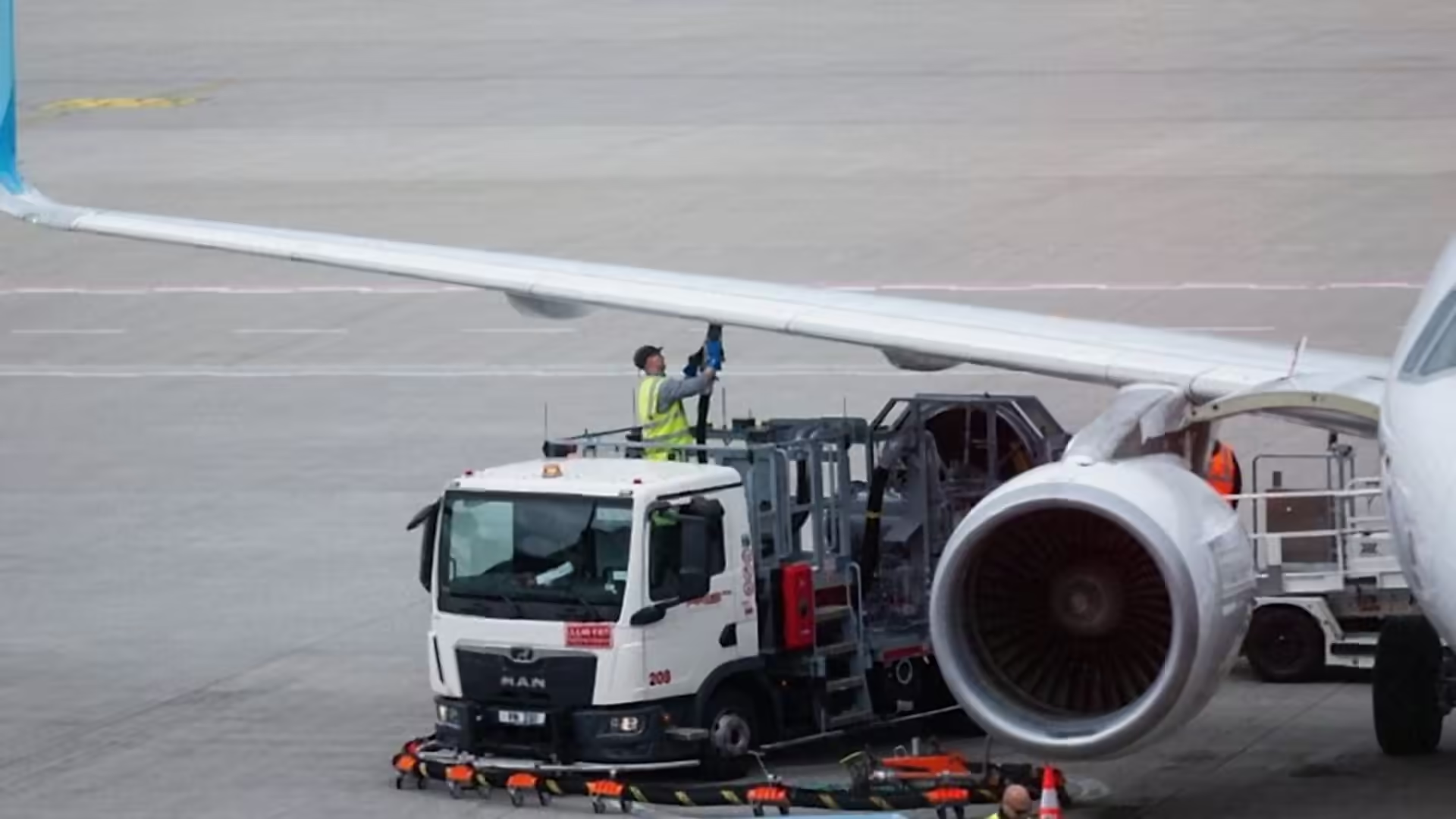
Italy imposes fuel rationing at four major airports amid Middle East tensions
Air BP Italia restricts jet fuel supplies at Bologna, Milan Linate, Treviso and Venice through April 9, citing reduced kerosene availability linked to regional conflict.
1:35 PM
Four major airports in northern Italy have implemented temporary fuel rationing measures effective immediately through the evening of April 9, according to notices issued by Air BP Italia, a primary aviation fuel supplier.
The restrictions affect Milan Linate, Bologna, Treviso and Venice airports. Air BP Italia announced the measures through Notam bulletins—technical notices distributed to airlines—citing reduced or limited availability of Jet A1 kerosene.
Under the rationing system, absolute priority is granted to ambulance flights, state flights and routes exceeding three hours in duration. All other operations face contingency limits on fuel quantities.
Bologna and Venice airports have set a ceiling of 2,000 liters per aircraft, while Treviso allows up to 2,500 liters. Milan Linate introduced restrictions without specifying precise quantitative limits.
Venice's Marco Polo Airport faces the most acute constraints. The Notam explicitly recommends that pilots arrive with sufficient fuel to cover their subsequent flight leg, thereby minimizing refueling at the airport.
Pierluigi Di Palma, president of Enac, Italy's aviation authority, stated on Rai News 24 that supplier bulletins alert airlines to arrive at these destinations with full tanks, given the reduced fuel storage capacity at Italian airports.
The fuel supply strain has been linked by airlines to tensions in the Middle East, risks affecting the Strait of Hormuz and sharp increases in kerosene prices. The situation reflects broader stress emerging across European airport logistics chains, according to reporting by Politico on continental aviation infrastructure.
Save, the group operating Venice, Treviso and Verona airports, clarified that the limitations are not significant for its facilities, as other fuel suppliers operate at those airports and can service most carriers. The group confirmed that intercontinental flights and Schengen-area routes remain guaranteed.
The rationing represents the first operational manifestation in Italy of supply chain effects that airlines have attributed to the regional conflict for several days. However, authorities have characterized the situation as contained to a single fuel supplier at present, without yet constituting a broader emergency across Italian aviation infrastructure.