Kim Jong Un says North Korea could 'completely destroy' South Korea, rules out talks
North Korean leader Kim Jong Un threatened to completely destroy South Korea during the Workers' Party congress, while signaling potential dialogue with the United States if it ends hostile policies.
11 hrs ago
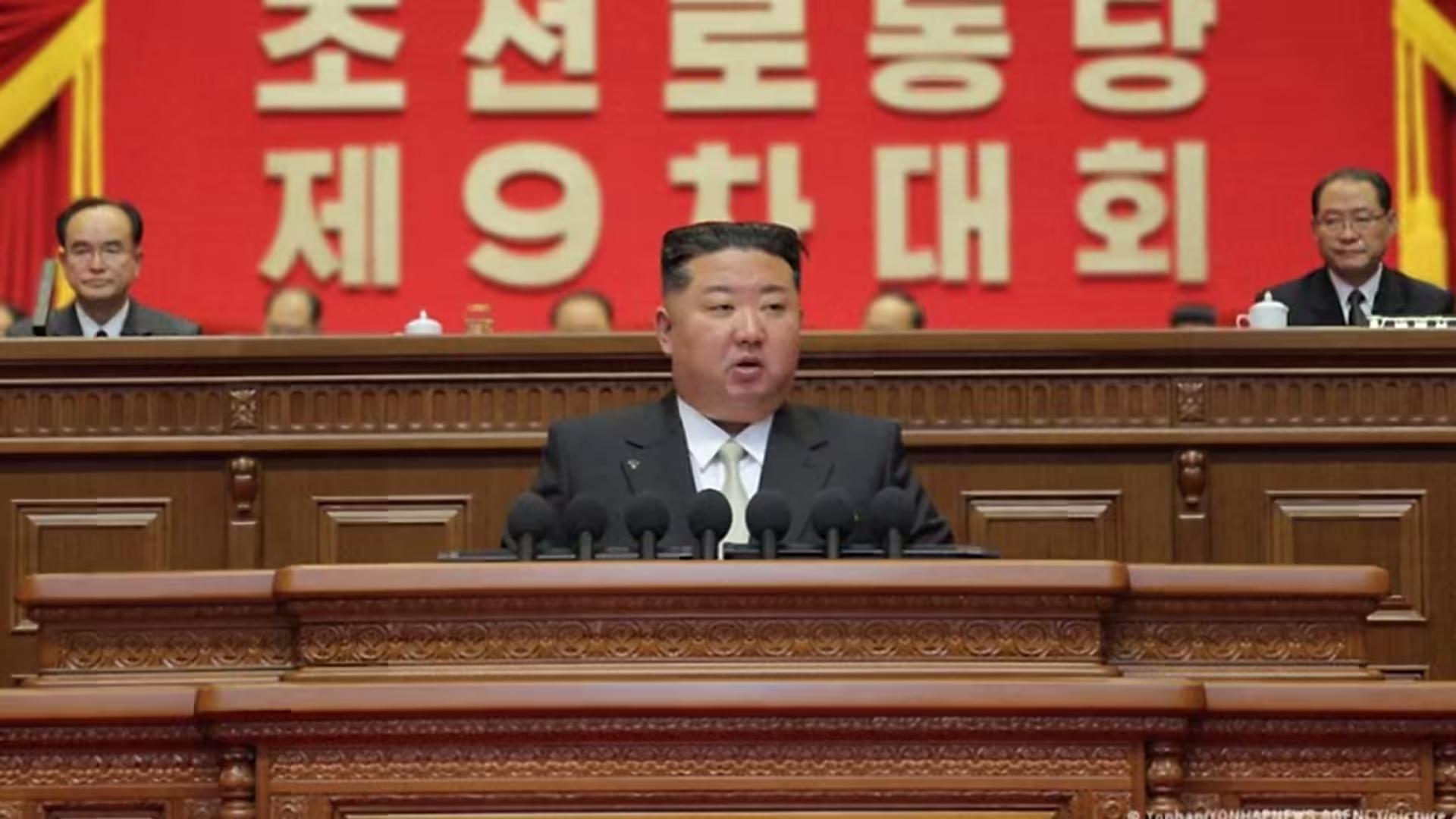
North Korean leader Kim Jong Un said Thursday that his country could "completely destroy" South Korea if it feels threatened, escalating rhetoric while ruling out renewed talks with Seoul.
Speaking at the Ninth Congress of the ruling Workers' Party in Pyongyang, Kim labeled South Korea the "most hostile enemy" and dismissed recent efforts by Seoul to improve relations. According to state media Korean Central News Agency (KCNA), Kim said "the conciliatory attitude that South Korea's current government advocates on the surface is clumsily deceptive and crude."
Kim stated that North Korea "can initiate arbitrary action" if South Korea engages in "obnoxious behavior" directed at his country. "South Korea's complete collapse cannot be ruled out," he said, according to KCNA.
The remarks came as the week-long congress concluded. During the gathering, Kim outlined sweeping five-year policy goals centered on expanding North Korea's nuclear arsenal. According to state media, the leader ordered acceleration of development for new weapons systems to strengthen the military, including intercontinental ballistic missiles capable of being launched from submarines, as well as an expanded arsenal of tactical nuclear weapons such as short-range artillery and missiles.
While closing the door on dialogue with South Korea, Kim signaled a different stance toward the United States. He stated that if Washington "respects our country's current status as stipulated in the Constitution … and withdraws its hostile policy … there is no reason why we cannot get along well with the United States."
Kim reiterated his total rejection of any dialogue with Seoul, which he again defined as a "hostile entity." His comments represent among his harshest warnings directed at South Korea in recent statements.