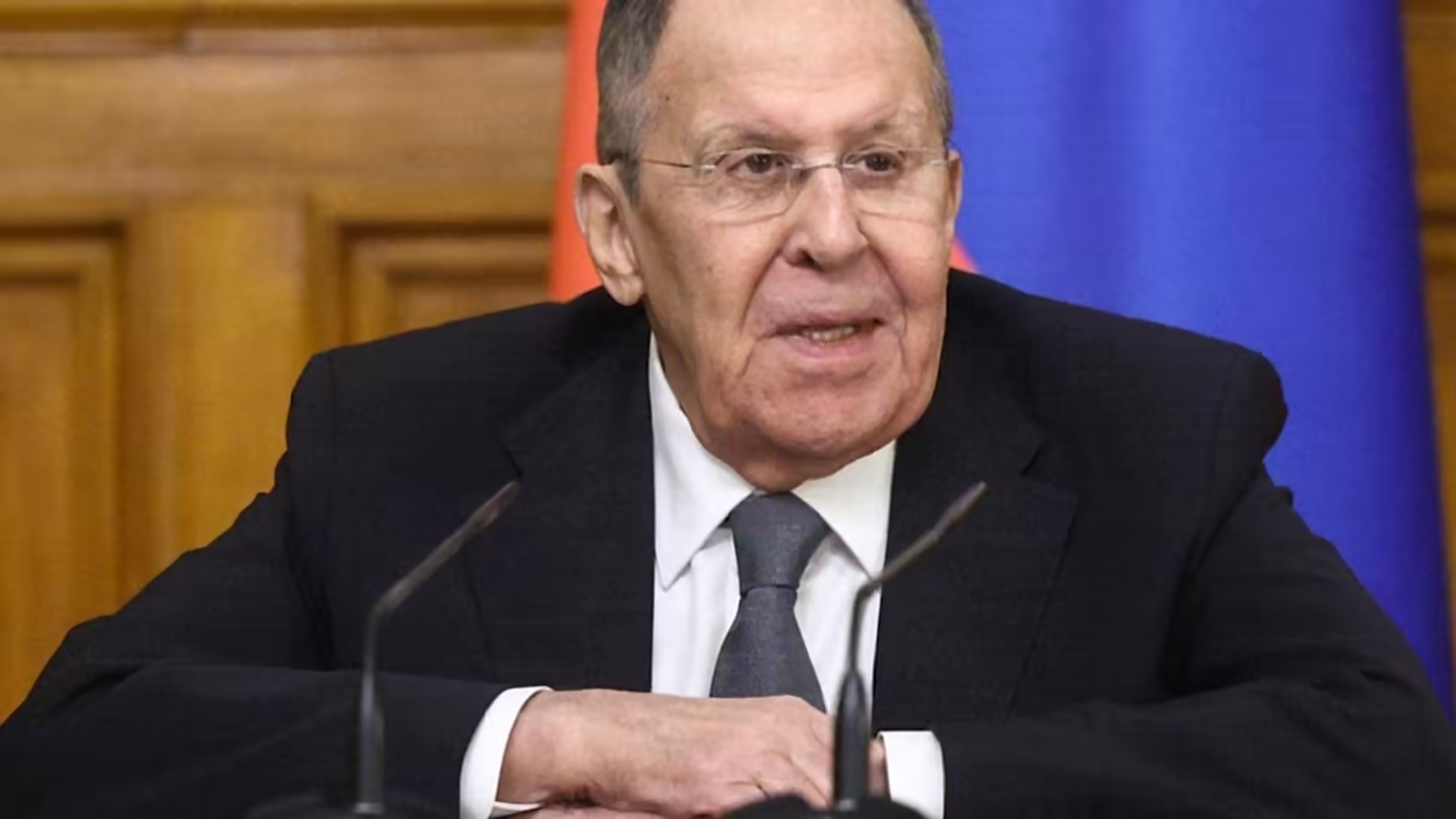
Lavrov accuses Trump administration of breaking Alaska summit agreement on Russia cooperation
Russian Foreign Minister Sergei Lavrov said the U.S. is not honoring understandings reached at an August summit in Alaska, citing continued sanctions and enforcement against Russian oil tankers.
5 hrs ago
Russian Foreign Minister Sergei Lavrov criticized the Trump administration on Monday for failing to uphold mutual understandings reached at a summit in Alaska, saying the U.S. continues to pursue an "anti-Russian policy" despite public statements signaling improved relations.
In an interview with BRICS TV, Lavrov said the United States accepted a Russian proposal at the August meeting in Anchorage to resolve the Ukrainian problem, but has not followed through on expectations for broader cooperation. "Despite declarations about moving toward full-scale, broad cooperation, everything looks the opposite in practice," Lavrov said.
Lavrov pointed to specific U.S. actions as evidence of continued hostility. "New sanctions are being introduced, and a war against shadow fleet tankers is being waged on the high seas," he said. On Monday, the U.S. boarded another sanctioned, Russia-linked oil tanker, according to officials.
The Russian foreign minister said that by accepting the American proposal on Ukraine, Moscow expected to advance toward "full, broad and mutually beneficial cooperation." Instead, he said the Trump administration has maintained the same approach as its predecessor under President Joe Biden. "It is Bidenism as clear as water," Lavrov said.
Lavrov also expressed concern about the economic relationship between the two countries. "We also do not see a promising future in the economic sphere," he said.
The criticism comes as contacts between Washington and Moscow have officially resumed under the Trump administration, roughly a year after they were reestablished. However, the relationship has not achieved the level of alignment that Russian President Vladimir Putin appeared to expect, according to officials familiar with the matter.
The New Start nuclear arms control treaty between Russia and the United States expired on February 6, marking the first time in more than 50 years that no agreement limits or regulates the nuclear arsenals of the two countries that possess more than 80 percent of the world's nuclear weapons. The previous continuous framework of nuclear arms agreements began with the Salt I treaty signed in 1972 between President Richard Nixon and Soviet leader Leonid Brezhnev.