Iran warns of total Strait of Hormuz closure if U.S. attacks power plants
Iran's Revolutionary Guards and military command threatened retaliatory strikes on U.S. and Israeli energy infrastructure if American forces target Iranian electrical facilities.
11:21 AM
Iran's Revolutionary Guards warned Sunday that a complete closure of the Strait of Hormuz would follow any U.S. attack on Iranian power plants, according to an official statement carried by state broadcaster IRIB.
"If the United States fulfills its threats against Iranian electrical plants, punitive measures will be adopted immediately," the Revolutionary Guards said in their statement. The warning came after U.S. President Donald Trump threatened new attacks on Iran if the country did not fully open the Strait of Hormuz, a strategic chokepoint for Persian Gulf oil exports.
Ebrahim Zolfaghari, spokesman for Iran's Joint Armed Forces Command, specified that Tehran would also target desalination plants and information technology infrastructure linked to the United States and Israel in the region as retaliation, according to Iranian media reports.
The Revolutionary Guards clarified Iran's position on the waterway in their statement, saying "the Strait of Hormuz is only closed to the enemy and to harmful traffic." They added that passage could occur "under a series of specific conditions that guarantee our security and interests."
The statement outlined four points of retaliatory measures in the event of attacks on Iranian power plants, though the full details of those measures were not specified in the available accounts.
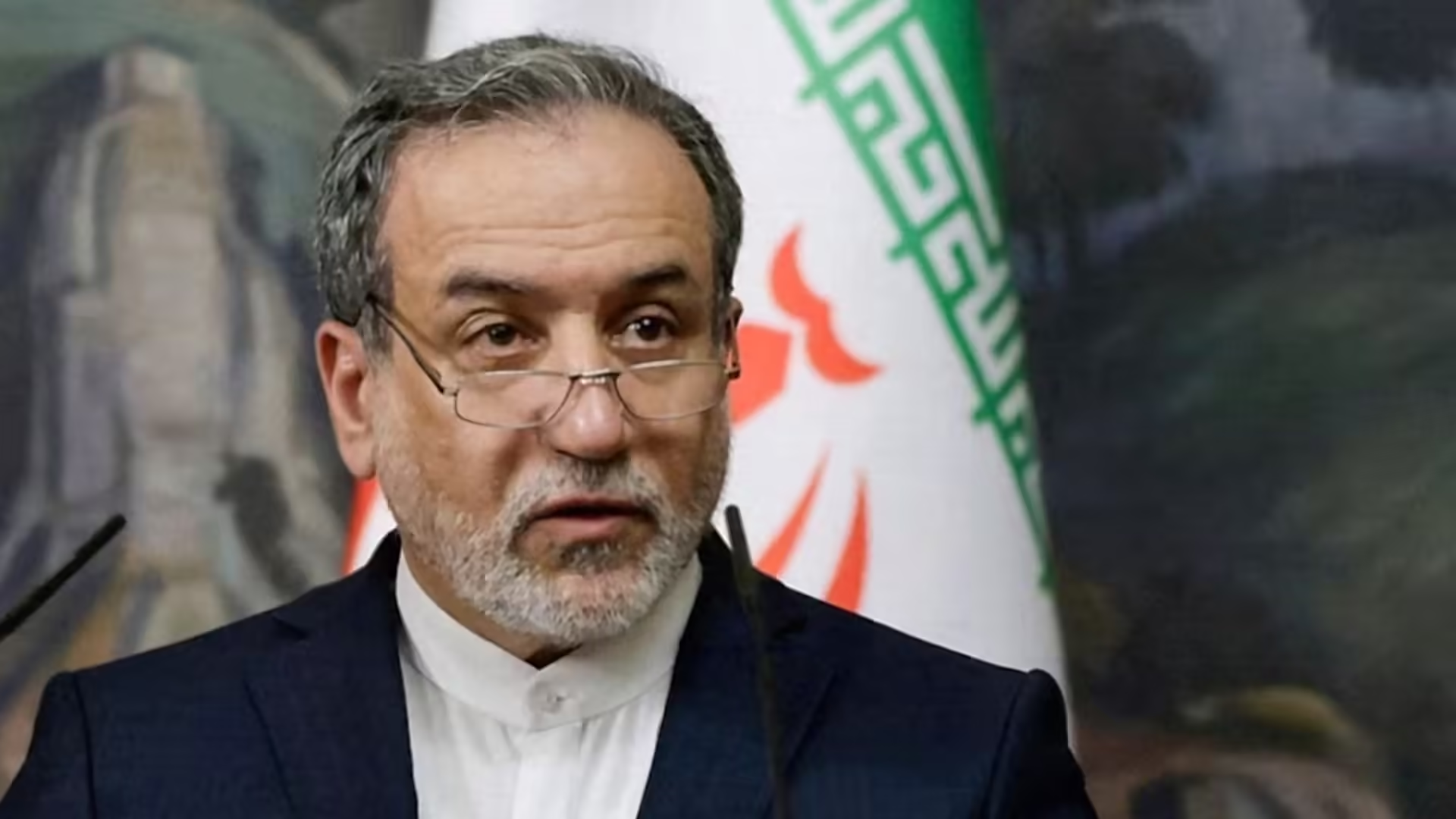
Iran's Foreign Minister Abbas Araqchi stated that his country "will not accept a ceasefire" in the conflict with the United States and Israel, and demanded "compensation" for damages inflicted on the Islamic Republic. According to Iranian authorities, at least 1,200 people have died since February 28.
Araqchi referenced the outcome of Israeli attacks against Iran's nuclear program and military leadership in June, which were followed by strikes from the White House. Those attacks concluded 12 days later with a ceasefire between Tehran and Jerusalem. "We will not accept a ceasefire because we do not want the scenario of last year to be repeated," Araqchi said in remarks distributed Saturday on social media by Iran's Embassy in Japan, from an interview with Japanese news agency Kyodo.