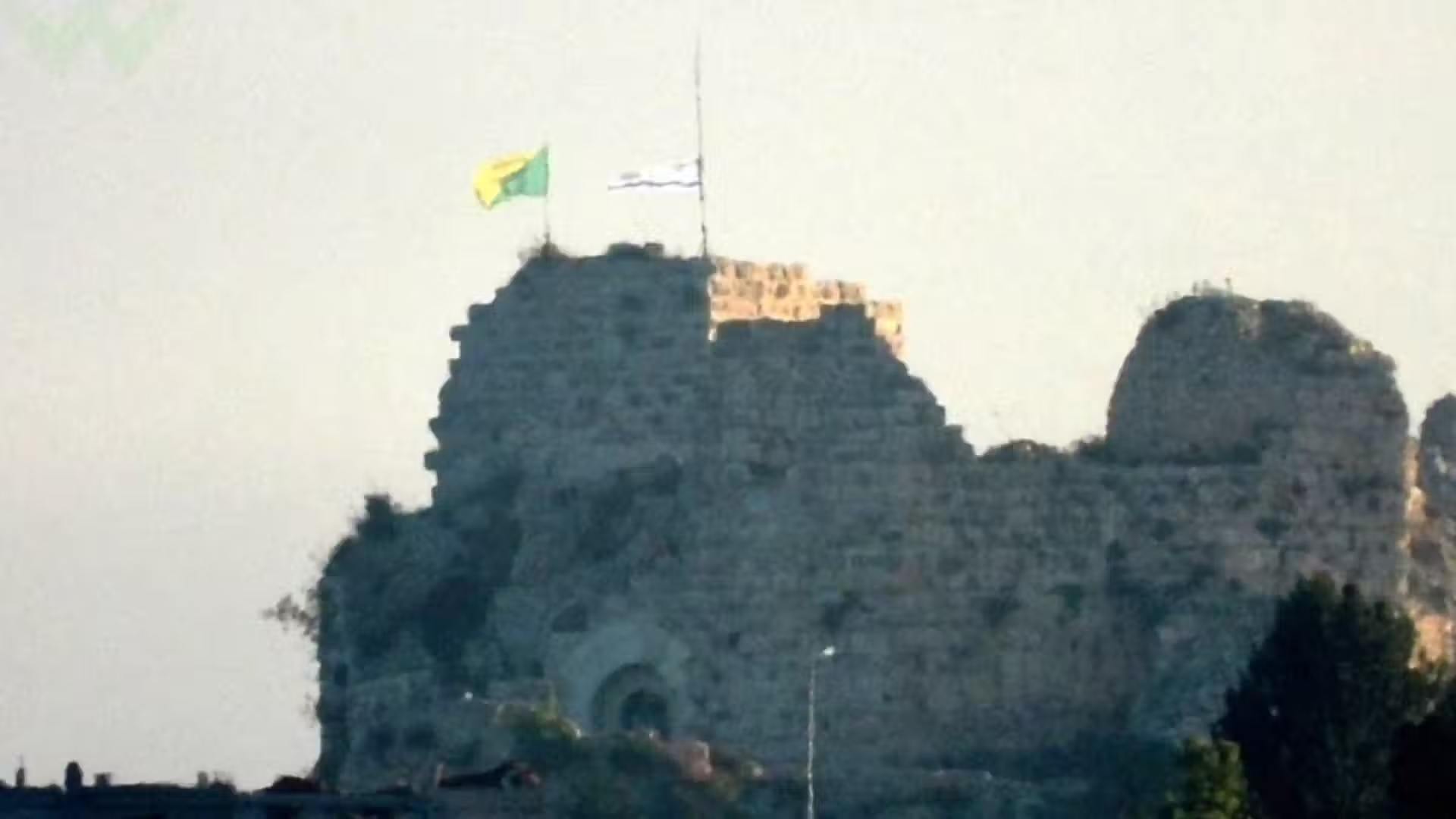
Israeli forces captured Beaufort Castle in southern Lebanon on Sunday, announcing the seizure of the strategic medieval fortress as part of an expanded military operation against Hezbollah in the region.
The castle, situated approximately 700 meters above the Litani River near the city of Nabatieh, was taken after operations that began several days prior. Israeli soldiers reached the summit at dawn and raised the Israeli flag and the flag of the Golani Brigade at the site.
Defense Minister Israel Katz marked the capture in a statement referencing the 1982 invasion of Lebanon. "Forty-four years after the heroic battle of Beaufort, and on the day of remembrance for those who fell in the Shalom HaGalil war and among them the soldiers of Golani who fell in the battle for Beaufort, the fighters of the IDF and at the head the Golani Brigade have returned to the summit of Beaufort and have raised again upon it the flag of Israel and the flag of Golani," Katz said.
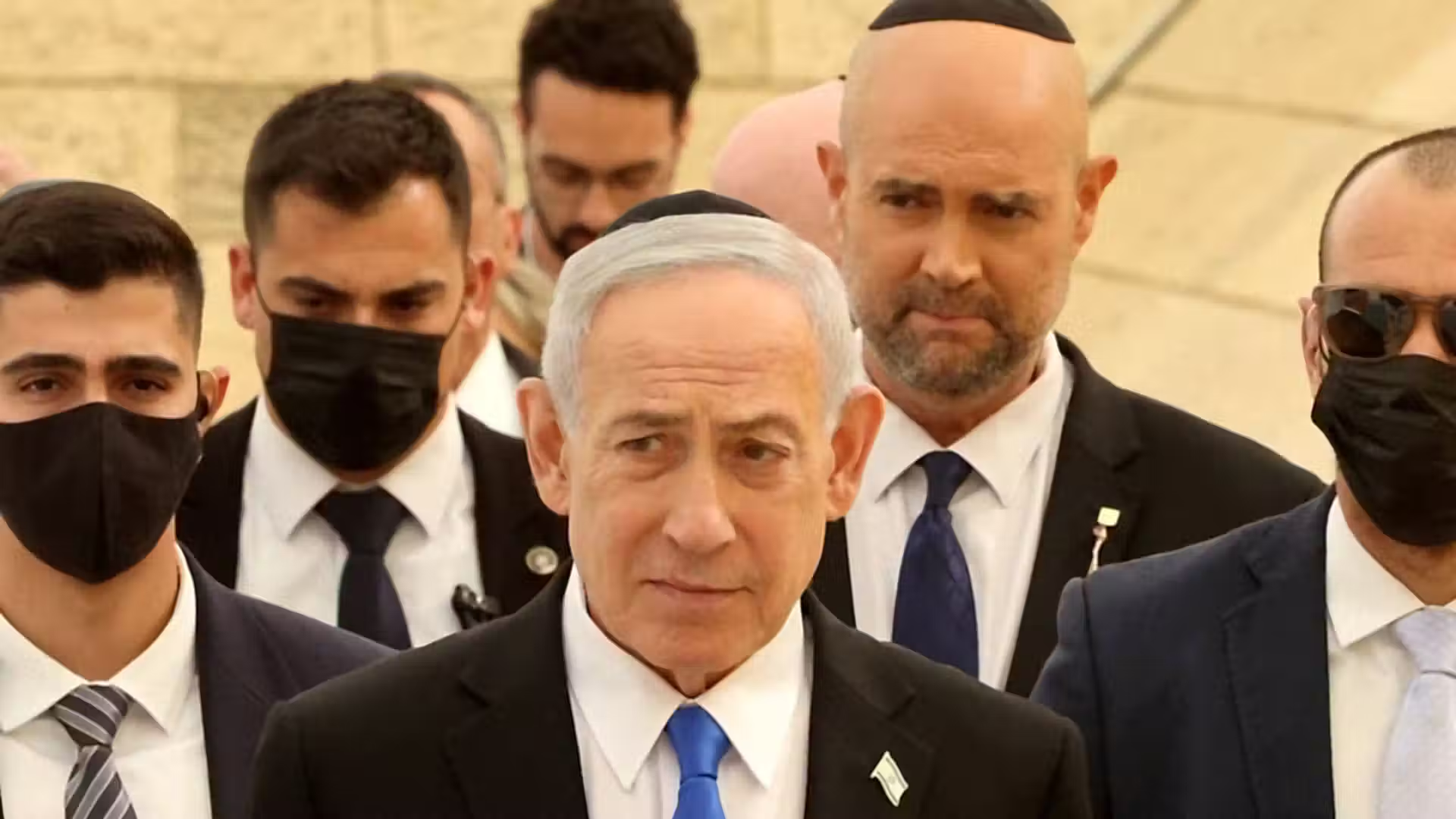
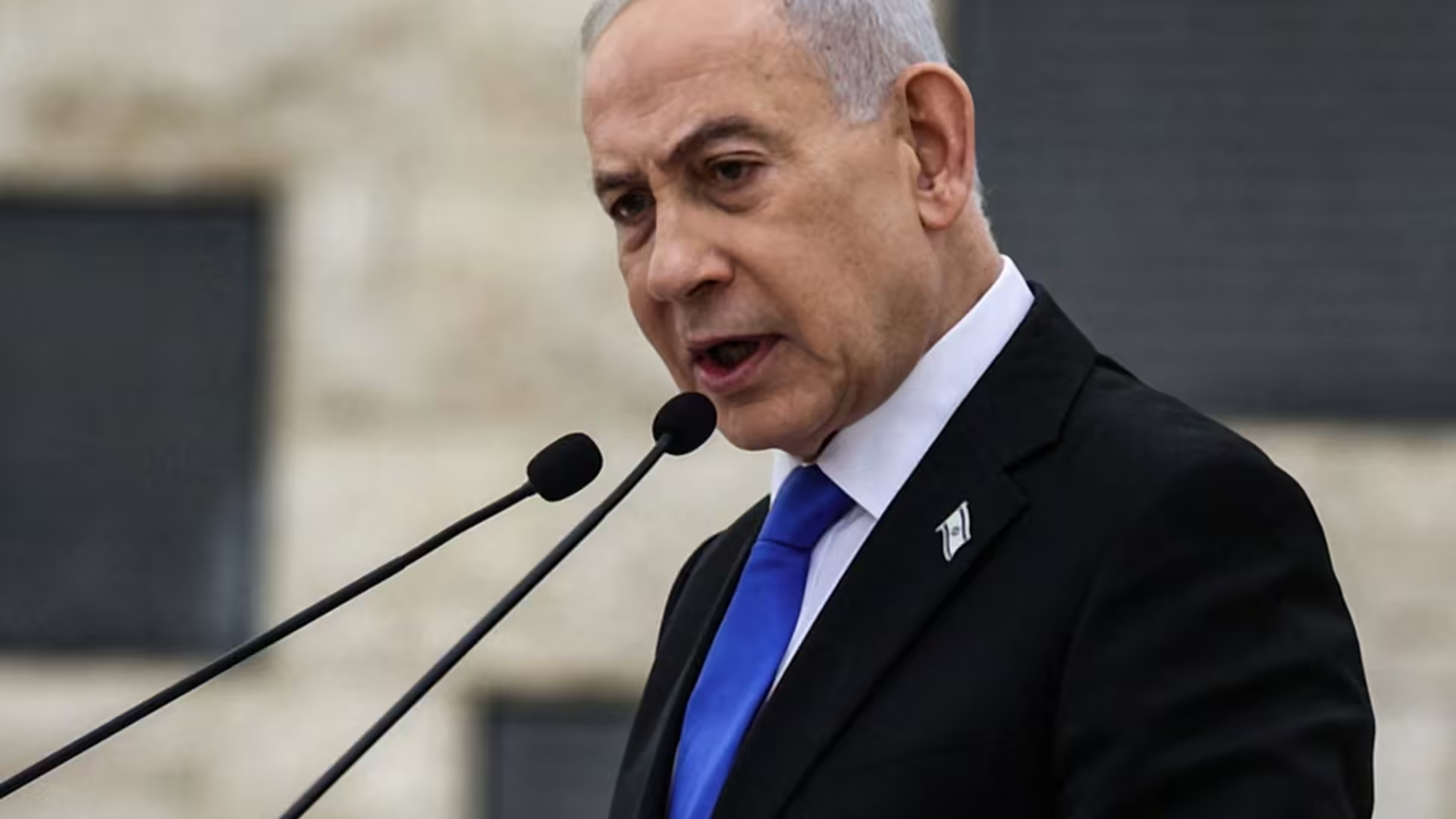
Prime Minister Benjamin Netanyahu announced the capture in a video message, describing it as a "crucial milestone" and a "radical change in policy" for Israel's operations in Lebanon. "We have overcome the barrier of fear and are taking the initiative," Netanyahu stated. He instructed the military to "consolidate and extend" Israeli control over areas previously held by Hezbollah, though he did not specify which locations.
Israel previously held Beaufort Castle during its 1982 invasion of Lebanon and maintained control until withdrawing from southern Lebanon in 2000. The fortress overlooks key routes toward the coastal cities of Tyre and Sidon and dominates the surrounding terrain, making it strategically significant for monitoring the border region.
The operation occurred after one of the most intense days of Hezbollah rocket fire toward northern Israel since a ceasefire was announced more than six weeks earlier in April. The escalation prompted school closures and restrictions in Israeli communities.
The castle has been contested for nearly 900 years. Crusader King Fulk of Anjou, who later became King of Jerusalem, conquered the site in 1139 and constructed the fortress, naming it "Beau Fort" (Beautiful Fortress), though it is known in Arabic as Qalat al-Shaqif. Saladin captured it in 1190 after a two-year siege. The Crusaders retook it 50 years later and sold it to the Knights Templar in 1260. The Mamluk Sultan Baibars conquered it in 1268, after which it entered centuries of decline under Ottoman rule and damage from an 1837 earthquake.
The Israeli military stated the operation aimed to establish control of the Beaufort ridge and the Wadi al-Saluki area, weaken Hezbollah, and dismantle its infrastructure. The operation is part of broader efforts to strengthen Israeli operational control in southern Lebanon.
Concurrent with the Beaufort operation, Israeli forces conducted airstrikes on Tyre, Lebanon's largest southern city with approximately 200,000 residents. According to Lebanon's Health Ministry, the strikes wounded 13 medical personnel near Hiram Hospital and resulted in 41 deaths over a 24-hour period.
France protested the operation and called for an urgent United Nations Security Council meeting in response to the military advance.
The capture comes as Israel has declared an area up to 50 kilometers from its border with Lebanon as a battlefield, expanding its military presence well beyond the Litani River.