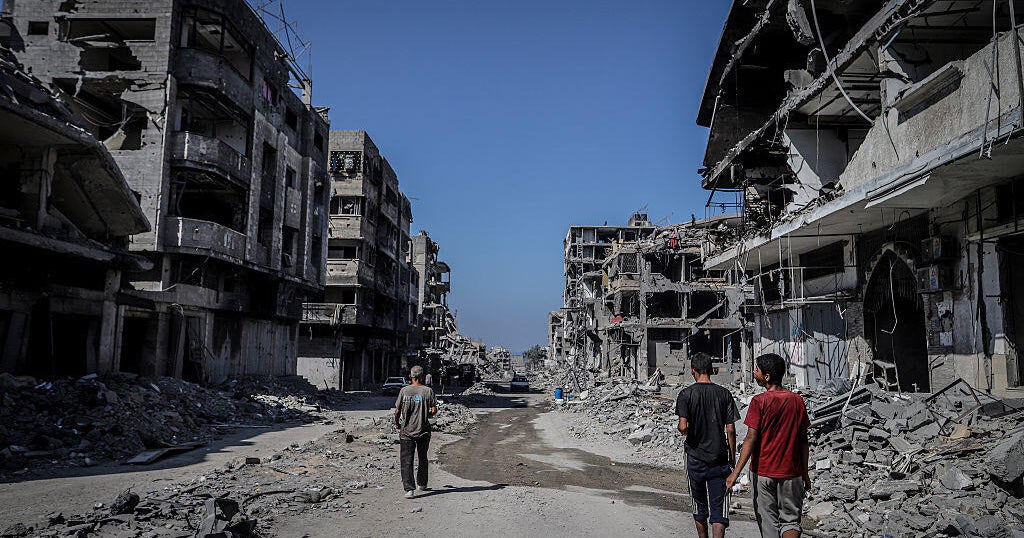
Israeli military forces launched airstrikes and artillery fire across the Gaza Strip on Sunday, responding to what officials described as a “flagrant violation” of the U.S.-brokered ceasefire by Palestinian militants. The military action, which targeted areas in the south (Rafah), center (Deir el Balah), and north (Jabalia) of the enclave, threatens the fragile truce that has been in effect since October 11.
Escalation and Mutual Accusations
Israel’s military reported that militants used anti-tank missiles and rocket-propelled grenades (RPGs), along with small arms fire, targeting Israeli troops who were operating in an Israeli-controlled area east of the designated “yellow line” near Rafah. An Israeli military official called the attacks a “bold violation” of the agreement.
Following the incidents, Prime Minister Benjamin Netanyahu held consultations with security heads and directed the military to take “strong action” against ceasefire violations, though he did not issue a threat to return to full-scale warfare.
Hamas, however, immediately denied involvement in the clashes, reaffirming its commitment to the truce. The group's Ezzedine Al-Qassam Brigades stated they had no knowledge of incidents in Rafah, noting that contact with their remaining forces in those Israeli-controlled “red zones” had been cut since the war resumed in March 2024. Hamas officials instead accused Israel of seeking “pretexts for its crimes” and attempting to evade its responsibilities under the agreement.
Casualty reports following the Sunday attacks were still being compiled. Sources at the Al-Aqsa Martyrs Hospital in Deir el Balah reported that at least five Palestinians were killed and 10 wounded in a drone strike near a café in central Gaza. The Gaza Health Ministry reported a total of eight Gazan deaths in the preceding 24 hours.
Disputes Over Hostage Remains and Border Access
The renewed fighting came as both sides continued to struggle with implementing key aspects of the ceasefire agreement, particularly concerning the exchange of bodies and humanitarian access.
Israel confirmed the identities of the remains of two deceased hostages returned by Hamas overnight Saturday: Ronen Engel, an Israeli father from Kibbutz Nir Oz, and Sonthaya Oakkharasri, a Thai agricultural worker from Kibbutz Be'eri, both killed during the October 7, 2023, attacks. Israel is still pressing for the return of the remains of 16 other deceased hostages.
Hamas maintains that the extensive devastation in the enclave complicates the search and retrieval process for additional bodies, which Israel views as a deliberate delay.
In response to the alleged violations and delays in returning remains, Mr. Netanyahu’s office announced that the critical Rafah border crossing—which serves as the primary gateway for humanitarian aid and movement between Gaza and Egypt—would remain closed “until further notice.” Hamas called the closure a “flagrant violation” of the agreement and stressed that it obstructs the delivery of heavy equipment necessary for recovery efforts.
Separately, the U.S. State Department issued a warning on Saturday, citing “credible reports” of an imminent Hamas violation. The U.S. statement referred to Hamas's recent internal actions against other armed Palestinian factions in Gaza—which Hamas accuses of collaboration with Israel and criminal activity, including the looting of aid. Hamas rejected the U.S. claim, accusing Washington of echoing Israeli propaganda and stating that its security forces are simply working to restore law and order.
Amidst the fray, Hamas spokesmen indicated that discussions with mediators have begun concerning the difficult second phase of the ceasefire, which is slated to address long-term issues such as the disarmament of Hamas, the withdrawal of Israeli forces from additional areas, and the future governance of the territory.