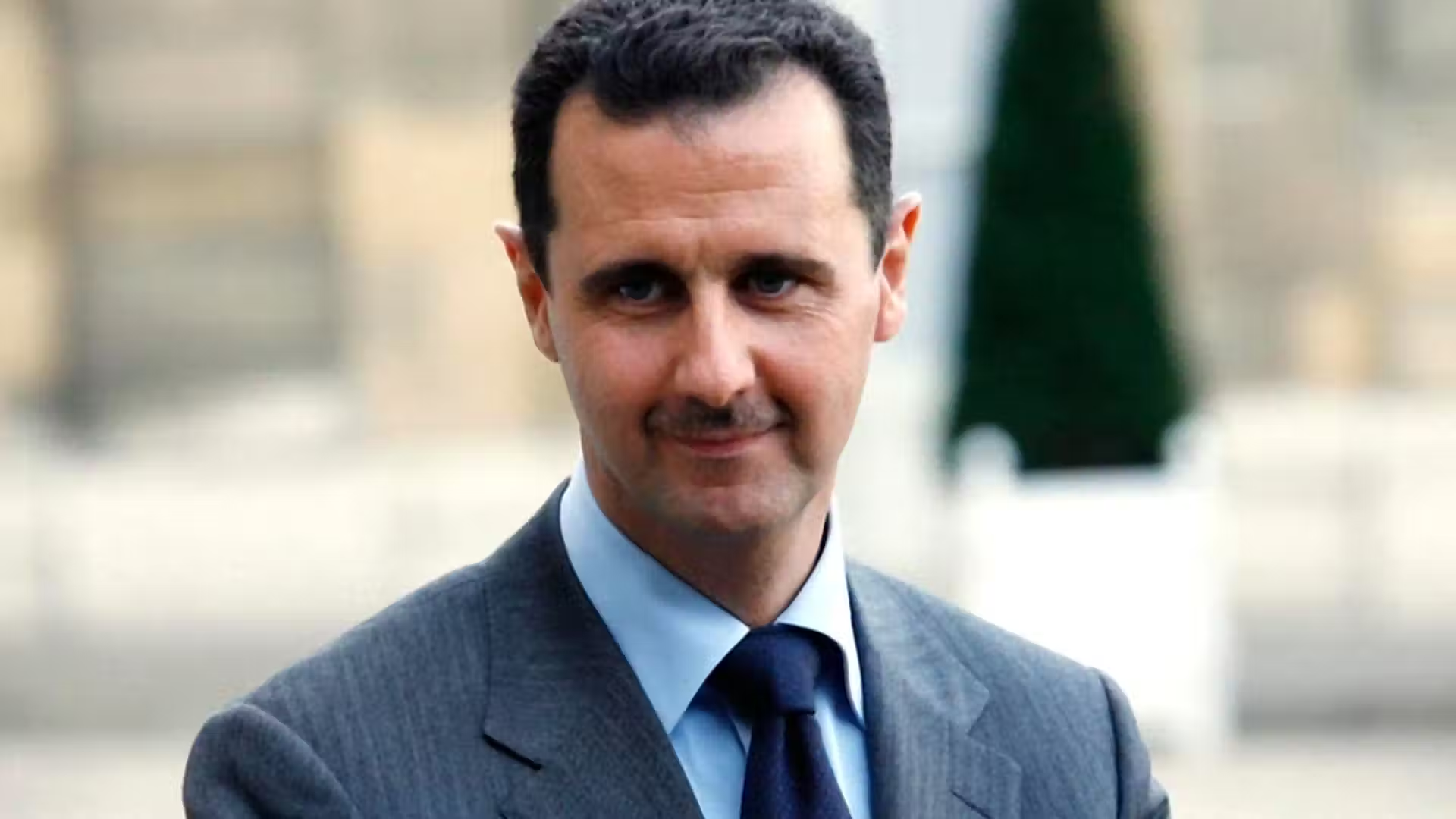
A Syrian court sentenced former President Bashar al-Assad to death in absentia on Tuesday after convicting him of war crimes and crimes against humanity committed during the country's 14-year civil war.
The Fourth Criminal Court in Damascus handed down the verdict, marking the first conviction against Assad since his regime was toppled in December 2024. Judge Fakhr al-Din al-Aryan presided over the trial, which was broadcast live on state television.
Assad was found guilty of "premeditated and intentional murder of more than one person and of children, torture, arbitrary arrest and crimes against humanity." The judge stated that "Bashar Assad used state agencies to commit war crimes and crimes against humanity" and that "the contribution of the criminal Bashar Assad to the crimes was that of the person ultimately responsible for decision-making, mobilizing state institutions to commit them."
Assad fled to Moscow with his family in December 2024 as rebel forces swept into Damascus, ending more than five decades of rule by the Assad family. He was granted asylum in Russia.
Assad's younger brother Maher al-Assad, who commanded the feared fourth division and served as a top security official, was also sentenced to death in the same case. Maher was convicted of premeditated murder, torture and incitement to hatred.
Assad's maternal cousin Atef Najib, former head of the Political Security Branch in the southern province of Daraa, received a death sentence as well. Unlike the other defendants, Najib was present in the courtroom during sentencing. He stood inside a cage wearing a striped prison uniform as the judge read the verdict. Najib was convicted of leading the crackdown in Daraa that sparked the initial uprising in 2011, which eventually escalated into the broader civil war.
In March 2011, the detention and alleged torture of teenagers accused of writing anti-government graffiti in Daraa sparked protests in the city. The government's response to these demonstrations is widely seen as the catalyst for the uprising that led to the civil war.
The trial was presided over by Syria's most senior judge and prosecuted by the attorney-general and the Commission for Transitional Justice. The proceedings took place in the presence of victims' families and international human rights groups.
Eight other former officials were also sentenced to death in the same case, including Defense Minister Fahd Jassem al-Freij and other members of the previous government.
Syria's civil war, which began in 2011, resulted in approximately 500,000 deaths. The conflict also displaced millions, with about half the population becoming refugees or internally displaced persons at various points during the fighting.
The transitional authorities that took power after Assad's ouster began prosecuting figures from the previous government in 2026, both in person and in absentia. An arrest warrant for Assad was issued in December 2024 on charges of murder and torture. The court indicated that Assad should be pursued at the international level, according to reports.