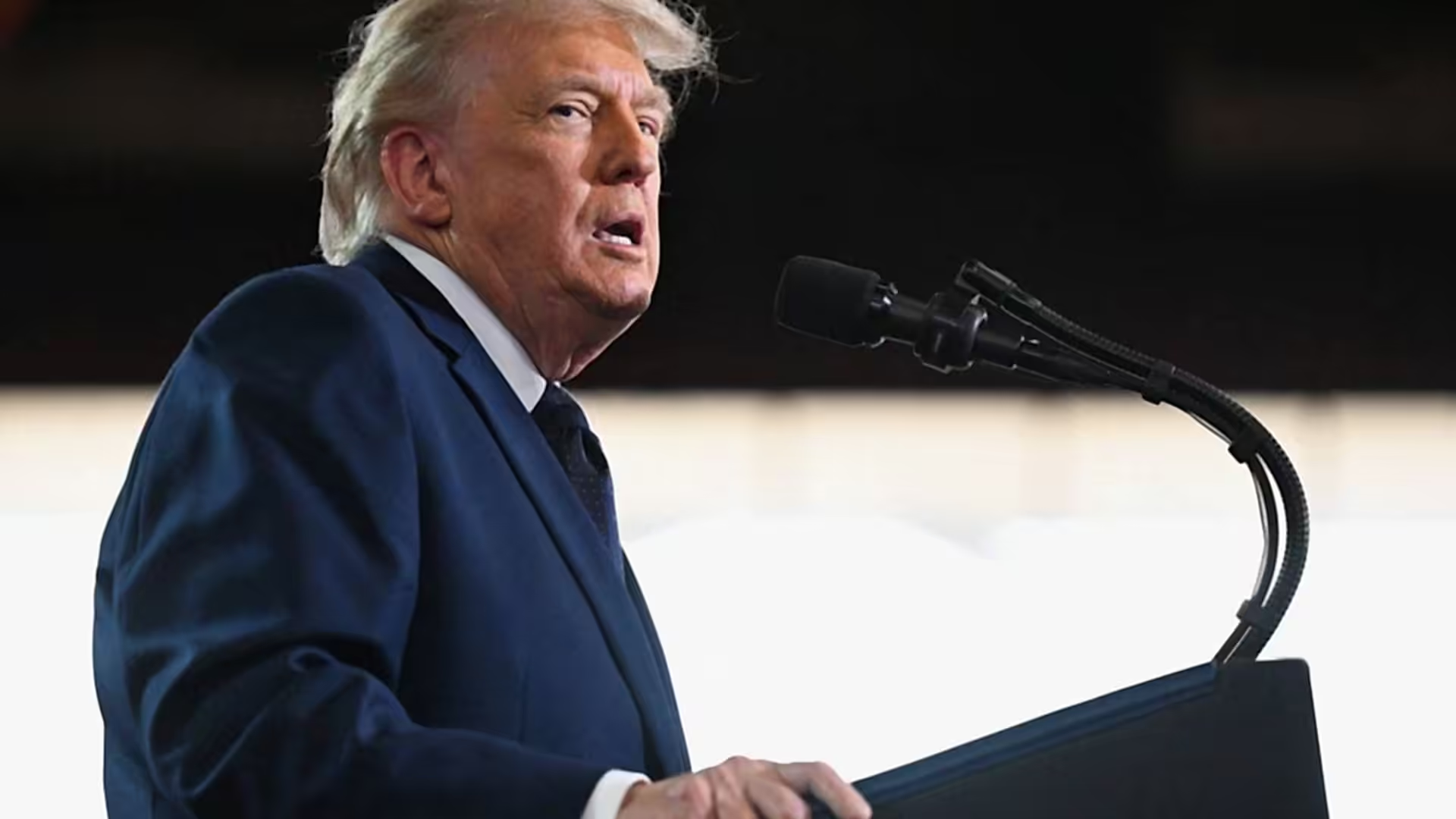
US President Donald Trump called on leaders of several Middle Eastern countries and Pakistan to normalize relations with Israel during a conference call on May 23, according to reporting by Axios citing two US officials.
The call included leaders of Bahrain, Egypt, Jordan, Qatar, the United Arab Emirates, Pakistan, Saudi Arabia, and Turkey. Trump expressed hope that if Washington and Tehran reach a peace agreement, countries not currently party to the Abraham Accords or lacking a peace treaty with Israel would establish formal relations with Tel Aviv.
The call came as reports of a possible deal with Iran have circulated. Pro-Israel advocates in the United States have been warning Trump against signing such an agreement, with hawkish figures including some prominent senators voicing opposition to any deal that fails to remove or severely weaken Iran's political leadership and destroy its military powers.
Trump's proposal to link Arab normalization with Israel to a potential Iran agreement appears designed to address some concerns from pro-Israel critics. After Trump floated the prospect of more Arab countries establishing formal relations with Israel as part of the agreement, some of the critics began to soften their opposition, according to reporting.
The Abraham Accords framework, first established in 2020, has already brought several Arab nations into formal diplomatic relations with Israel. Trump's latest push seeks to expand that group further, contingent on progress in negotiations with Iran.
Representatives of Qatar, Pakistan, and Saudi Arabia participated in the May 23 call, according to the sources.