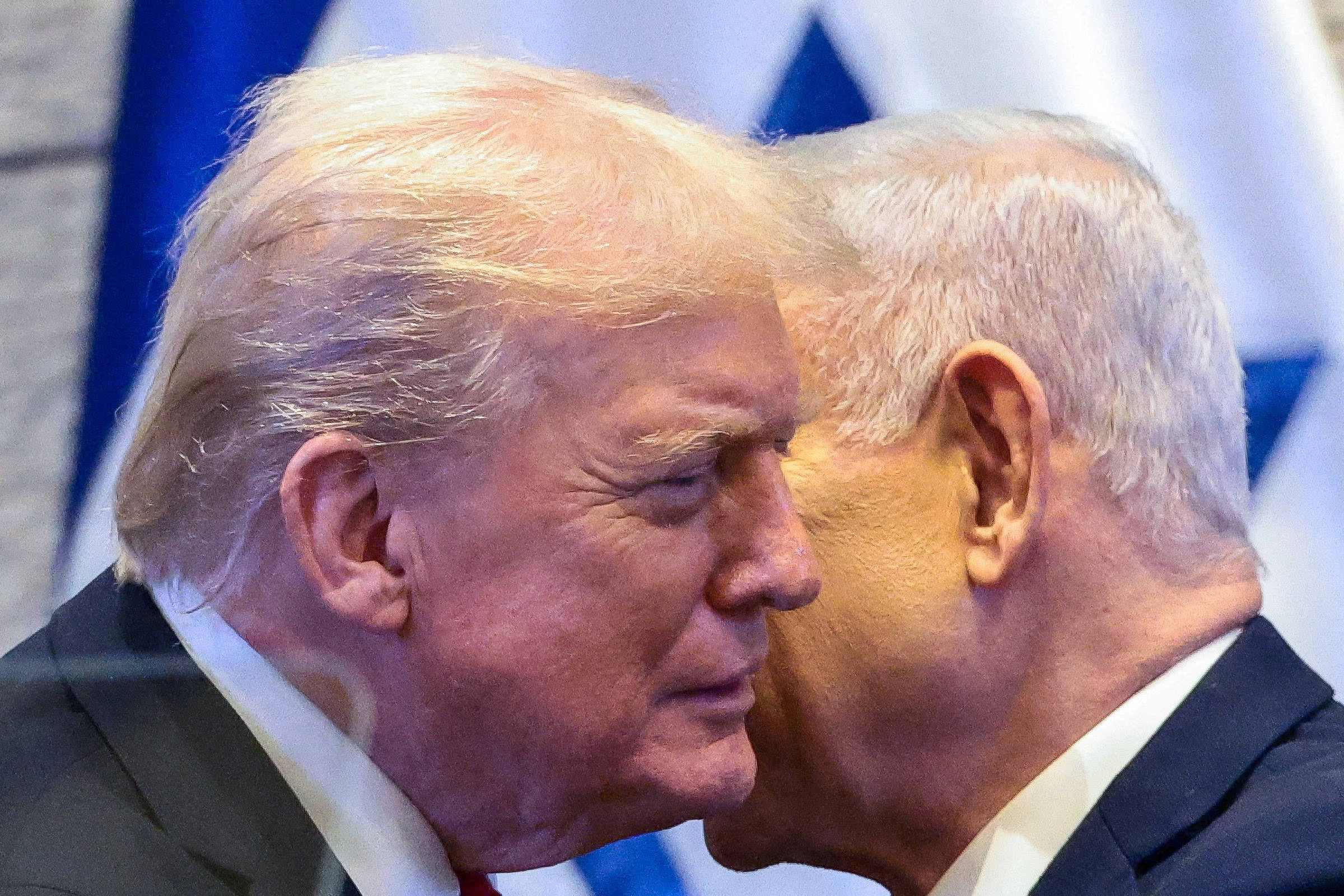
President Donald Trump declared an end to the conflict in Gaza during a visit to Israel, receiving widespread adulation from the Israeli public and parliament. However, upon his return to Washington, Trump adopted a more ambiguous stance regarding the establishment of a Palestinian state, focusing instead on the reconstruction of Gaza.
Trump arrived in Israel on Monday, shortly after Hamas released the first of 20 hostages. He addressed the Israeli Knesset, proclaiming that the moment marked "not just the end of a war, this is the end of an era of terror and death," and heralded it as the "historic dawn of a new Middle East."
During his visit, Trump was met with significant enthusiasm, with crowds chanting his name and some lawmakers wearing MAGA-style hats. Prime Minister Benjamin Netanyahu described the president as "the greatest friend Israel has ever had in the White House."
Trump also extended offers to Iran for peace talks, suggesting that an agreement could end decades of animosity. He spoke of his administration's actions against Iran's nuclear facilities, a point that garnered strong applause from the Knesset.
Despite the celebratory atmosphere and the brokered ceasefire, which has allowed for the flow of aid into Gaza, underlying tensions and divergent views on the future of the region remained evident.
Netanyahu adopted a more cautious tone, emphasizing the release of hostages and the absence of Israelis being held alive in Gaza. He refrained from discussing whether Israel would resume hostilities if Hamas did not disarm or leave the territory. Reports indicated that Hamas had only returned the remains of four of the 28 hostages who had died in captivity, with the Israeli Defense Minister stating that any delays would be considered a "blatant violation" of the agreement.
On the flight back to Washington, Trump fielded questions from reporters. While he reiterated that the "war is over," he sidestepped direct inquiries about a potential Palestinian state. He emphasized that the focus was on rebuilding Gaza and avoided defining his position on a two-state solution, a concept he had previously described at the UN as a potential "reward" for Hamas, a stance he now seemed to be walking back.
The White House released a statement outlining the Gaza peace agreement, pledging to ensure stability in the region. However, public discussion about the implementation of Trump's 20-point plan, including the role of Arab states and European governments in providing an international stabilization force or funding reconstruction, remained limited.
During Trump's address to the Knesset, two left-wing lawmakers holding signs that read "Recognize Palestine!" were removed. One of the lawmakers later stated on social media that the speeches did not absolve Netanyahu of "crimes against humanity committed in Gaza," asserting that "There are two peoples here, and neither of them is going anywhere."
Analysts noted that while Trump received accolades for facilitating the ceasefire, his administration has remained notably silent on the specifics of rebuilding Gaza, the future of the Palestinian people, and the potential creation of a Palestinian state, leaving significant questions about the path forward unresolved.