US and Iran agree to two-week ceasefire ahead of Trump deadline
Iran and the US announced a conditional two-week ceasefire Wednesday, with negotiations set to begin Friday in Islamabad. Strait of Hormuz passage will be managed by Iran.
9:57 AM
The United States and Iran agreed to a two-week ceasefire Wednesday, averting action threatened by President Donald Trump with an hour remaining before his deadline. Iran's Supreme National Security Council confirmed the agreement conditionally, stating it would hold if attacks against Iran ceased.
Pakistan's Prime Minister Shehbaz Sharif announced that Iran, the US and their allies had agreed to an immediate ceasefire everywhere, including Lebanon. However, Israel disputed this characterization, saying fighting Hezbollah in Lebanon was not part of the ceasefire agreement.
Under the terms, Iran agreed to allow safe passage for ships through the Strait of Hormuz for the next two weeks, with Iranian military management of the waterway. Iran's foreign minister confirmed this arrangement.
Iran's Supreme National Security Council stated that Iran has achieved a great victory and forced the United States to accept its 10-point plan. The plan includes controlled passage through the Strait of Hormuz and the necessity of ending the war against all elements of the "axis of resistance." According to the council, Pakistan's prime minister informed Iran that the United States has accepted Iran's 10-point plan as the basis for negotiations.
Negotiations between the US and Iran will be held in Islamabad beginning Friday, April 10, to finalize details of an agreement. Iran's Supreme National Security Council said the negotiations will proceed with "complete distrust of the American side" and that Iran will allocate two weeks for these talks. The period can be extended by mutual agreement, according to state media.
The ceasefire comes more than a month after Israel and the US launched attacks on Iran, which led to Iran striking locations throughout the Gulf. The American military operation was dubbed Operation Epic Fury by the Pentagon.
Defense Secretary Pete Hegseth said Wednesday that Iran was "no longer" a threat to the United States and referred to the American war in Iran in the past tense. "Operation Epic Fury was a historic and overwhelming victory on the battlefield," he said. Hegseth stated that Iran "begged" for the ceasefire.
The head of the United Nations' maritime organization welcomed the ceasefire and said he is working "with relevant parties" to ensure the safe transit of vessels through the Strait of Hormuz following the agreement.
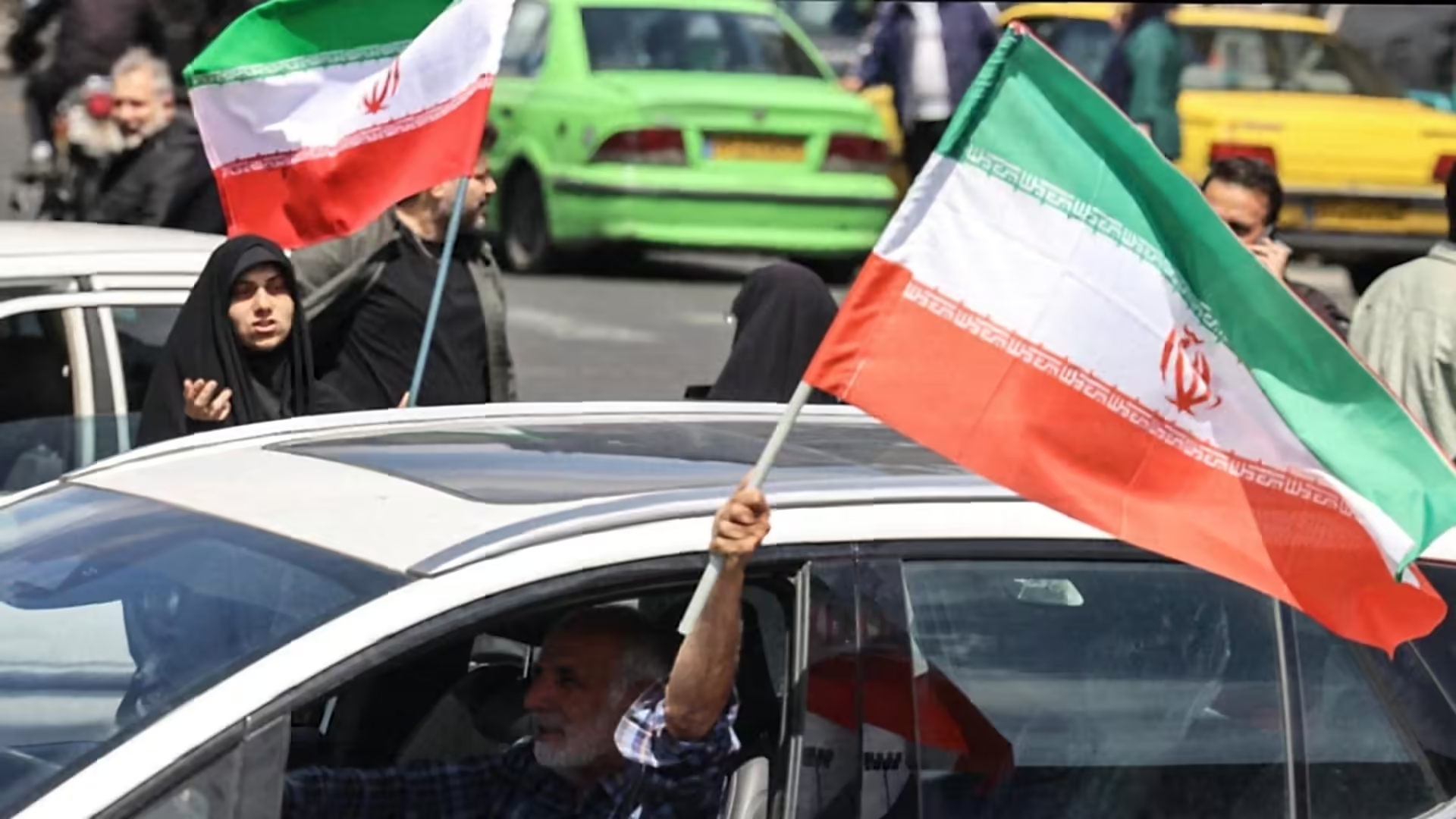
Crowds of pro-government demonstrators gathered in Tehran, waving flags and chanting after the ceasefire announcement. Pakistan's Prime Minister Sharif has been a key figure in attempting to mediate the negotiations between the parties.