US Secretary of War Pete Hegseth said Wednesday that the United States military can maintain a naval blockade of Iran indefinitely by rotating ships in and out of position.
"Indefinitely, the United States Navy can maintain a blockade like that because we'll rotate ships in and out, as we have, and we'll continue to," Hegseth told reporters, according to Reuters.
The blockade follows a broader pattern of military escalation in the region. The United States and Israel launched a military operation against Iran on February 28. In June, Washington and Tehran signed a memorandum of understanding calling for an immediate cessation of hostilities on all fronts, including in Lebanon. However, the United States resumed large-scale strikes on Iran overnight on July 8, accusing Tehran of violating the terms of the agreement concerning the Strait of Hormuz.
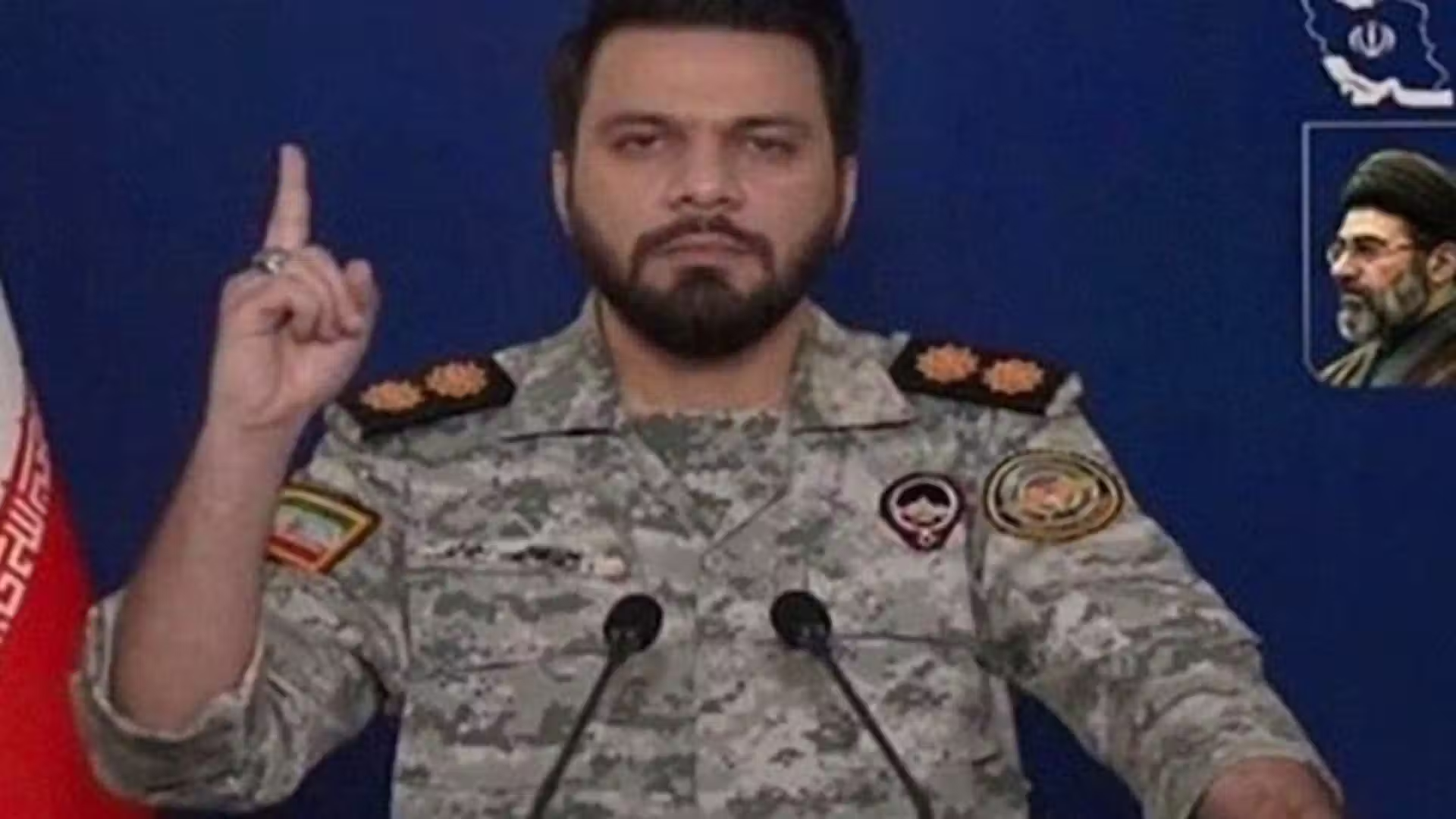
Iran's military leadership rejected US characterizations of normal maritime traffic through the strategic waterway. Second Brigadier General Abolfazl Zolfaghari, spokesman of Iran's Khatam al-Anbia Central Headquarters, said in a statement Thursday that US claims about normal vessel traffic through the Strait of Hormuz were "nothing but falsehoods and lies," describing them as a sign of US military desperation and helplessness.
Zolfaghari emphasized that the Strait of Hormuz remains under the full management and control of the Islamic Republic of Iran. He stated that "no commercial ship or oil tanker has had and will have the possibility of safe transit through this strait without the permission and supervision of Iran's powerful Armed Forces."
On August 5, Iranian Foreign Ministry spokesman Esmail Baghaei said Iran and Oman had agreed on coordinates for a new route, signaling potential diplomatic efforts regarding maritime passage in the region.
The Strait of Hormuz remains a critical chokepoint for global energy supplies, with significant geopolitical implications for international shipping and commerce.
Related Articles
U.S. warships transit Strait of Hormuz as Iran fires missiles
Two U.S. military vessels crossed the Strait of Hormuz under Project Freedom, an operation to clear blocked commercial shipping, as Iran claimed missile strikes.
Iran reasserts control over Strait of Hormuz amid stalled US talks
Iran warned foreign vessels will be targeted if they do not comply with passage regulations through the strategic waterway.
Iran offers to reopen Strait of Hormuz if U.S. lifts blockade
Iran proposes ending its control of the strategic waterway and the war in exchange for lifting U.S. sanctions, postponing nuclear talks.
Iran seizes two cargo ships in Strait of Hormuz after U.S. extends ceasefire
Iran's Revolutionary Guard Navy said it seized two container vessels for maritime violations as tensions escalate over competing blockades in the strategic waterway.
Iran closes Strait of Hormuz to all vessels, says armed forces
Iran's military announced a complete closure of the strategic waterway in response to U.S. strikes, warning of military action against vessels attempting passage.
U.S. and Iran reach peace deal; Strait of Hormuz to reopen
President Trump announced a completed agreement with Iran ending three months of conflict, with the Strait of Hormuz reopening and the U.S. naval blockade lifted.