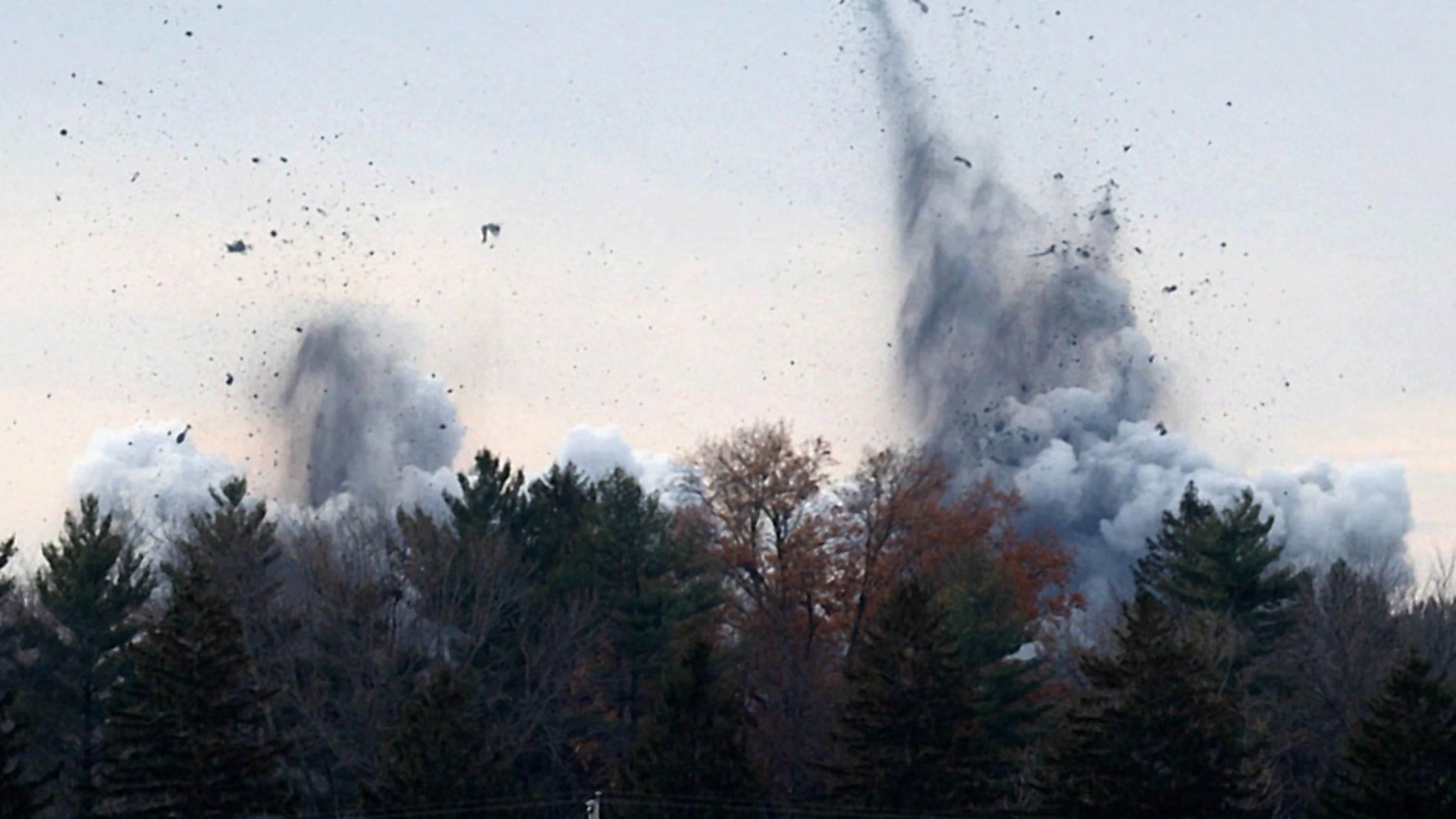
The U.S. Army detonated 9,700 pounds of degraded lead azide Wednesday morning at the Iowa Army Ammunition Plant in Middletown, Iowa, to prevent a spontaneous uncontrolled explosion of the highly unstable compound.
The detonation at about 9 a.m. Central Time involved 68 barrels of the crystallized material. Residents within a 5-mile radius were advised to evacuate, while those farther away were told to shelter in place.
Army modeling indicated that airborne lead could travel approximately 100 miles southwest of the facility, with dust deposition covering around 200 square miles. Lead is a neurotoxin that does not break down in the environment and poses significant health risks, particularly to young children and pregnant people.
In preparation, the Army surrounded the earth-covered containers with sand and lime fill, set up water cannons and misters to suppress dust, and covered the container top with fire-suppressant foam. Researchers collected baseline air and soil samples.
The operation followed days of delays and legal challenges. The Army said it had known about the hazardous state since March. The detonation was initially scheduled for November 20 but delayed after public alarm and an emergency court filing. A federal appeals court initially issued a stay; Trump said he ordered a halt until the court lifted it and Governor-elect Rob Sand signed off. The court ruled the Army could proceed.
After the blast, the EPA reported that its air monitors showed zero detection of airborne lead throughout the region. FEMA issued an all-clear, allowing residents to return. Army officials described the controlled detonation as a success that eliminated the threat of an uncontrolled explosion.