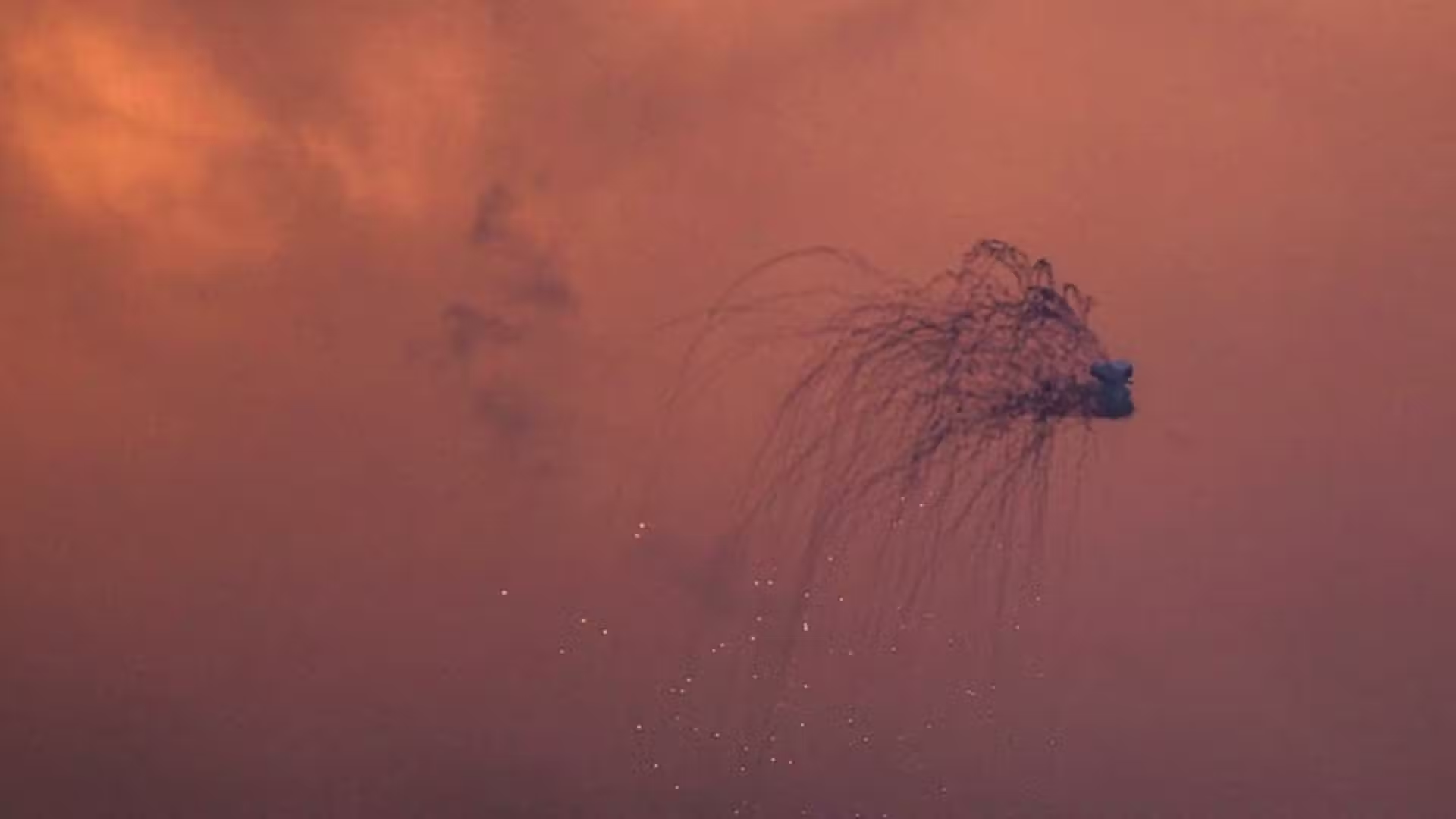
Cluster munitions killed or wounded at least 1,063 people globally in 2025, marking the third-highest annual toll on record, according to a report released by the Cluster Munition Coalition ahead of a conference reviewing a treaty banning the weapons.
The figure represents more than a tripling of casualties compared to 2024, making 2025 one of the highest annual totals since the coalition began tracking cluster munition casualties in 2010. The vast majority of those killed or wounded — 87 percent — were civilians, with around two-fifths of all casualties being children.
Ukraine bore the heaviest burden, with at least 927 people killed or wounded by cluster munitions in 2025. This marked the fourth consecutive year that Ukraine recorded more cluster munition casualties than any other country in the world. Russian forces have deployed the internationally banned weapons in Ukraine, according to the coalition's findings.
Cluster munitions consist of containers that open in mid-air and disperse hundreds of smaller submunitions over wide areas. They are typically delivered by aircraft or rocket launchers. Many of the submunitions fail to detonate on impact, remaining as unexploded ordnance that continues to pose a threat to civilians long after conflicts end.
Beyond Ukraine, cluster munition casualties were recorded in eight other countries during 2025: Afghanistan, Cambodia, Iraq, Laos, Lebanon, Myanmar, Syria, and Russia. The coalition noted that the actual global casualty figure is likely higher, as many incidents go unreported.
The 2008 Convention on Cluster Munitions, which bans the use, production, stockpiling, and transfer of cluster munitions, has been ratified by 124 countries. However, several major military powers, including Russia and Israel, are not parties to the treaty. According to the coalition's report, both Russia and Israel have increased their use of cluster munitions in recent years.
Tamar Gabelnick, director of the Cluster Munition Coalition, stated that while the treaty was helping affected communities, "the rising human toll, continued and new use, production, and transfers by states not party are stark warnings that these gains cannot be taken for granted."
Human Rights Watch, a founding member of the coalition that contributed to the report, called for united action among treaty members in response to the surge in civilian deaths and injuries caused by cluster munitions.