Russia has reactivated a secret nuclear command bunker deep in the Ural Mountains as part of a Cold War-era program designed to guarantee retaliatory nuclear strikes in the event of a Western attack, according to an investigation by The Sunday Times, Danish media group Danwatch, and Dossier Center.
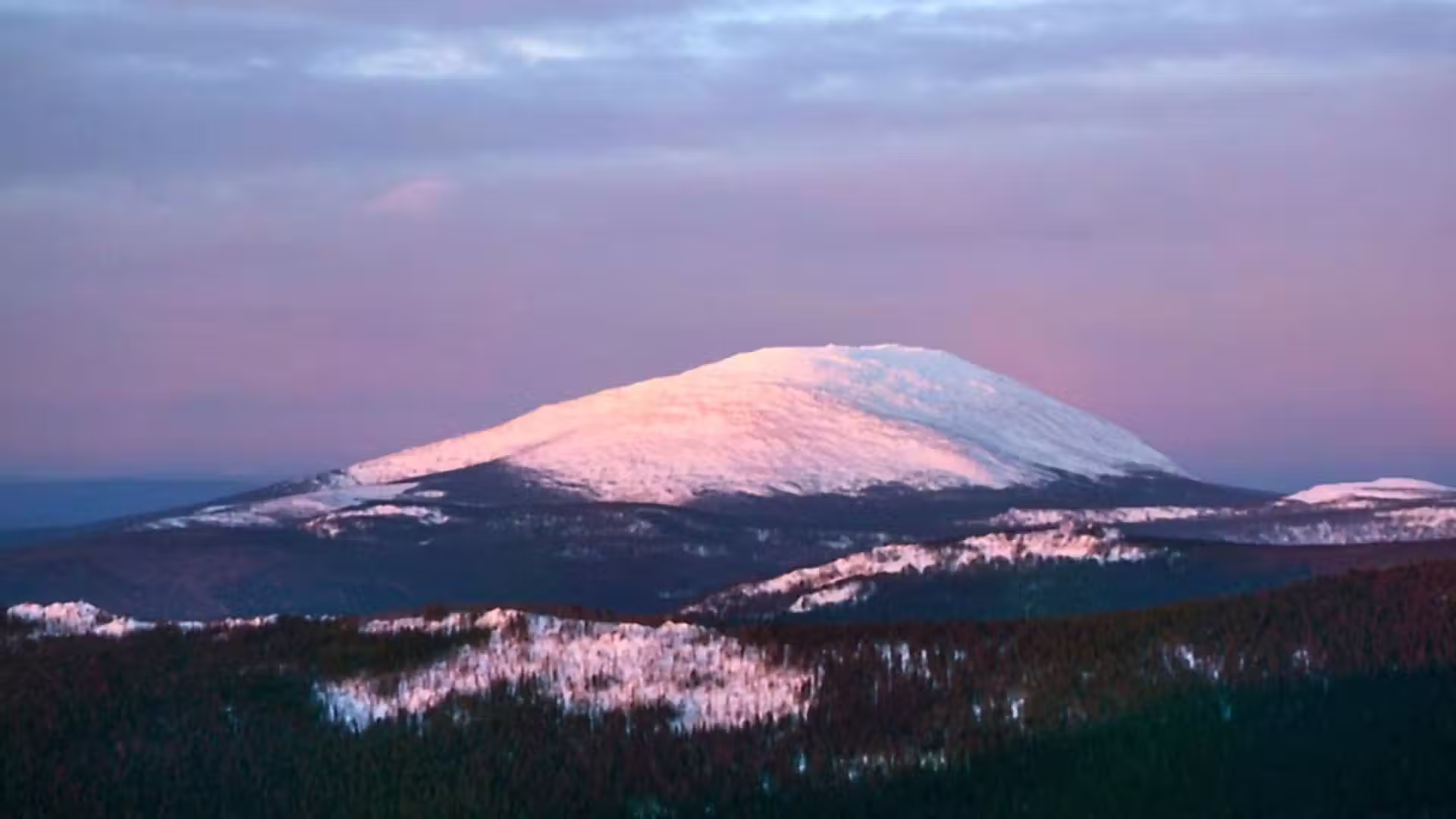
The facility, located on a remote mountainside in the Urals, is guarded around the clock by soldiers stationed at a machine gun tower. The underground complex functions as a giant command center capable of withstanding strikes from American bunker-busting bombs, according to the investigation.
The program, known as "Dead Hand" or "Perimeter," originated during the Cold War when the Soviet Union and United States were locked in strategic competition over nuclear capability. Soviet planners developed the system to ensure the country could survive a nuclear attack and launch retaliatory strikes without waiting for orders from central authorities.
During the Cold War, the Soviets constructed numerous underground bunkers across the country, each designed to resist any type of attack. These facilities were equipped to launch nuclear strikes independently, functioning as shelters against what Soviet leadership feared would be apocalyptic warfare.
As Cold War tensions eased and relations between the superpowers improved following the collapse of the Soviet Union, the "Dead Hand" program gradually fell into obscurity. The secret operation faded from public awareness as the geopolitical landscape shifted.
The investigation employed open-source journalism methods to obtain the first footage of the facility and the military operations surrounding it. Journalists gathered evidence of large-scale construction activities at the site and obtained intelligence indicating the nuclear missile program remains fully operational.