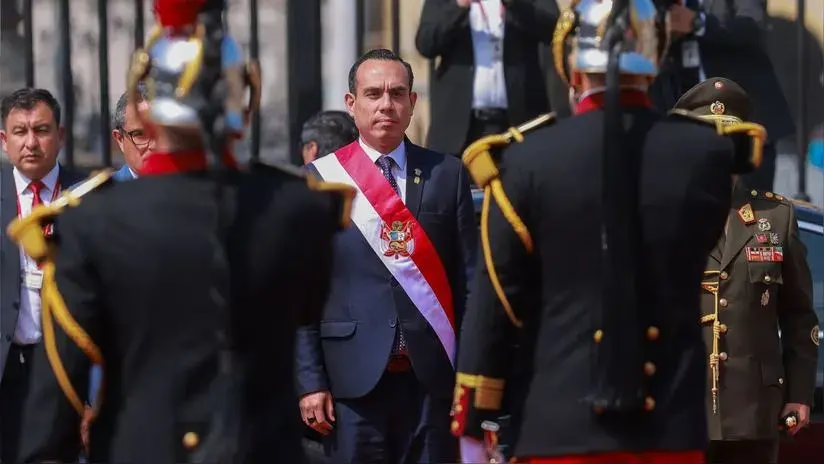
Lima, Peru – Just two days after assuming the presidency following the impeachment of Dina Boluarte, José Jerí is facing mounting pressure to form a new cabinet, a move critical for the country's governance and stability.
The delay in appointing a prime minister and ministers has sparked concern and uncertainty regarding the nation's political direction. Experts warn that without a functioning executive team, the government lacks the basic tools to implement policies and ensure governability. The situation is compounded by Jerí's background in Congress, an institution with low public approval ratings.
According to Article 120 of Peru's Political Constitution, presidential acts require ministerial endorsement to be legally valid. This means that until Jerí names his cabinet, any executive decisions, including decrees and administrative resolutions, would lack legal force.
Sources close to the executive indicate that Jerí is considering profiles of former ministers and individuals associated with his political party, Somos Perú. Names reportedly being evaluated include Carlos Estremadoyro, Miguel Palacios, Jorge Angulo, and Cluber Aliaga, though no official confirmations have been made.
Meanwhile, President Jerí has been actively engaging with various sectors of society. He recently met with over 20 leaders from public transportation unions in Lima and Callao to address the rising crime and extortion affecting the sector. During this meeting, a controversial proposal emerged: offering rewards to criminals who provide information on their own gangs. This idea, reportedly suggested by Jerí himself, aims to weaken criminal structures from within by fostering distrust among members.
Transport unions have given the executive a 15-day deadline to implement concrete actions, including the creation of a special police unit to combat extortion. However, some representatives expressed dissatisfaction, warning of decisive action if commitments are not met. Despite these concerns, transport groups have stated they will not participate in protests planned for November 12 and 15, while urging the government to uphold its promises.
Further complicating Jerí's immediate agenda is the upcoming national strike and march scheduled for October 15, called by various social organizations demanding effective action against crime and expressing rejection of the current government and Congress. Political analysts stress that Jerí's initial steps, particularly the formation of his cabinet, will be crucial in determining the stability of his administration.
Analysts also highlighted that Jerí, while constitutionally legitimate, currently lacks popular legitimacy and must earn it. Repressing the upcoming demonstrations would be a significant misstep, potentially distancing him further from the populace. There is a call for a broad-based cabinet that can foster consensus among political forces and connect with popular sectors, particularly in the southern regions, which have shown significant discontent. The appointment of a Minister of the Interior capable of delivering results in the remaining seven months of Jerí's term is also seen as critical.
Political commentators have described the current situation as an acceleration of institutional decay, stemming from past political crises. They emphasize the need for a cabinet that balances technical expertise with political experience, avoiding a mere distribution of posts that could be perceived negatively by the public. The selection of ministers for key portfolios such as foreign affairs and national defense, requiring specific expertise and geopolitical understanding, is also a point of discussion among analysts.