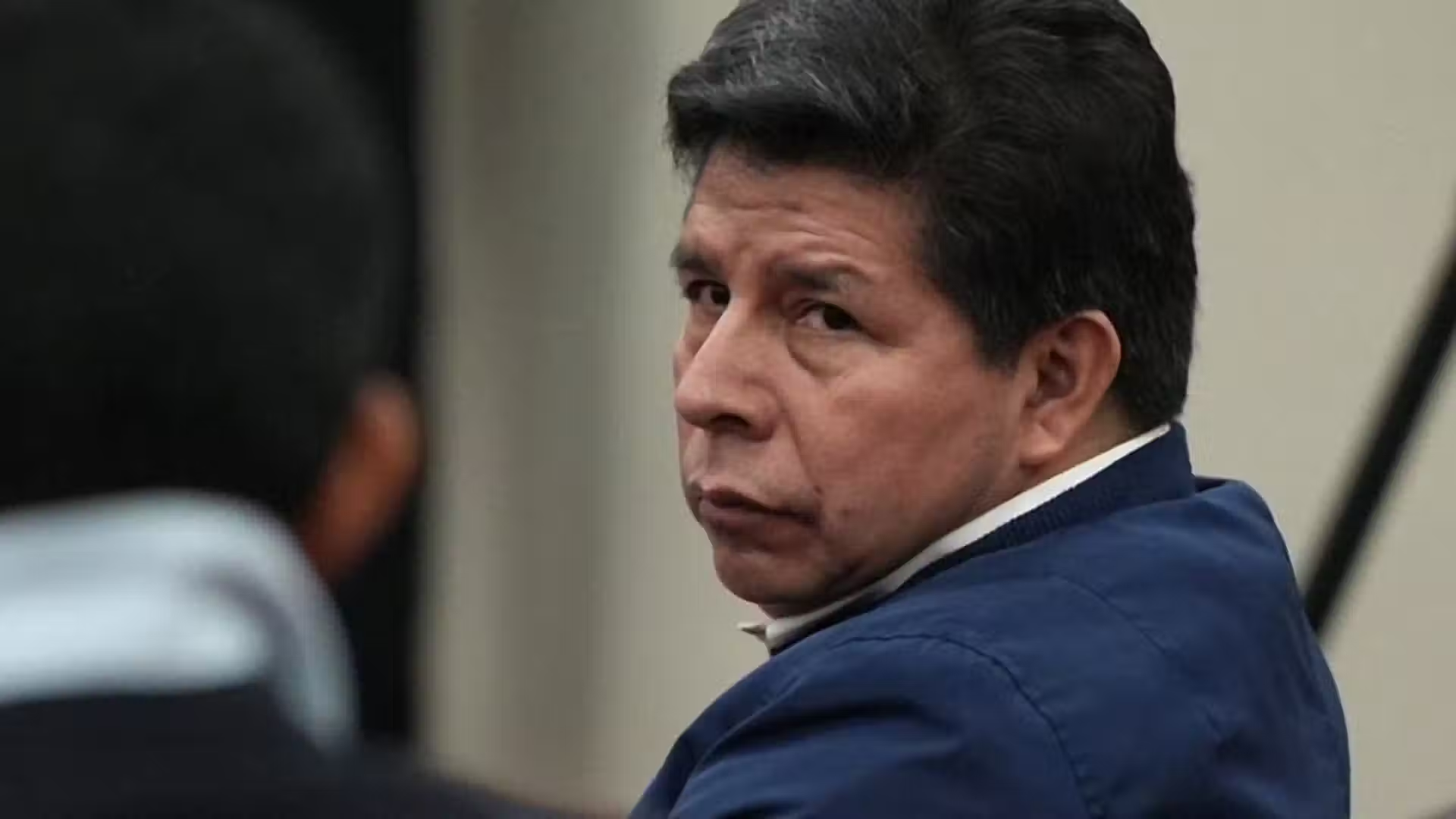
A United Nations panel has determined that former Peruvian President Pedro Castillo's detention is "arbitrary," calling for his immediate release and compensation for violations of his fundamental rights under international treaties.
The U.N. Working Group on Arbitrary Detention concluded in a report dated June 4 that Castillo's arrest following his failed attempt to dissolve Congress on December 7, 2022, lacked a valid legal basis. The group said Peru failed to uphold key due process guarantees and questioned the legality of the arrest, citing the absence of a prior judicial warrant and the failure to respect presidential immunity.
According to the panel's opinion, Peruvian authorities violated Article 9 of the International Covenant on Civil and Political Rights, as well as Articles 3 and 9 of the Universal Declaration of Human Rights. The report stated that Castillo's arrest after his televised address announcing the dissolution of Congress lacked proper legal foundation.
The working group recommended that Castillo be released "immediately" and granted "the effective right to obtain compensation and other types of reparation, in accordance with international law." Castillo, who governed Peru between 2021 and 2022, has remained in prison since his December 2022 detention.
On Friday, Castillo issued a statement on social media calling the U.N. determination a "historic decision" that confirms "unequivocally" his imprisonment was unjustified. He stated that the Peruvian state "flagrantly violated" his human rights and that he was subjected to arbitrary detention while serving as president.
Former Foreign Minister Javier González-Olaechea characterized the U.N. panel's pronouncement as an "opinion" rather than a binding international ruling. He emphasized that the working group is not a judicial body and that its determination carries no binding force for the Peruvian state. González-Olaechea stated that Castillo's legal defense cannot use the document to force his release from prison.
President José María Balcázar said he would need to review the U.N. report, noting that the findings could serve those petitioning for Castillo's pardon. Balcázar stated that the case should be analyzed in light of the U.N. pronouncement and its possible implications for pardon proceedings.