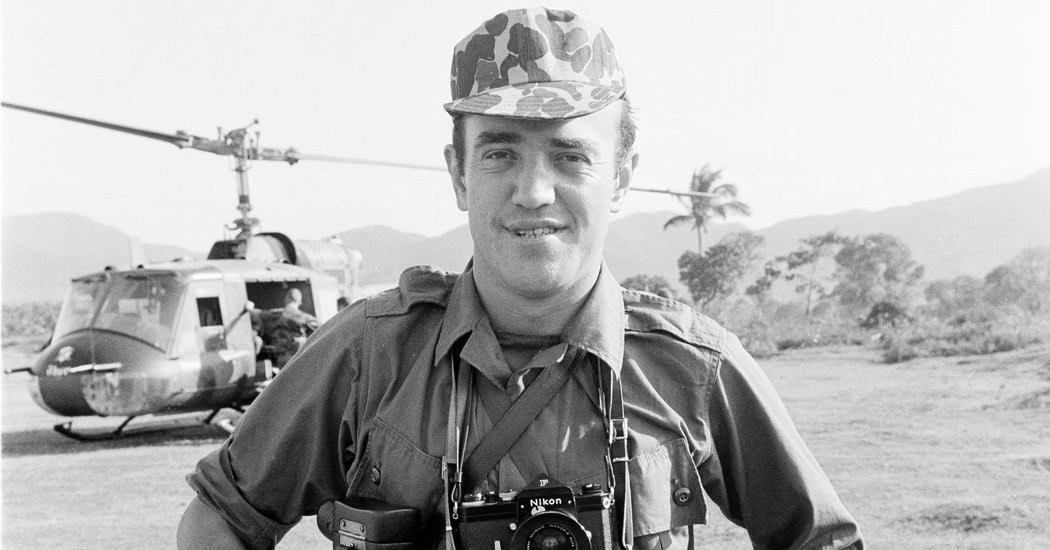
Peter Arnett, Pulitzer Prize-winning war correspondent, dies at 91
Peter Arnett, who won the Pulitzer Prize for Vietnam War coverage and reported from war zones for decades, died Wednesday in California from prostate cancer.
December 18, 2025 - 12:55 AM ET • 2 min read
Peter Arnett, the Pulitzer Prize-winning war correspondent who spent over four decades reporting from combat zones across Asia, the Middle East, and Europe, died Wednesday in Newport Beach, California. He was 91.
Arnett's daughter, Elsa, confirmed his death and said the cause was prostate cancer. He had entered hospice on Saturday. His son Andrew said he was surrounded by friends and family at the time of his death.
Arnett won the 1966 Pulitzer Prize for international reporting for his coverage of the Vietnam War while working as a correspondent for the Associated Press. He reported from Vietnam from 1962 until the war's end in 1975, initially known primarily to fellow journalists for his wire-service dispatches from the conflict.
His prominence expanded significantly in 1991 when he became one of the world's best-known television reporters after broadcasting live updates for CNN during the first Gulf War. While nearly all Western reporters had fled Baghdad in the days before the U.S. led attack began, Arnett remained in the city. As missiles began striking Baghdad, he broadcast live accounts by cellphone from his hotel room, providing eyewitness coverage of the conflict as it unfolded.
Over his career spanning 45 years, Arnett covered 17 wars across multiple continents. He worked as a television reporter for CNN for 18 years, during which he traveled to war-torn regions and areas of insurrection. His reporting took him from Vietnam's jungles to Iraq, where he interviewed President Saddam Hussein. He was among the last Western television broadcasters in Baghdad on two occasions: at the start of the 1991 Persian Gulf War and during the 2003 American-led coalition invasion.
Throughout his career, Arnett's reporting broke news and challenged conventions, actions that infuriated national leaders while inspiring generations of journalists to pursue frontline war correspondence.