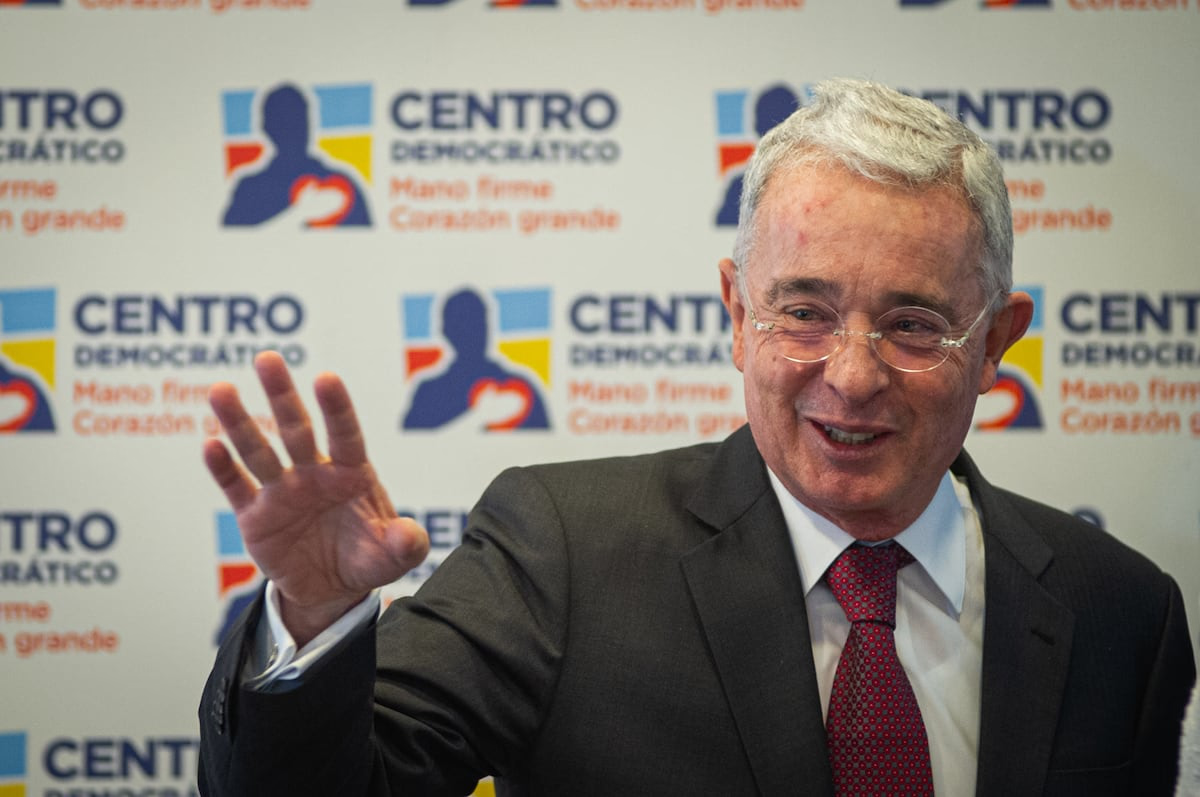
BOGOTÁ – The Bogotá Superior Tribunal (Tribunal Superior de Bogotá) on Tuesday absolved former Colombian President Álvaro Uribe Vélez of all charges related to witness tampering and procedural fraud, overturning a first-instance conviction that had resulted in a 12-year prison sentence.
The tribunal’s decision, announced after a four-hour virtual hearing, concluded that there was insufficient evidence to sustain the former president’s guilt. The ruling, which required the vote of two out of the three sitting magistrates, effectively nullified the historic decision from three months prior that had made Uribe the first former Colombian head of state to be convicted criminally.
Magistrate Manuel Antonio Merchán announced the resolution, which found that the prosecution had not proven Uribe directly instigated the criminal acts. The tribunal’s 700-page ruling sharply questioned the methodology used by the first-instance judge, Sandra Liliana Heredia, citing “rhetorical biases” and “vague premises.” The court also raised concerns regarding the legality of certain telephone intercepts presented by the prosecution and noted an error in the judicial interpretation of “eventual intent” (dolo eventual) in the previous ruling.
Political reactions and calls for appeal
Uribe, 73, who served two consecutive terms and remains the leader of the right-wing Centro Democrático party, celebrated the ruling, calling the years-long process political rather than judicial. “My only motivation was always to defend Colombia from terrorism,” he said.
The acquittal immediately triggered a political storm, with celebratory responses from Uribe’s allies.
Senator Paloma Valencia, a presidential pre-candidate for Centro Democrático, stated, “We knew of his innocence and today we feel a victory that rejoices Colombians; justice has been done.” Former President Iván Duque, who relied heavily on Uribe’s support to win the presidency in 2018, also hailed the decision, arguing Uribe’s “honesty, patriotism and commitment to legality have prevailed.” Business associations, including the powerful National Association of Entrepreneurs (ANDI), welcomed the decision, praising the judiciary’s independence and transparency.
Uribe’s political allies immediately began calling for his return to active politics, urging him to run for a Senate seat in the upcoming 2026 legislative elections.
Condemnation from the left
Conversely, President Gustavo Petro and leftist leaders reacted with harsh criticism. Petro denounced the tribunal’s decision, claiming it contradicted the Supreme Court of Justice and essentially affirmed that judicial intercepts were a violation of privacy. He argued the decision serves to “cover up the history of paramilitary governance in Colombia,” which he asserted was tied to politicians allied with drug trafficking.
Petro also linked the ruling to international pressures, suggesting that former U.S. President Donald Trump, an ideological ally of Uribe, would seek sanctions against the current administration.
The Colombian president warned of maneuvers seeking a “coup d’état” against his government and issued a call for immediate popular mobilization, urging supporters to gather in Bogotá's Plaza de Bolívar this Friday.
The decision was also strongly condemned by Senator Iván Cepeda, the figure at the center of the original complaint. Cepeda announced that he would file a recourse of cassation with the Supreme Court of Justice to seek a reversal of the acquittal.
Case background
This legal saga began in 2012, when Uribe filed a criminal complaint against then-Senator Cepeda, accusing him of manipulating incarcerated witnesses to link Uribe to illegal paramilitary groups. However, the Supreme Court later archived the complaint against Cepeda and initiated an investigation into Uribe, concluding that he appeared to be the one attempting to tamper with testimonies.
In the revoked first-instance ruling, Uribe had been convicted based on evidence suggesting he, through his former lawyer Diego Cadena, pressured ex-paramilitaries to change their testimony in his favor. Cadena was separately convicted of bribery, but the superior tribunal determined that no direct evidence proved he acted under the explicit orders of the former president.
The acquittal comes at a critical time as Colombia heads toward the 2026 presidential and legislative elections, allowing Uribe and his party to potentially reassert their political dominance following years of legal challenges.