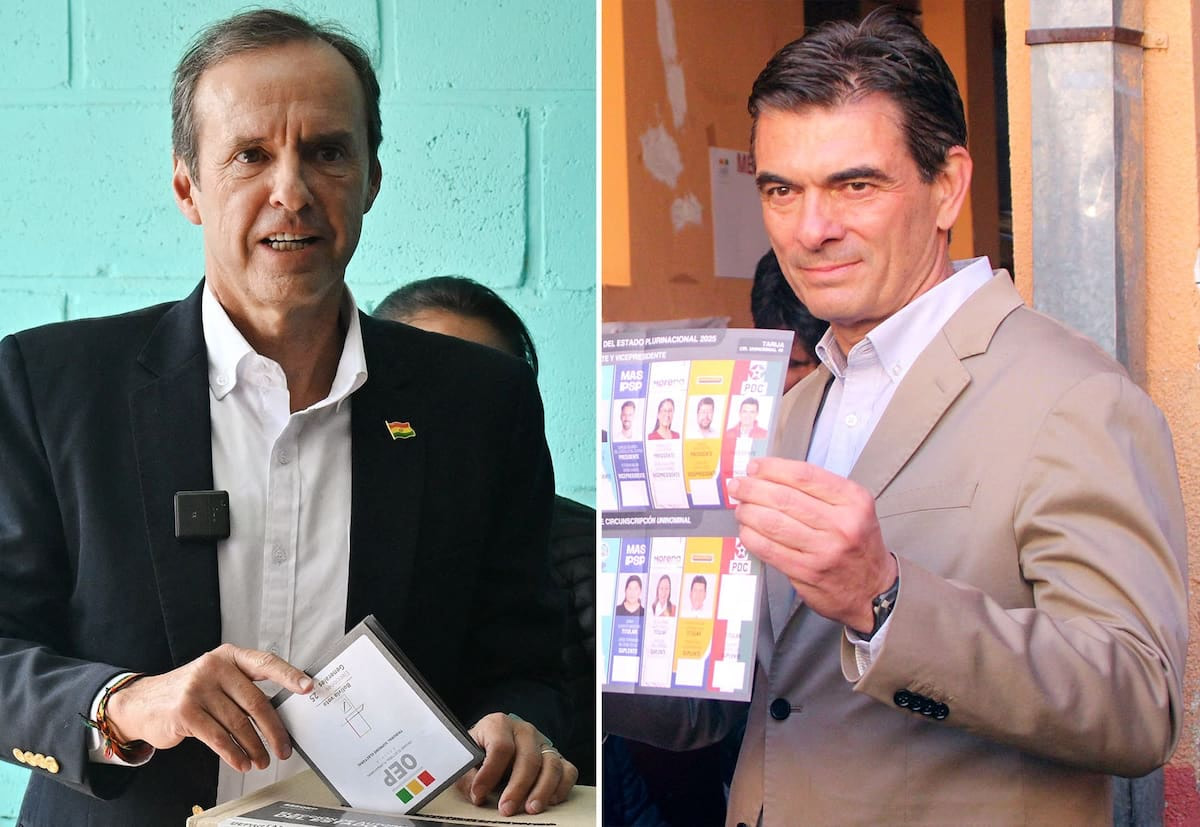
La Paz, Bolivia – Bolivians are preparing for a presidential runoff election this coming Sunday, October 19, a contest that is poised to be decided by a substantial bloc of undecided voters. Polls indicate a narrow lead for conservative former President Jorge “Tuto” Quiroga of the Free Alliance, with voter support estimated between 43% and 45%. His opponent, Rodrigo Paz Pereira of the Christian Democratic Party, trails with 36% to 39%.
The crucial factor in this election is the 18% to 20% of undecided voters, according to a survey by Ipsos Ciesmori for the television network Unitel. This segment of the electorate is expected to hold the key to the final result.
Sunday evening saw the candidates face each other in a televised presidential debate, organized by the Supreme Electoral Tribunal in La Paz. Broadcast on national television and digital platforms, the event attracted millions of viewers and marked the first time the candidates met in a formal debate format ahead of the runoff.
The exchange was characterized by a restrained tone, with candidates focusing on economic and governance proposals rather than personal attacks. Gustavo Ávila, a member of the Supreme Electoral Tribunal, described the debate as "successful and positive," highlighting the equal opportunity it provided for both candidates to present their platforms. Ávila views the event as an important step in strengthening democracy and mentioned the tribunal's intention to propose making presidential debates mandatory in future elections.
Following the debate, Paz emphasized the possibility of "discussing with respect and with proposals," stating that voters desire certainty and practical solutions. Quiroga, in turn, asserted that Bolivia needs "firm and swift decisions" and that the debate demonstrated readiness to govern from day one. During his closing remarks, Quiroga stressed the urgency of injecting dollars into the financial system and resolving fuel shortages, positioning himself as the experienced candidate to navigate the current crisis.
Political analyst Reymi Ferreira had previously told Bolivia's Red Uno network that the debate could be considered "historic," with the potential to sway between 9% and 12% of undecided voters in a race where the margin between candidates is minimal.
This runoff election is historic for Bolivia in several ways. It marks the first time the country will hold a presidential runoff since the mechanism was introduced in the 2009 Constitution. Furthermore, the election signifies a potential end to the hegemony of the Movement for Socialism (MAS), led by former President Evo Morales. The MAS, which has won every presidential election in the first round since 2006, did not secure enough votes to pass to the second round this year, though it remains a significant opposition force with nearly 20% of the electorate's support.
Questions surrounding the fate of MAS voters and the impact of calls to annul votes, particularly from Evo Morales who faces accusations of child trafficking, add another layer of uncertainty to the election. The significant number of null votes in the first round, exceeding the votes for other candidates, underscores this factor.
Nearly 8 million Bolivians are registered to vote in the election. Abroad, the largest number of Bolivian expatriate voters are in Argentina, followed by Spain, Brazil, Chile, and the United States. Voting will not be permitted in Austria, Canada, China, South Korea, Cuba, Egypt, India, Nicaragua, Russia, and Venezuela due to official resolutions.
Citizens can verify their voter registration and polling station details through the official “Yo Participo” platform of the Supreme Electoral Tribunal. Expired identity cards issued within the last year will be valid for voting.