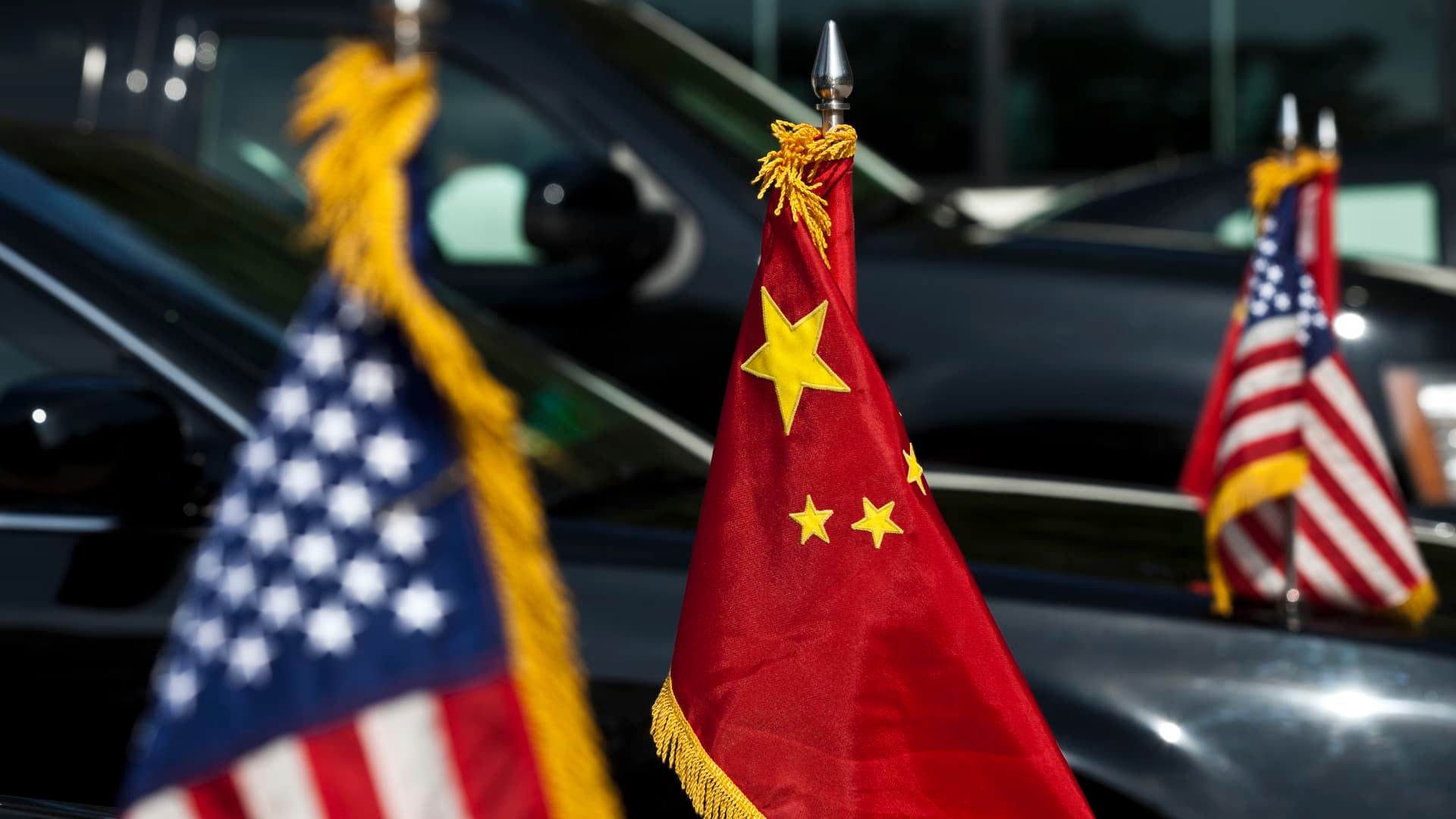
The trade war between the United States and China has flared up again following Beijing's announcement of new restrictions on the export of rare earth elements and lithium battery components. The measures, unveiled on Thursday, have drawn sharp criticism from U.S. President Donald Trump, who has threatened to impose an additional 100% tariff on Chinese imports starting November 1 and potentially cancel an upcoming meeting with Chinese President Xi Jinping.
The latest escalation marks a significant setback for efforts to de-escalate the prolonged trade dispute between the two economic superpowers. After several rounds of negotiations that had appeared to lower tensions since May, the conflict is now back to a point reminiscent of April, when Trump first launched his tariff war.
China's Ministry of Commerce defended the new export controls on rare earths as "legitimate" under international law, aiming to strengthen its export control system and "better safeguard world peace and regional stability." A spokesperson stated that the controls are not outright bans and that applications meeting requirements will be approved, asserting that the potential impact on the supply chain would be "very limited."
However, U.S. officials perceive Beijing's move as a strategic maneuver to leverage its near-monopolistic control over these critical materials in ongoing trade negotiations. The new regulations require foreign entities to obtain a license from Beijing to export products containing even minimal amounts (over 0.1%) of Chinese-sourced rare earths, or those manufactured using Chinese extraction, refining, or magnet-making technologies. Applications for items that could be used for military purposes will also be rejected.
Rare earth elements are crucial for a wide array of advanced technologies, including smartphones, wind turbines, electric vehicle batteries, medical equipment, and military weaponry. China dominates the global supply chain for these 17 metallic elements, controlling approximately 60% of global production and over 90% of processing capacity. In recent years, between 2020 and 2023, around 70% of the United States' imports of rare earth compounds and metals originated from China.
The announcement came after an eight-day official closure in China for the National Day holiday. The measures also include restrictions on several additional rare earth elements, such as holmium and erbium, along with controls on lithium battery-related items and "superhard materials" like synthetic diamond powder. Fourteen foreign organizations, predominantly U.S.-based and defense-related, have also been added to China's "unreliable entity" list.
In response to China's move, President Trump announced the new 100% tariffs on Chinese imports, set to take effect on November 1. He also threatened to impose export controls on "any and all critical software" on the same date. China's Commerce Ministry accused the U.S. of "double standards" and of generalizing national security concerns to abuse export controls, noting the much larger number of items on the U.S. control list.
Adding another layer to the escalating tensions, China also announced it would begin charging U.S. ships for docking at Chinese ports starting October 14, a reciprocal move to U.S. fees on Chinese vessels. Chinese officials described this as a "necessary passive defensive action" that "seriously undermined the atmosphere of the economic and trade talks."
The potential meeting between Trump and Xi, slated for the sidelines of the Asia-Pacific Economic Cooperation forum in South Korea in late October, now hangs in the balance. Trump stated he would still attend the forum but expressed uncertainty about the meeting with Xi proceeding.
This latest development represents a significant blow to U.S. industries heavily reliant on rare earth elements for sectors such as defense, electronics, and the energy transition. The controls are seen by analysts as China's way of asserting its leverage in global supply chains, mirroring tactics previously used by the U.S. against China.