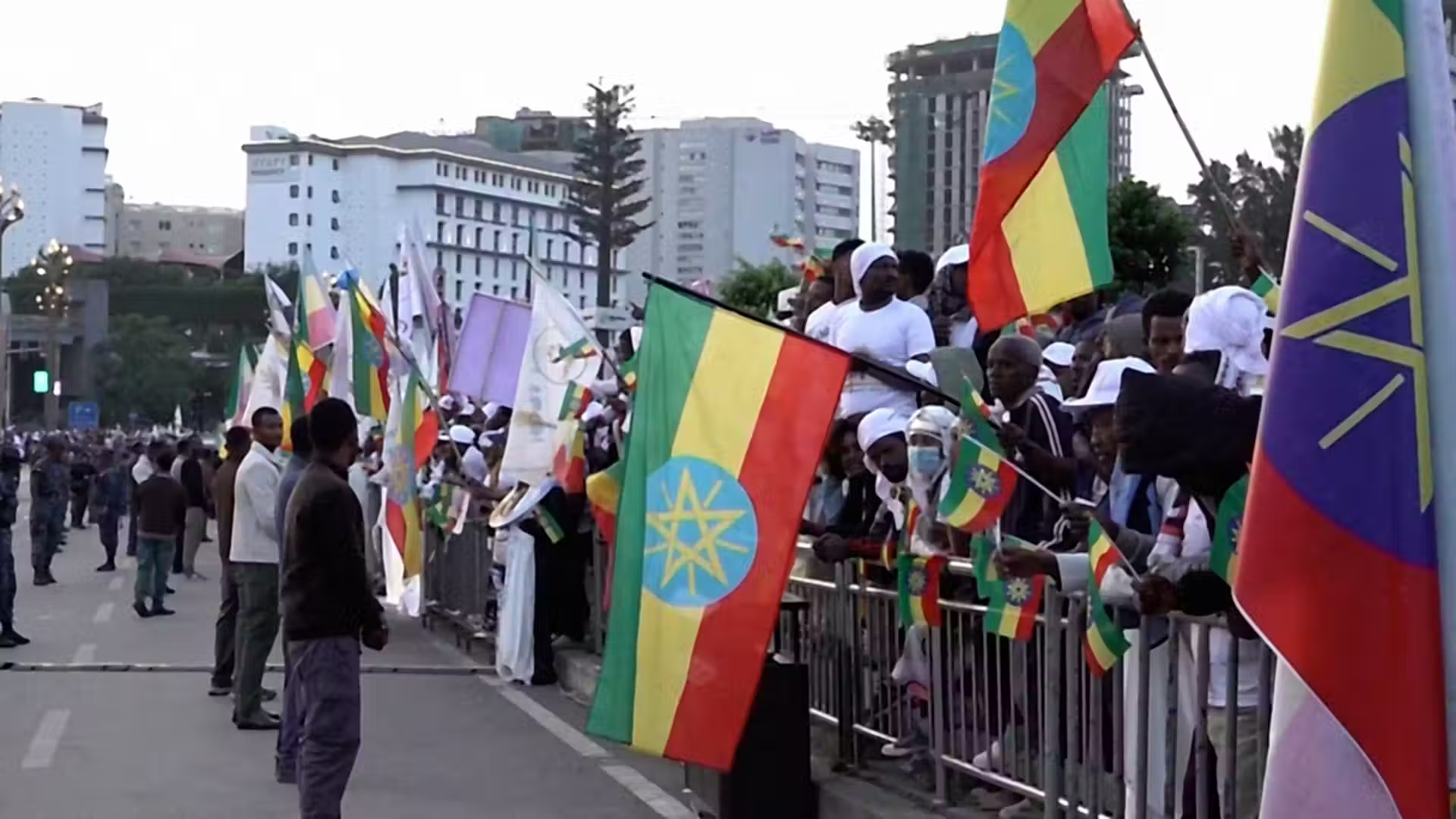
Ethiopia holds its seventh general election since the adoption of the 1995 constitution on Monday, with voters choosing members of parliament who will in turn select the next prime minister.
The National Election Board of Ethiopia said 47 political parties and more than 10,900 candidates are competing in the race. Of these, 2,198 candidates are running for the federal parliament, 8,736 for regional and city councils, and 73 are independents. More than 50 million voters are registered to participate, with women accounting for approximately half of the electorate.
The election takes place as conflict continues in parts of the country, preventing many people from voting. The entire northern region of Tigray has been excluded from the poll. Tigray has been attempting to recover from a brutal civil war that ended in 2022.
Ethiopia's electoral system differs from many other countries in that voters do not directly elect a president. Instead, they choose parliamentary representatives in a system similar to that of the United Kingdom. The party that secures at least 274 of the 547 parliamentary seats earns the right to form the next government.
Prime Minister Abiy Ahmed is not directly elected but is selected by parliament. The election occurs as Ethiopia's relations with its northern neighbour Eritrea remain tense. The two countries separated following the downfall of the military regime in 1991, with Eritrea's secession occurring two years later.
Young Ethiopians comprise a substantial portion of the population, with a median age of approximately 19 years according to United Nations population estimates, giving them significant representation in the electorate.