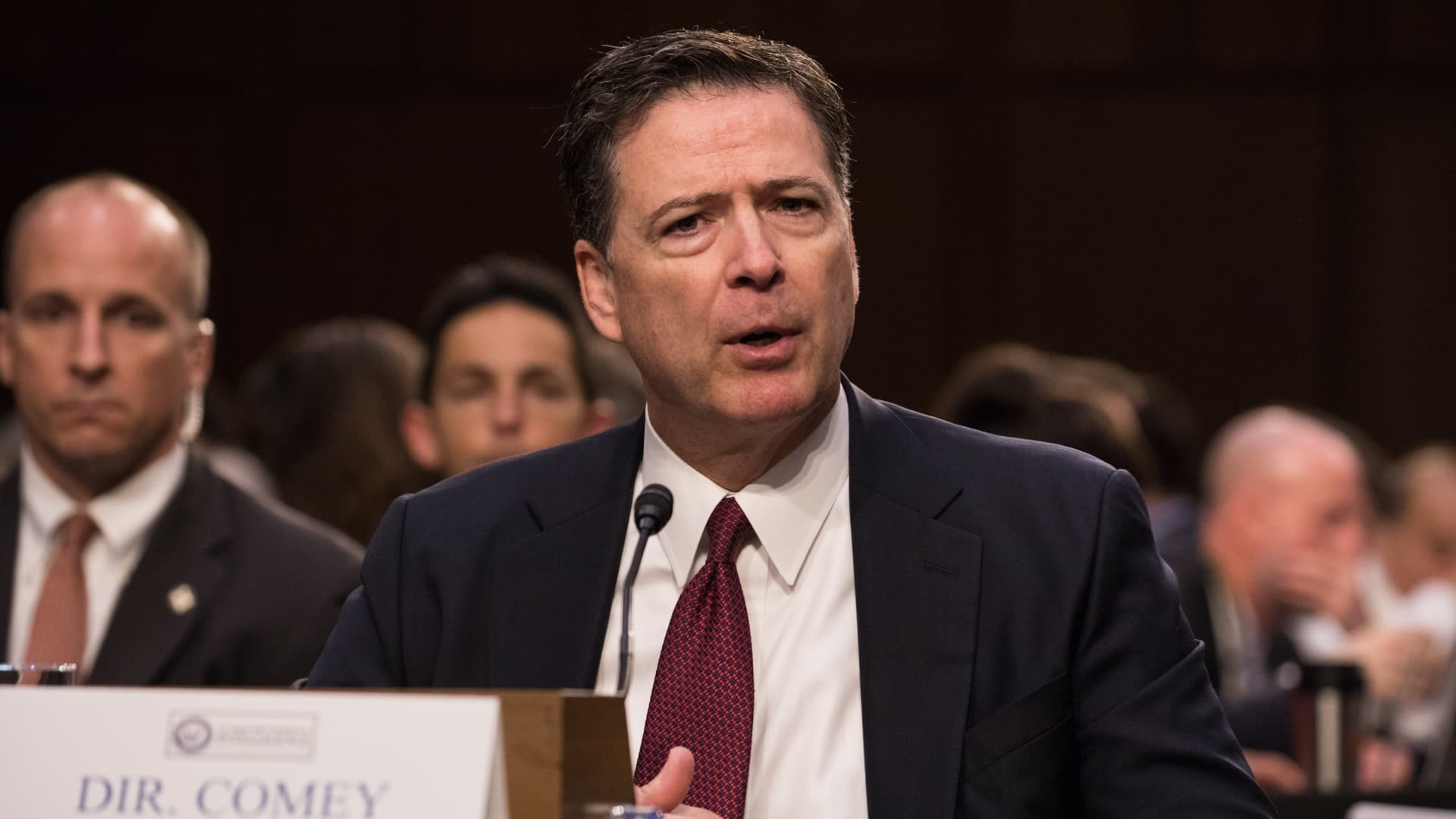
Attorneys for former FBI Director James Comey filed a slate of motions Monday seeking the dismissal of a federal indictment against him, arguing the charges were brought due to "President Trump's personal animus" and constituted a vindictive and unlawful prosecution.
Comey, who was indicted in September on one count of making false statements to Congress and one count of obstruction of justice, pleaded not guilty to both counts earlier this month. The charges relate to testimony Comey provided to the Senate in 2020, with the indictment returned just days before the relevant statute of limitations was set to expire.
Claims of Vindictive Prosecution
In motions filed in federal court in Eastern Virginia, Comey’s legal team argued that the charges represent an "egregious abuse of power" stemming from years of political sparring between the former FBI director and President Trump, who fired Comey in May 2017. Attorneys for Comey contended that Mr. Trump ordered prosecutors to charge Comey out of "personal spite" and retaliation for Comey’s public criticism of the President.
Comey’s lawyers asserted that without a dismissal, Mr. Comey would face a "perpetual state of being vindictively prosecuted." While claims of selective or vindictive prosecution are generally difficult to win, former prosecutors have noted that the highly politicized circumstances surrounding the indictment could aid Comey’s defense.
U.S. District Judge Michael Nachmanoff has scheduled a hearing on the initial motions for November 19 in Alexandria, Virginia. Comey’s legal team has indicated that a second round of filings challenging the case, including potential claims of grand jury abuse and "outrageous conduct" by the Justice Department, is expected in the coming weeks.
Challenging the Prosecutor's Authority
In a separate motion, Comey’s attorneys argued that the indictment should be dismissed because interim U.S. Attorney Lindsey Halligan, who signed the document, was "defectively appointed" to her office. Comey’s lawyers wrote that the President and Attorney General appointed Ms. Halligan, a former Trump defense lawyer, as interim U.S. Attorney in violation of a clear statutory command to indict an outspoken critic of the President.
The motion contends that because "no properly appointed" official obtained the indictment, it is a nullity and should be dismissed. The filing notes that the administration has recently attempted to bypass the Senate confirmation process for U.S. attorney positions nationwide, often through temporary installations.
This argument follows recent court successes in other districts, where defendants in New Jersey and Nevada successfully challenged similar temporary U.S. attorney appointments made by the President. In those cases, federal judges ruled that the individuals were serving "without lawful authority," interpreting federal law to limit the aggregate service time for temporary appointments to 120 days, regardless of how many individuals are appointed during that period.
Because the validity of Ms. Halligan’s appointment is at issue, the U.S. District Judge overseeing the case, Michael Nachmanoff, may be required to recuse himself, potentially requiring a judge from outside the Eastern District of Virginia to hear arguments on that motion.
Conflict Question Raised Over Defense Counsel
In a separate procedural development, federal prosecutors indicated in a recent filing that they may seek to disqualify Comey’s lead defense counsel, Patrick Fitzgerald. Prosecutors suggested that Mr. Fitzgerald’s alleged involvement in a 2017 plan by Comey to leak the contents of a memo to the media raises questions of conflict and potential disqualification.
Prosecutors argued that based on publicly disclosed information, Comey used Mr. Fitzgerald to improperly disclose classified information. They are asking the court to establish a "filter team"—a group of government attorneys tasked with reviewing evidence to separate privileged information from non-privileged material—to sort through communications between Comey and his legal team.
Comey’s attorneys, however, accused prosecutors of attempting to "defame" Mr. Fitzgerald, noting that a 2019 Department of Justice Inspector General report found no evidence that Comey or his attorneys had released classified information contained in the memos to members of the media. The Justice Department declined to prosecute Comey regarding his handling of the memos at that time.