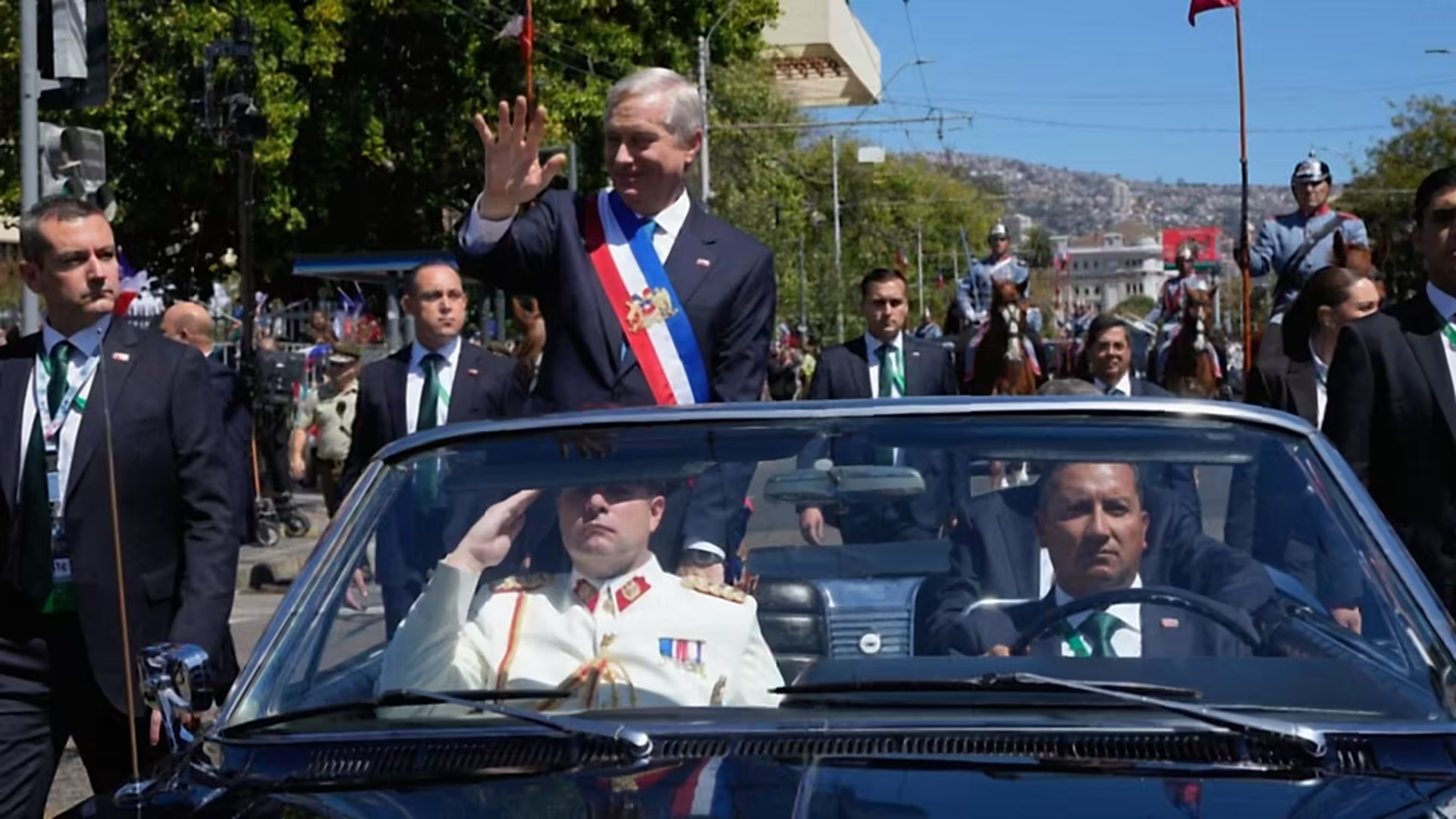
Kast inaugurated as Chile's most conservative president since democracy's return
José Antonio Kast was sworn in Wednesday as Chile's new president, taking office from leftist Gabriel Boric with a hardline agenda on crime and immigration.
March 11, 2026 at 06:54 PM
José Antonio Kast was sworn in Wednesday as president of Chile in a ceremony held at the National Congress in Valparaíso, marking the country's most conservative leadership since the return to democracy in 1990. The 60-year-old lawyer and former Republican Party leader took the oath at approximately 12:28 p.m. local time, receiving the presidential sash from Senate President Paulina Núñez and the O'Higgins baton—a symbol of executive power transfer—from outgoing President Gabriel Boric.
Kast won the presidency in a December runoff with over 58 percent of the vote, campaigning on what he termed an "emergency government" focused on dismantling organized crime networks and tightening border controls. His ascent represents a sharp ideological shift from Boric's four-year progressive administration.
The inauguration ceremony was attended by approximately 1,100 guests, including about a dozen heads of state and government. International attendees included Argentine President Javier Milei, Spain's King Felipe VI, Ecuador's President Daniel Noboa, Honduras's Nasry Asfura, Bolivia's Rodrigo Paz, and Venezuelan opposition leader and Nobel Peace Prize recipient María Corina Machado. Mexican President Claudia Sheinbaum and Brazilian President Luiz Inácio Lula da Silva were notably absent.
Kast resigned from the Republican Party hours before the ceremony, as he had previously pledged. The party, which he founded in June 2019, represented his political base during his rise to the presidency.
Following the swearing-in, Kast's 24-member cabinet also took their oaths. Interior Minister Claudio Alvarado was the first to swear in, followed by the remaining ministers including Security Minister María Trinidad Steinert, Defense Minister Fernando Barros, and Foreign Affairs Minister José Francisco Pérez-Mackenna. Other cabinet members include Justice Minister Fernando Rabat, Social Development Minister María Jesús Wulf, Health Minister May Chomalí, and Education Minister María Paz Arzola.
A symbolic moment during the ceremony occurred when an attendee shouted "Now yes, long live Chile" as Kast and Boric exchanged a handshake. Boric, who appeared without a necktie, greeted his successor with applause. Kast wore a blue suit suggested by designer Sergio Arias and a necktie that was a gift from Italian Prime Minister Giorgia Meloni, who could not attend the ceremony. Meloni sent the tie on March 10, and Italy was represented at the ceremony by Minister of University and Research Anna Maria Bernini.
The presidential sash Kast received bore an embroidered shield, a detail not incorporated by any democratically elected Chilean leader since the return to democracy. The last president to use such a symbol was dictator Augusto Pinochet, who ruled from 1973 to 1990.
Kast's first major international challenge involves determining the fate of a submarine fiber-optic cable project intended to connect Chile with China. The initiative, awarded in January to state-owned China Mobile, was annulled two days later. The Trump administration has characterized the project as a potential regional security threat. The previous Boric government faced sanctions from Washington, including visa revocations for three officials, including the transport minister, over the cable matter.
Some administrative gaps marked the transition. Provincial presidential delegates in Malleco, Bío Bío, and Osorno remained without formal appointments following Kast's inauguration, with interim representatives taking over in some cases. The Socialist Party expressed concern over what it characterized as governmental irresponsibility regarding these unfilled positions.
Kast's cabinet is tasked with implementing the emergency government agenda beginning immediately. The new president planned to hold meetings and settle into the presidential residence at La Moneda the same evening as his inauguration.