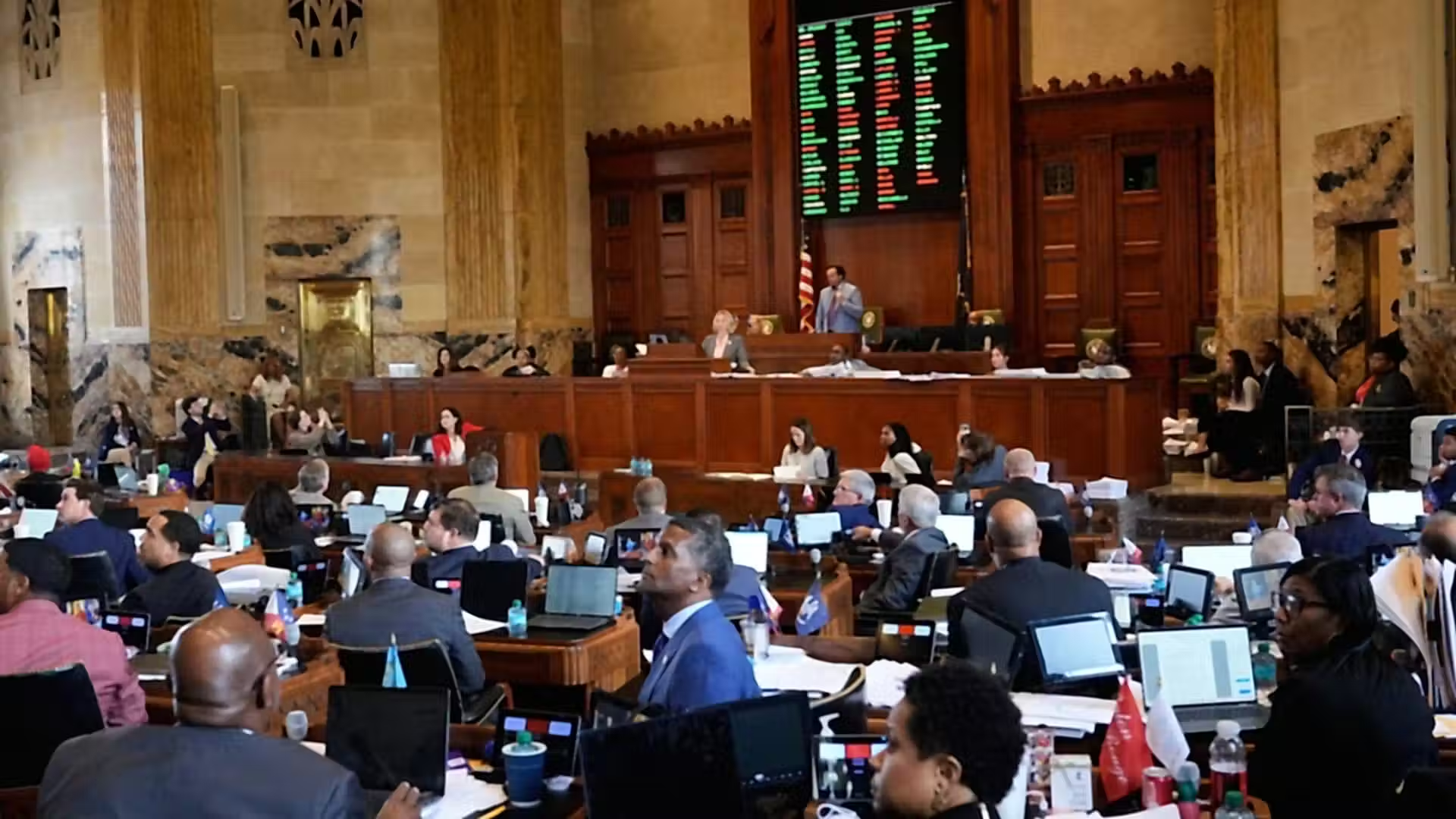
Louisiana's Republican-led legislature approved a new congressional map Friday that eliminates one of the state's two majority-Black districts, a move that could allow Republicans to flip one of two Democratic-held House seats in the 2026 midterms.
The map was passed by the Louisiana Senate after significant dissent from Democratic lawmakers. Republican Gov. Jeff Landry is expected to sign the legislation into law.
The new map reconfigures the state's congressional districts following a U.S. Supreme Court ruling last month that struck down Louisiana's previous map as an illegal racial gerrymander. The court's decision weakened Section 2 of the Voting Rights Act of 1965, a landmark federal statute protecting voting rights.
Under the new map, Louisiana will have one majority-Black congressional district covering an arc from Baton Rouge to New Orleans, representing a smaller section of the state. This represents a reduction from the previous two majority-Black districts, both represented by Democrats. Louisiana's population is approximately one-third Black.
Republican lawmakers had initially considered drawing a map that would have given the party a shot at winning all six of the state's U.S. House seats. However, that approach would have required adding more Black voters to Republican-held districts, a strategy some Republicans believed could backfire with losses. Some Republicans said a 5-1 map better protects U.S. House Speaker Mike Johnson from facing a difficult reelection.
The redistricting effort comes as part of a broader national mid-decade redistricting battle. President Trump pushed Republican-led states to pursue redistricting efforts, prompting Democratic-led states to join in a year-long tit-for-tat contest.
The legislature moved quickly to pass the new map. Republican Gov. Jeff Landry had pushed to delay the House primary elections originally scheduled for May 16, allowing lawmakers time to redraw districts after the Supreme Court's ruling. This delay occurred just days before early voting was set to begin, with tens of thousands of voters having already returned mail ballots.
During the Senate floor debate, Democratic state Sen. Royce Duplessis expressed concerns about the map's durability. "Y'all, at the beginning of this process, I would have said that we are building a house on a broken foundation. Now, it feels more like quicksand, because we're in 2026 going into a map that we know is flawed, that we know is going to get struck down," Duplessis said.
Republican state Sen. Jay Morris defended the map ahead of the final vote, stating: "I think we have a map here that meets all the traditional redistricting criteria. It's not racially gerrymandered. ... I think it broadly allows for representation for each region."
Louisiana is the latest state to enact rare mid-decade congressional redistricting efforts following the Supreme Court's April decision in Louisiana vs. Callais, which invalidated the 2024 map on the grounds that the state legislature was not justified in using race to construct the districts.