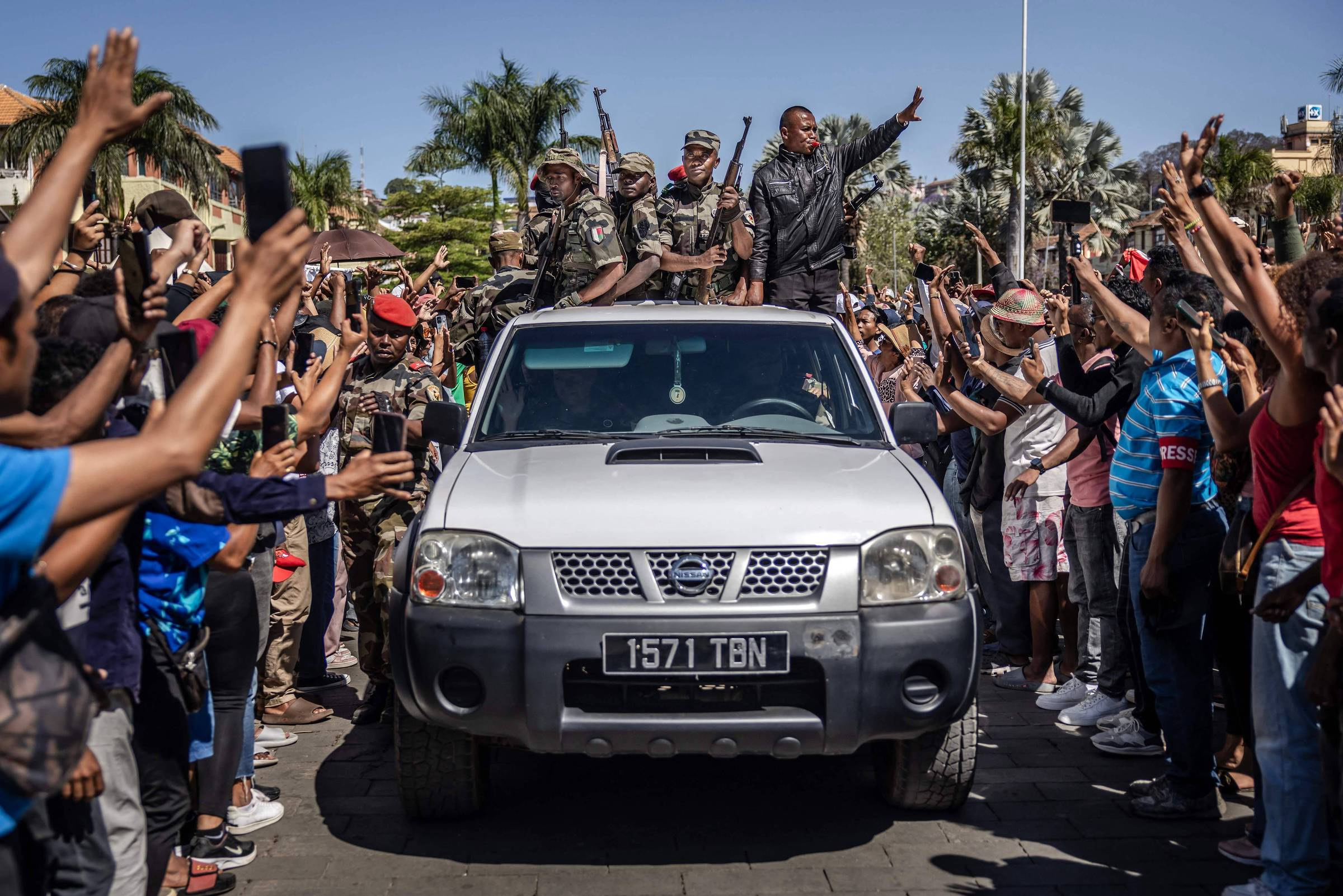
Madagascar's President Andry Rajoelina has fled his country along with his family, according to opposition leader Siteny Randrianasoloniaiko and other officials. Rajoelina's departure comes after army units reportedly switched allegiance and joined young protesters, known as Generation Z, who have been demonstrating across the nation since late September.
The protests, which have resulted in at least 22 deaths and numerous injuries, initially stemmed from frequent electricity and water cuts. However, they have broadened into a wider movement against issues such as corruption, poor governance, and a lack of basic services. Young Malagasy citizens, inspired by similar movements in other countries, organized protests via social media under the hashtag "Leo Délestage" (Fed Up with Blackouts), with some adopting symbols from the manga series One Piece.
Sources told Reuters that Rajoelina departed on a French military aircraft, reportedly after reaching an agreement with French President Emmanuel Macron. Radio France Internationale (RFI), citing official French sources, reported that Rajoelina traveled from the capital, Antananarivo, by helicopter to the island of Sainte-Marie before boarding the French military plane to the island of Réunion.
The situation escalated over the weekend when an elite army unit, Capsat, refused to repress protesters and declared its support for them. This was followed by declarations that they were taking control of the armed forces and appointing a new Chief of Staff, moves typically requiring presidential decree, suggesting a power vacuum.
Adding to the instability, Rajoelina's former prime minister, Christian Ntsay, and businessman Maminiaina Ravatomanga, reportedly left Madagascar on a private flight bound for Mauritius. Mauritian authorities later expressed displeasure regarding the air traffic control clearance for the flight's landing.
Protests began on September 25, characterized by scenes of looting and violence, met with a strong police response including tear gas and smoke bombs. University and secondary school students joined, voicing grievances over their difficult living conditions compared to the perceived extravagant lifestyles of Rajoelina's children.
In an attempt to quell the unrest, Rajoelina announced the dismissal of Prime Minister Ntsay and his entire government. However, protests persisted, with trade unions and opposition figures joining the demonstrations. The subsequent appointment of a new government led by General Ruphin Fortunat Zafisambo did not appease the population, who continued to demand the release of detainees and an apology from Rajoelina.
Madagascar, an island nation off the coast of Southeast Africa, has a population of approximately 30 million, with a significant majority living in poverty, according to the World Bank. The country's economy relies on exports such as vanilla, nickel, cobalt, textiles, and shrimp. The average annual income has remained stagnant, while food prices have risen, contributing to widespread discontent.