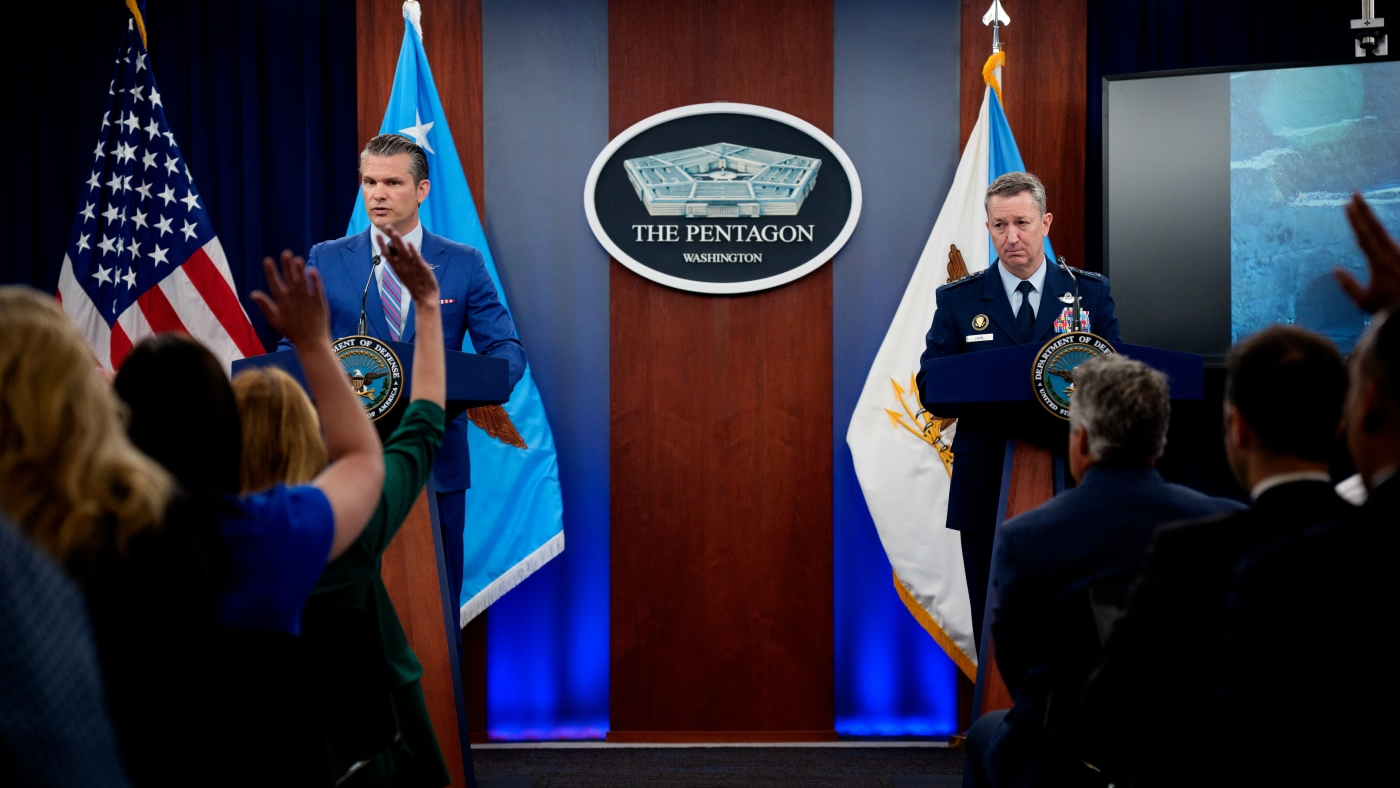
A significant number of major American media organizations have united in refusing to sign new, restrictive press policies enacted by the Pentagon, a move they argue amounts to "covert censorship" and a direct threat to the First Amendment.
The sweeping new regulations, championed by Defense Secretary Pete Hegseth, would require journalists accredited at the Pentagon to obtain formal authorization before publishing any information, even if unclassified. The agreement warns that reporters could lose their press credentials for "soliciting" information from federal employees that has not been officially approved for release.
More than a dozen prominent news outlets, including The New York Times, The Wall Street Journal, Reuters, the Associated Press, Fox News, CBS News, CNN, and The Washington Post, have all issued statements refusing to comply with the new demands. The deadline for journalists to sign the 21-page document was Tuesday afternoon.
The Pentagon Press Association has decried the policy, stating it was a "one-sided move by Pentagon officials apparently intent upon cutting the American public off from information they do not control and pre-approve." The association contends that the new rules aim to "gag Pentagon employees and threaten reprisals against journalists seeking information not previously approved for publication."
Tom Bowman, a veteran Pentagon reporter for NPR, wrote a searing opinion piece explaining his decision to surrender his press pass. "Signing that document would make us stenographers parroting press releases, not watchdogs holding government officials accountable," Bowman stated. He recalled instances where his reporting uncovered truths that differed from official narratives, highlighting the crucial role of investigative journalism in holding power to account.
Bowman also noted a dramatic decrease in transparency under Secretary Hegseth, with only two official briefings and virtually no background briefings in the last 10 months. He contrasted this with previous administrations where regular press briefings were common, emphasizing that officials understood the public's right to know.
Defense Secretary Hegseth, a former Fox News commentator, has defended the new rules as necessary for national security, asserting that "access to the Pentagon is a privilege, not a right." He responded to news organizations' announcements of refusal with a farewell emoji on social media platform X.
This standoff marks a significant moment in the relationship between the U.S. military and the press, with journalists arguing that the new policies could hinder their ability to report on critical national security issues, including potential issues like sexual assault in the military, conflicts of interest, corruption, or waste in large-scale programs.
Despite the potential loss of access to their workspaces within the Pentagon building, news organizations have vowed to continue their reporting. "We will continue to cover the U.S. military as each of our organizations has done for many decades, upholding the principles of a free and independent press," stated a joint release from the five major broadcast networks.
One America News Network (OAN) is reportedly the only outlet that has agreed to the new restrictions after a legal review.