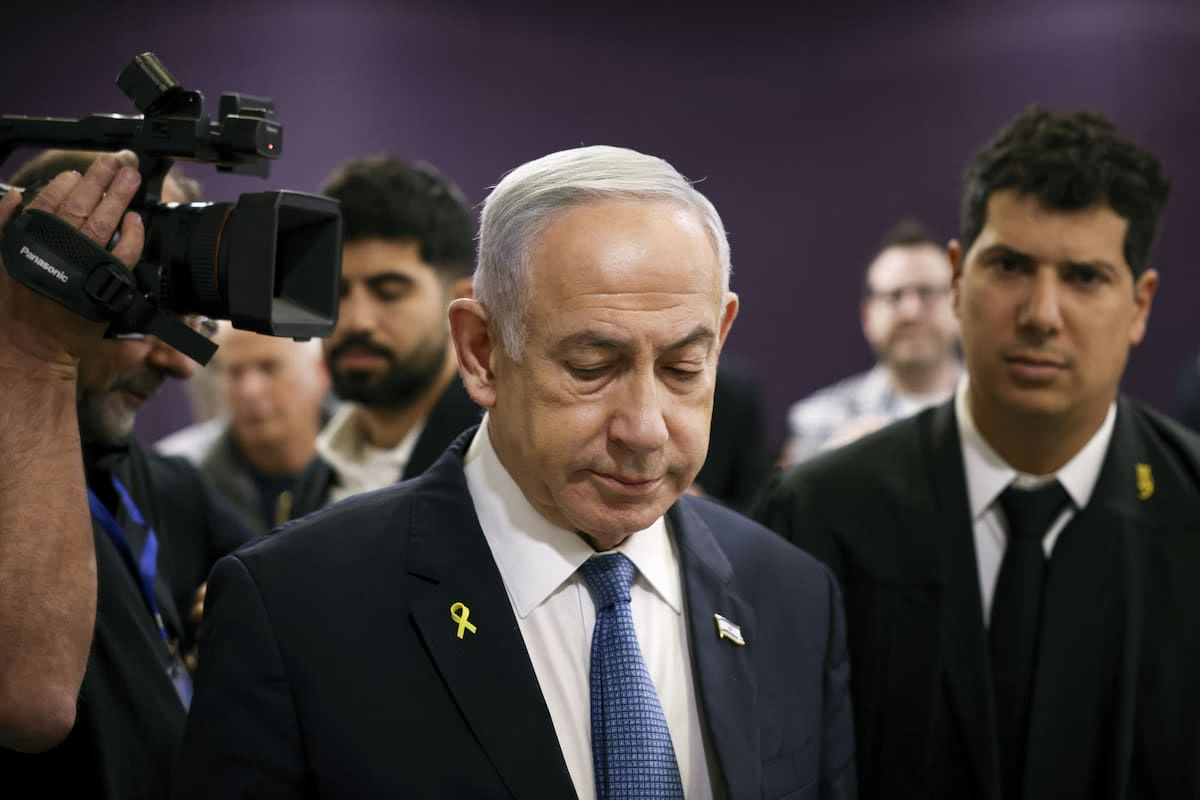
TEL AVIV – Israeli Prime Minister Benjamin Netanyahu appeared in the Tel Aviv District Court on Wednesday for a new hearing in his corruption trial, but requested to shorten his testimony due to a cold, which his office later stated was bronchitis.
Netanyahu, who is facing charges of fraud, breach of trust, and bribery, told the judges he would stay for only an hour or two longer, a request that was granted. His testimony, originally scheduled to conclude at 4:30 p.m. local time, ended at 1:30 p.m.
Netanyahu arrived at the court accompanied by several ministers and lawmakers from his Likud party, drawing protests from demonstrators gathered outside.
The proceedings come as international attention remains focused on the region. In a recent address to the Israeli Knesset, U.S. President Donald Trump called for an Israeli presidential pardon for Netanyahu, a close international ally. Trump suggested that charges of corruption were minor compared to Netanyahu's leadership during wartime, stating, “I have an idea, Mr. President, why don’t you give him a pardon?”
Netanyahu's request to leave the trial early has drawn criticism. Hagai Levine, head of the medical division of the Hostages and Missing Families Forum, questioned on social media why the prime minister would visit recently released hostages with weakened immune systems if he were significantly unwell. Netanyahu's office, however, asserted that his illness posed no danger to himself or others, and the Hadassah Ein Kerem Hospital issued a statement confirming he was not contagious.
Meanwhile, proposals are being discussed within Israel to potentially limit the frequency of court appearances for the prime minister. Israeli Minister of Education Yoav Kisch stated that it was time to cancel the trial, arguing that the prime minister should be focused on national priorities. Minister of Justice Yariv Levin announced plans for a bill that would allow the Minister of Defense, in consultation with the Minister of Justice, to limit judicial hearings in criminal cases if they could harm national security.
Netanyahu, the first sitting prime minister to be indicted, has consistently denied all charges, describing the accusations as a “witch hunt” aimed at removing him from power. His government, since late 2022, has also pursued judicial reforms that critics argue aim to weaken the judiciary.
In related legal developments, Argentina's Federal Chamber of Appeals rejected a request to issue an international arrest warrant for Netanyahu should he visit Argentine territory. The court upheld a previous decision by a federal judge, stating that while the International Criminal Court had issued arrest warrants for Netanyahu for alleged war crimes and crimes against humanity, the avenue pursued by the plaintiffs was not legally tenable under cooperation norms.
The judges emphasized the primacy of the ICC proceedings and the exceptional and subsidiary nature of universal jurisdiction, noting that no official information suggested Netanyahu was in Argentina, nor had any arrest request from the ICC been received.
In separate comments regarding the broader regional situation, Netanyahu told CBS News that Israel was “giving peace a chance” but insisted that a Palestinian state would not be established without “destroying fanaticism.” He reiterated that security control must remain with Israel to prevent its destruction. He also addressed the question of governance in Gaza post-conflict, expressing doubt about figures like Tony Blair taking a leadership role and emphasizing the need for a governance structure not committed to Israel's destruction. Netanyahu stated that while many Gazans may desire to continue fighting, there are also those within Gaza who oppose Hamas and recognize the catastrophic consequences of its actions.