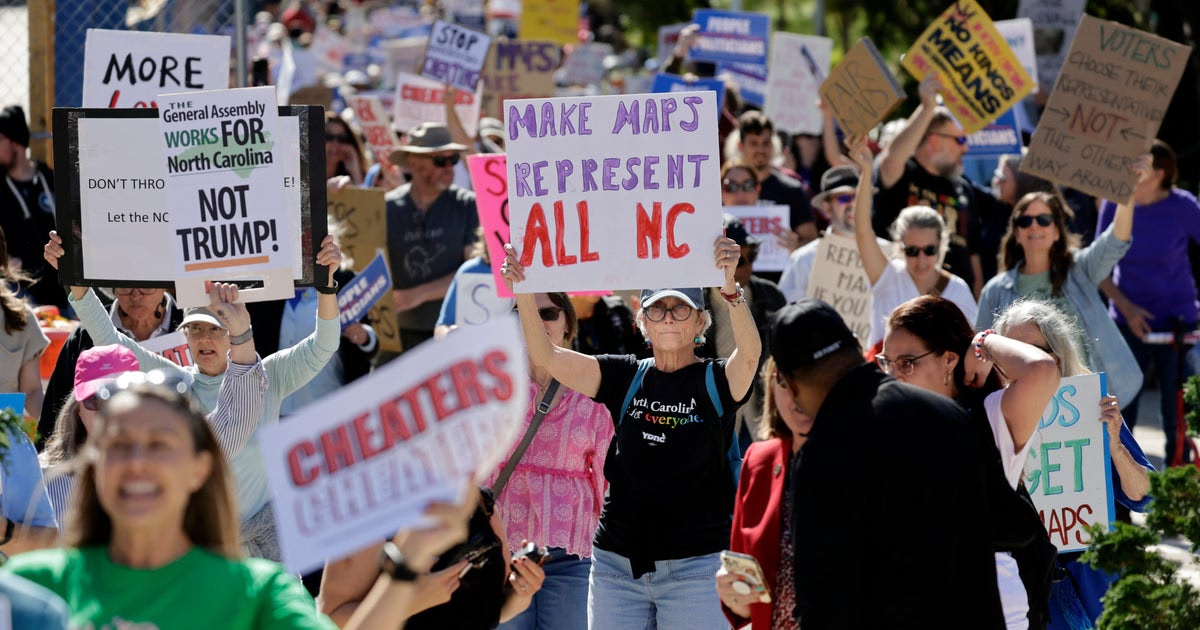
The North Carolina State Senate approved a new congressional redistricting map this week, a move designed by Republicans to solidify and potentially expand their majority in the U.S. House of Representatives ahead of the 2026 midterm elections.
The measure, which passed the state Senate on Tuesday, is expected to receive final approval in the North Carolina House of Representatives shortly. Legislative leaders anticipate the new boundaries will enable the Republican Party to gain an additional seat, increasing their current 10-4 advantage in the state’s 14 congressional districts to 11-3.
The proposed map primarily targets the 1st Congressional District, currently held by moderate Democrat Rep. Don Davis. Analysis indicates the redrawing eliminates several counties with majority African American populations while adding conservative rural areas, shifting the district from a slight Democratic lean to one favoring Republicans by approximately 11 points.
Davis, whose district elected both him and former President Donald Trump in 2024, condemned the plan. He stated that the new map was “beyond the pale” and a deliberate attempt to undermine the will of voters.
North Carolina’s push to redraw its electoral lines is tied to a broader, national Republican strategy aimed at protecting the party’s control of the U.S. House. Legislative leaders, including State Senate GOP leader Phil Berger, have publicly stated their intention to use redistricting to “safeguard the Republican control of the Congress” and “protect the agenda” of President Trump.
Berger defended the urgency of the redrawing, contending that the new map “respects the will of the North Carolina voters who sent President Trump to the White House three times.” The president himself celebrated the expected outcome in advance on social media, calling the move a “great victory for America” that would provide the state the chance to elect “another Republican MAGA” member.
Because North Carolina’s Democratic Governor Josh Stein lacks the power to veto a standalone redistricting measure, Democrats’ only likely recourse to block the map’s implementation is through a legal challenge.
During legislative debate, Democratic senators criticized the map as openly partisan manipulation. One senator, Lisa Grafstein, noted that lawmakers were making little attempt to disguise the gerrymandering. Another, Val Applewhite, warned that the new boundaries risked disenfranchising African American communities by dismantling the current configuration of the 1st Congressional District, arguing that the change risked “silencing voices and giving the back to decades of progress.”
The move in North Carolina follows similar redistricting efforts in other Republican-led states this year, including Texas and Missouri, both of which altered maps to consolidate conservative majorities.
California Governor Gavin Newsom strongly criticized the action, labeling the effort “Repugnant.” Newsom attacked North Carolina Republicans on social media, accusing them of prioritizing party benefit over governing, stating they were willing to “do whatever Trump commands.”
Political analysts suggest the new configuration could face judicial review, potentially raising questions under the provisions of the Voting Rights Act of 1965. However, legal experts noted that the U.S. Supreme Court has recently shown a willingness to limit the influence of that legislation in setting racial criteria for drawing districts, making the outcome of any potential lawsuit uncertain.