Supreme Court appears skeptical of Trump's birthright citizenship order
Justices questioned the administration's legal arguments during Wednesday's oral arguments on whether to end automatic citizenship for children born to undocumented immigrants.
2:51 PM
The Supreme Court on Wednesday appeared skeptical of President Trump's executive order to end birthright citizenship, with a majority of justices raising doubts about the administration's constitutional arguments during more than two hours of oral arguments.
Several conservative justices peppered Solicitor General D. John Sauer with questions about the legal underpinnings of the directive. Chief Justice John Roberts referred to part of the government's argument as "very quirky," while Justice Elena Kagan said the administration's "revisionist theory" requires the court to change what "people have thought the rule was for more than a century."
Sauer argued that noncitizens temporarily in the country are not "domiciled" in the United States and therefore are not pledging "allegiance" to it, which he contended invalidates their children's claims to citizenship. However, both liberal and conservative justices questioned this position, noting that the language of "domicile" does not appear in the Citizenship Clause of the Fourteenth Amendment.
For more than 100 years, the 14th Amendment's Citizenship Clause has been understood to mean that nearly everyone born in the U.S. is automatically granted citizenship. Trump's order seeks to end automatic citizenship for children born on U.S. soil to undocumented immigrants and some temporary foreign visitors.
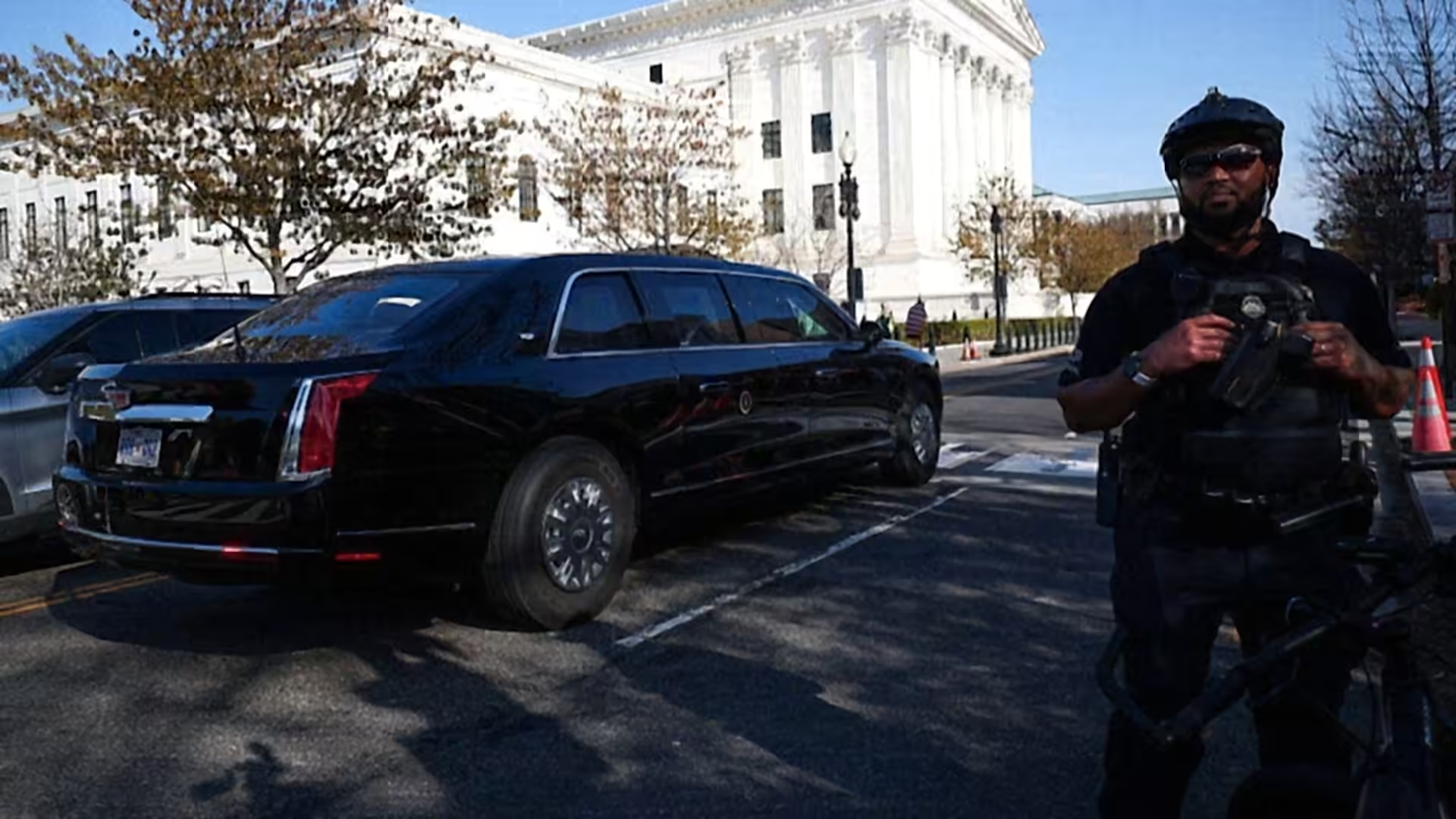
In an unprecedented move signaling the stakes of the case, Trump attended the first part of the argument for roughly 90 minutes, the first time a sitting president has done so. He was accompanied by White House counsel David Warrington. Attorney General Pam Bondi also attended.
Following the session, Trump wrote on Truth Social: "We are the only Country in the World STUPID enough to allow 'Birthright' Citizenship!"
The American Civil Liberties Union brought the legal challenge to the executive order. During arguments, several of the court's conservative justices also asked tough questions of the ACLU's lawyer, making the outcome of the legally complicated case not fully clear.
Sauer also argued that unrestricted birthright citizenship has "spawned a sprawling" set of consequences, though he did not elaborate further during the arguments.